WTW Meaning in Text | What Does WTW Mean?
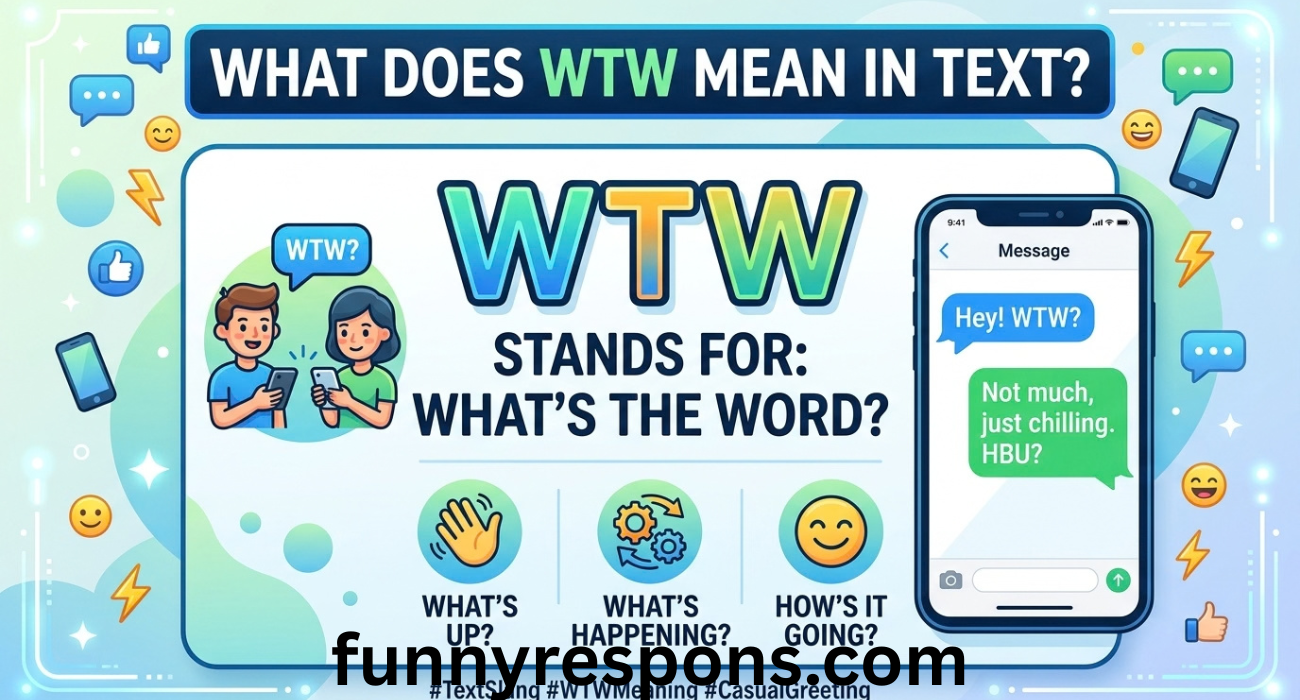
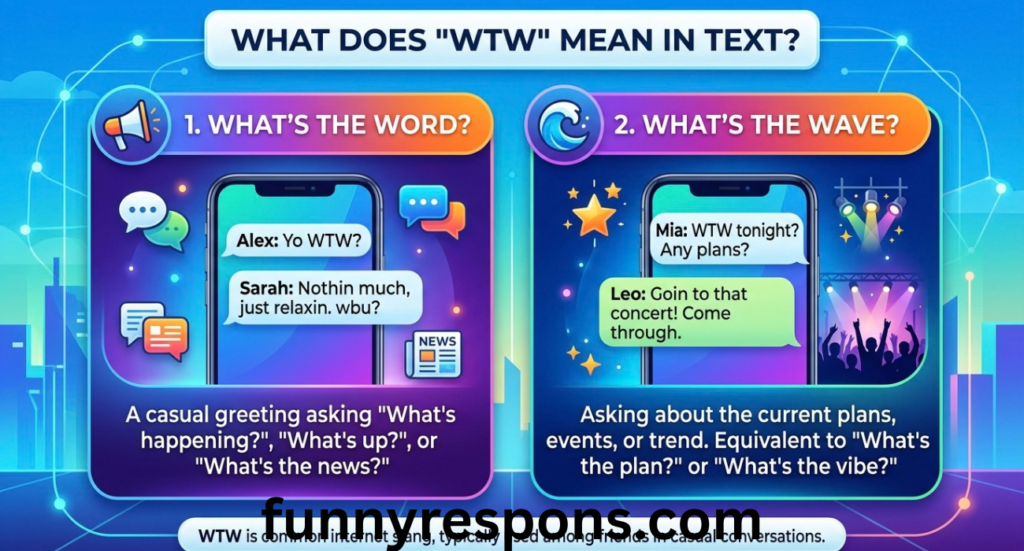
The WTW Meaning in Text is usually “What’s the word?” People use WTW as a casual way to ask what’s happening, what’s new, or what someone is doing. The exact meaning can shift slightly depending on the conversation and the words around it.
In texting, WTW often works as a quick check-in or conversation starter. Someone might write “WTW tonight?” when asking about plans, while “WTW?” can simply mean “What’s up?” This casual slang meaning is common in informal chats with friends and on social media.
This article explains What Does WTW Mean, including its full form, common uses, and meaning in chat. You’ll also see examples, tone differences, and practical ways to reply to WTW.
What Does WTW Mean in Text?
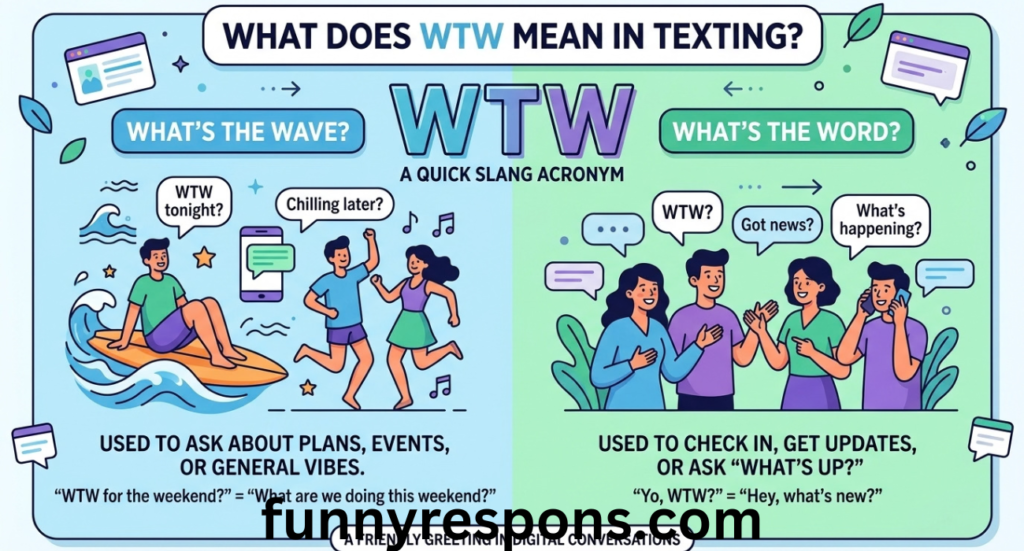
WTW means “What’s the word?” in many casual text conversations. The phrase doesn’t usually ask about a literal word. Instead, it works as a broad question about what’s happening, what the plans are, or what someone has to share.
For example, a friend might text:
Person A: “WTW?”
Person B: “Not much. Just chilling at home.”
Here, WTW acts as a casual check-in. Person A could be asking what’s new, what Person B is doing, or whether anything interesting is happening.
WTW can also be used when someone wants to make plans:
“WTW this weekend?”
In that sentence, the sender is probably asking what the plans are for the weekend. A natural response could be, “Nothing planned yet. You?”
The phrase has a flexible meaning because “What’s the word?” is itself a broad expression. It can invite news, plans, updates, or a simple conversation starter.
Read Also : Endeavor Meaning | Definition, Examples, and Usage
WTW Full Form and Slang Meaning
The most common WTW full form in casual texting is “What’s the word?” Its WTW slang meaning is close to “What’s up?”, “What’s going on?”, or “What are you up to?”
It belongs to the category of texting abbreviations and online slang that make informal messaging faster. People may use it with friends, classmates, family members, or people they regularly chat with.
For example:
- “WTW rn?” = What are you up to right now?
- “WTW later?” = What are the plans later?
- “WTW Friday?” = What are the plans for Friday?
- “WTW bro?” = What’s up, bro?
- “WTW after work?” = What are you doing after work?
The exact interpretation can shift slightly. That’s why you shouldn’t treat every WTW message as having one rigid translation.
How Context Changes the WTW Meaning
The WTW meaning can change according to the words around it. A short message such as “WTW?” is especially broad. It may mean “What’s new?” or simply serve as a friendly way to start a conversation.
Adding a time, place, or activity makes the intended meaning clearer.
For example:
“WTW tonight?” usually asks about evening plans.
“WTW after work?” often asks what someone plans to do after work.
“WTW at the party?” could ask what is happening at the party or what the current situation is.
The relationship between the speakers also matters. A close friend may use WTW as a relaxed check-in. Someone you recently met might use it as an informal way to start talking.
Punctuation and context can affect tone, too. “WTW?” may sound neutral and casual. “WTW 😂” can feel more playful. A message such as “WTW??” may suggest greater curiosity, although punctuation alone doesn’t establish a specific emotion.
What Does WTW Mean on Different Platforms?
WTW generally keeps the same basic meaning across messaging platforms. However, the surrounding conversation can make its intended meaning clearer.
Text Messages
In ordinary text messages, WTW is commonly used between people who already have a casual relationship.
A friend might send:
“WTW after work?”
The likely meaning is, “What are you doing after work?” or “What are the plans after work?”
Another example is:
“WTW later?”
This can be an invitation to discuss availability or make plans. The sender may want to know whether you’re free.
WTW in texting is therefore less like a precise question and more like an informal opening. The response usually supplies the missing details.
Snapchat
WTW meaning on Snapchat is generally similar to its meaning in text messages. Someone may use it in a private message when they want to know what’s happening or whether you have plans.
For example:
“WTW tonight?”
A reply such as “Going out with some friends” answers the question naturally.
Because Snapchat conversations often use short messages, abbreviations such as WTW can fit easily into casual chats. Still, the abbreviation remains informal rather than a standard form for professional communication.
The WTW meaning on Instagram is also usually “What’s the word?” or a similar casual question such as “What’s up?” or “What are the plans?”
You might see it in Instagram DMs between friends:
“WTW this weekend?”
The sender may be asking whether you have plans, whether you’re attending an event, or whether you want to make plans together.
Instagram comments can be less predictable because a short abbreviation may depend heavily on the post or previous messages. In DMs, the surrounding conversation usually provides enough context.
Group Chats
WTW can also appear in group chats when someone wants information from several people.
For example:
“WTW for Friday night?”
The sender may be asking everyone about the group’s plans.
Another example:
“WTW? Are we still meeting at 8?”
Here, the second sentence clarifies the first. The person wants an update about an existing plan.
In a group chat, WTW can therefore function as a quick request for plans and information rather than a simple personal check-in.
WTW Examples in Real Conversations
Seeing WTW in realistic conversations makes the slang easier to understand. The following examples show how the same abbreviation can take slightly different meanings depending on context.
1: Friends Making Plans
Person A: “WTW Saturday?”
Person B: “I’m free after 6. Want to grab food?”
Meaning: Person A is asking what the plans are for Saturday and may be checking whether Person B wants to make plans.
Another example:
Person A: “WTW later?”
Person B: “Nothing yet. You trying to go somewhere?”
Here, WTW means something close to “What are you doing later?” or “What are the plans?”
2: Casual Check-In
Person A: “WTW?”
Person B: “Not much. Just finished class.”
Meaning: Person A is casually checking in and asking what’s happening or what’s new.
The message doesn’t necessarily suggest that Person A wants to make plans. It can simply open a conversation.
For example:
“WTW bro?”
A natural answer could be:
“All good. Just working. What’s new with you?”
In this case, the abbreviation works much like a casual “What’s up?”
3: Group Chat
Person A: “WTW for tonight?”
Person B: “I thought we were meeting downtown.”
Person C: “Same. What time?”
Meaning: Person A wants an update about the group’s plans.
The context makes the intended meaning clear. WTW isn’t asking for a definition of a word. It’s asking for current information about the situation.
Is WTW Rude?
WTW is not normally rude. It’s a casual abbreviation used in informal communication.
However, tone depends on the situation. A very short message can sometimes feel blunt, especially if the recipient expects more formal wording.
For example, sending “WTW?” to a close friend is usually harmless. Sending the same message to a client, professor, manager, or unfamiliar professional contact may sound too casual.
Professional communication generally benefits from clear wording. Instead of WTW, you could write:
- “What are the plans for today?”
- “Do you have any updates?”
- “What’s the latest?”
- “Are we still meeting tonight?”
The issue isn’t that WTW is inherently rude. It’s that it belongs to informal messaging rather than formal communication.
Is WTW Flirty?
WTW is not automatically flirty. The abbreviation itself does not indicate romantic interest.
A friend, coworker, relative, or dating partner could all use WTW. The surrounding conversation determines whether the message has a playful or romantic tone.
For example:
“WTW tonight? 👀”
In a dating conversation, the emoji and previous messages might make the message feel more suggestive or playful. But the same wording between two friends could simply mean, “What are the plans tonight?”
Another example:
“WTW? Haven’t heard from you all day.”
That could express interest in talking without necessarily being romantic.
So, if you’re confused about WTW, look at the whole conversation rather than assuming the abbreviation is flirty.
How to Reply to WTW
Your response should match what the sender seems to be asking. If WTW means “What are you doing?” you can share your current activity. If it means “What are the plans?” you can mention your availability or suggest something.
For example:
“Not much. What about you?”
“I’m free tonight. What did you have in mind?”
“Just getting home from work.”
“Nothing planned yet.”
Friendly Replies
A friendly reply keeps the conversation moving without sounding too formal.
Try:
- “Not much! What’s up with you?”
- “Just chilling. You?”
- “I’m free later. What’s the plan?”
- “Nothing exciting yet. What are you up to?”
- “Just got home. How about you?”
These replies work well when WTW is simply a casual check-in.
Funny Replies
If the conversation has a playful tone, you can answer with humor.
For example:
“WTW?”
“Apparently, I’m supposed to have plans now 😂”
Or:
“WTW tonight?”
“Surviving and looking for snacks. You?”
A funny response works best when you already have a relaxed relationship with the sender. Humor can sound awkward if the conversation is formal or unfamiliar.
Replies When You Are Confused
If you aren’t sure what the sender means, you don’t need to guess.
You can simply say:
- “What do you mean by WTW?”
- “Do you mean what’s going on?”
- “You mean what are the plans?”
- “Not sure what you mean. Can you clarify?”
A short clarification prevents misunderstandings. Since WTW can refer to several related questions, asking for clarification is completely reasonable.
When to Use WTW
Use WTW when you’re having a casual conversation with someone who understands texting abbreviations.
It works well in:
- Text messages with friends
- Group chats
- Casual DMs
- Snapchat conversations
- Instagram messages
- Informal social media chats
- Conversations about plans
- Quick check-ins
- Casual conversations with people you know
WTW can also work when you want to ask about current activity, availability, or plans without writing a complete sentence.
For example, “WTW Friday?” quickly opens a conversation about Friday. “WTW rn?” can ask what someone is doing right now.
When to Avoid WTW
Avoid WTW when the situation requires formal or highly clear wording.
That includes:
- Professional emails
- Academic writing
- Formal announcements
- Client communication
- Job applications
- Business correspondence
- Official documents
Instead of writing “WTW?” in a professional email, use a complete question that clearly explains what you need.
For example:
“Do you have any updates about tomorrow’s meeting?”
This approach removes ambiguity and keeps the tone appropriate.
WTW also may not work well with someone who doesn’t use common texting slang. In that situation, a full phrase such as “What are the plans?” is easier to understand.
Common Mistakes About WTW
One common mistake is assuming that WTW always has exactly one meaning. Although “What’s the word?” is a common interpretation, context can make it function more like “What’s up?” or “What are the plans?”
Another mistake is assuming that WTW is automatically flirty. The abbreviation itself does not communicate romantic interest. The conversation, relationship, wording, emojis, and situation provide those clues.
People also sometimes confuse WTW with other short expressions such as WSG, WYO, WYD, and WYA. These abbreviations overlap in casual conversation, but they ask different questions.
Finally, avoid using WTW in formal settings simply because it is shorter. Quick digital communication can be useful, but clear wording matters more when the audience expects professionalism.
Read Also : Other Ways to Say Have a Good Day: 40 Friendly and Natural Alternatives
Similar Slang Terms
Several texting abbreviations can appear in conversations similar to WTW. Their meanings overlap, but they aren’t interchangeable in every situation.
| Slang | Common meaning | Typical use |
|---|---|---|
| WTW | What’s the word? / What’s going on? | Checking in or asking about plans |
| WSG | What’s good? | Asking how someone is doing or what’s happening |
| WYO | What you on? | Asking what someone is doing or involved in |
| WYD | What you doing? | Asking about current activity |
| WYA | Where you at? | Asking about someone’s location |
For example, WYD focuses more directly on current activity, while WYA asks about location. WYO can ask what someone is doing or what they’re interested in at the moment.
WTW is broader. Depending on the conversation, it can ask about plans, news, activity, or what’s happening.
Where Does WTW Come From?
WTW comes from the informal expression “What’s the word?” In casual speech, “What’s the word?” can be used as a broad way to ask for news, updates, plans, or information.
The abbreviation shortens that expression for quick digital communication. Like many texting abbreviations, its meaning depends on how people use it in conversation.
There isn’t a single context that defines every use of WTW. Contemporary informal messaging often allows short abbreviations to carry a broader meaning than their literal words suggest.
That’s why the best way to understand WTW is to consider the complete message. A phrase such as “WTW tonight?” clearly points toward plans, while a standalone “WTW?” may simply mean “What’s new?” or “What’s going on?”
WTW Meaning in Different Situations
WTW can take on slightly different meanings depending on the situation. In casual texting, it may ask what’s happening, what someone is doing, or what plans are available. A message like “WTW tonight?” usually focuses on plans, while “WTW?” can simply start a conversation. The surrounding words help readers understand the intended meaning clearly.
The relationship between the speakers also matters. Friends may use WTW as a relaxed check-in, while someone you’re dating might use it to start a playful conversation. However, WTW itself doesn’t guarantee romantic interest. Look at the complete message, previous conversation, emojis, and overall tone before deciding what the sender means.
WTW Meaning From a Guy or Girl
If a guy or girl texts you “WTW,” the abbreviation usually has the same basic meaning: “What’s the word?” They may be asking what’s new, what you’re doing, or whether you have plans. The message alone doesn’t reveal the sender’s intentions, so avoid assuming that WTW automatically signals flirting or romantic interest.
For example, “WTW this weekend?” probably asks about your weekend plans. Meanwhile, “WTW 😂” could simply be a friendly conversation starter. Your relationship with the person and the surrounding conversation provide better clues than the abbreviation itself. A simple response such as “Not much, what about you?” usually keeps things moving naturally.
WTW Meaning in Social Media Messages
WTW appears naturally in social media messages because platforms such as Instagram, Snapchat, and TikTok support quick, informal conversations. Someone might send “WTW?” after seeing your story or message. They could be asking what’s happening, what you’re doing, or whether anything interesting is going on. The platform doesn’t usually change the basic slang meaning.
The context can make the question more specific. For instance, replying to a concert story with “WTW?” may relate to plans or the event. In a private Instagram DM, it may simply mean “What’s up?” When the message seems unclear, asking the sender to clarify is better than guessing.
WTW vs. WSG, WYO, WYD, and WYA
WTW can look similar to other texting abbreviations, but each one has a slightly different focus. WSG commonly means “What’s good?” WYO means “What you on?” WYD means “What you doing?” and WYA means “Where you at?” These expressions often appear in the same casual conversations, especially among friends.
The main difference is the information requested. WYD usually focuses on current activity, while WYA asks about location. WSG often works as a general check-in. WTW is broader and may ask about news, plans, activity, or what’s happening. Understanding these differences can make informal messages easier to interpret.
Quick Recap
The WTW meaning in text is most commonly “What’s the word?” In casual conversation, it can also mean “What’s up?”, “What’s going on?”, “What are you up to?”, or “What are the plans?” The intended meaning depends on the surrounding conversation.
WTW is common in informal messaging, including texts, Snapchat, Instagram DMs, group chats, and other social media conversations. It isn’t inherently rude or flirty. Use context, punctuation, emojis, and your relationship with the sender to understand the tone. For formal communication, choose clear words instead of this casual slang.
FAQs
How to Respond to a WTW Text?
You can reply with “Not much, you?” or “What’s up?” if the message is a casual check-in. If WTW asks about plans, you can share what you’re doing or suggest something.
What Does WTW Stand For?
WTW usually stands for “What’s the word?” In casual texting, it can also mean “What’s up?”, “What’s going on?”, or “What are the plans?”
What Does WTW Snap Mean?
On Snapchat, WTW usually means “What’s the word?” It’s a casual way to ask what’s happening, what someone is doing, or what plans they have.
What Does WTW Stand For on TikTok?
On TikTok, WTW generally means “What’s the word?” Its exact meaning can depend on the conversation, but it often works as a casual “What’s up?” or “What’s going on?”
Conclusion
The WTW Meaning in Text is usually “What’s the word?” It works as a casual way to ask what’s happening, what’s new, what someone is doing, or what plans are available. The exact meaning depends on the surrounding conversation, so a message like “WTW tonight?” focuses on plans, while “WTW?” may simply mean “What’s up?”
When you see WTW in chat, consider the relationship, tone, punctuation, and topic before replying. You can answer naturally with “Not much, you?” or share your plans if the sender asks about them. The WTW slang meaning stays informal, so it fits casual texts, social media chats, and group conversations better than professional messages. Knowing the context makes it easier to understand and reply clearly.