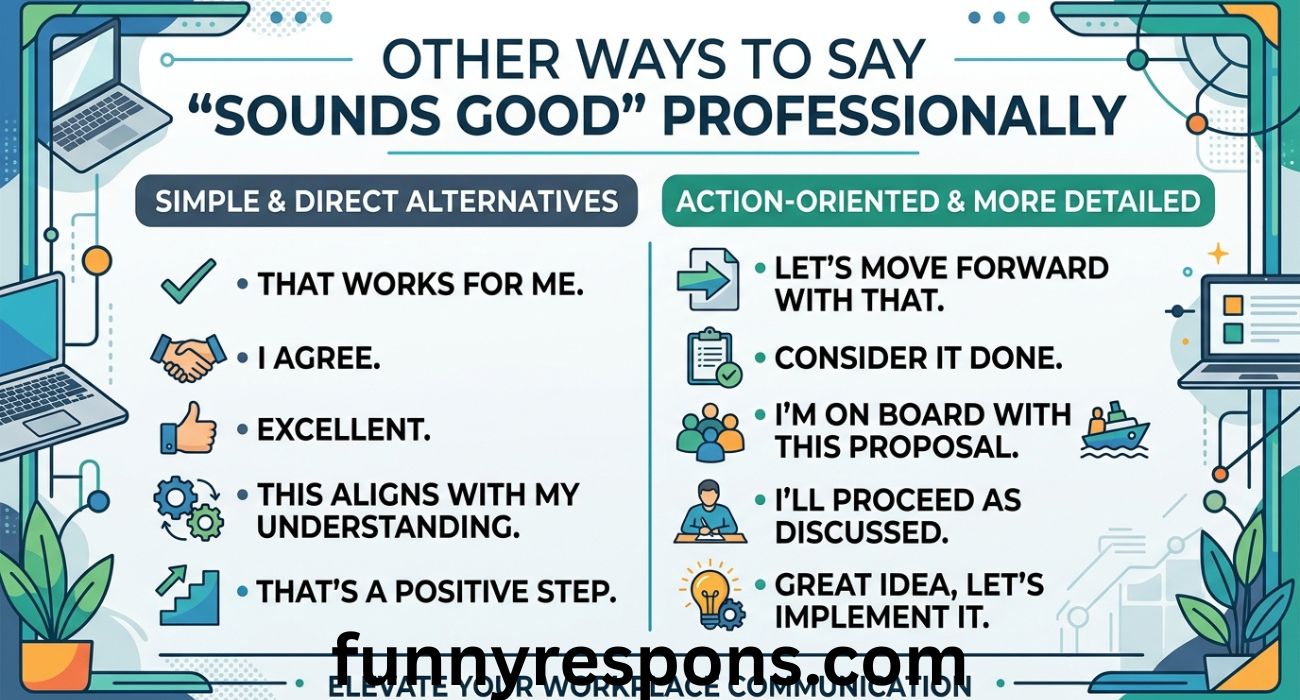
Other Ways to Say Sounds Good Professionally: 35 Better Alternatives for Workplace Communication
Sounds Good Professionally means using polite and suitable words to show agreement at work. It helps you respond in a clear and respectful way. These phrases make business talks and emails sound better.
Using the right words can change your communication style. A simple reply can create a strong professional image. Learn new ways to agree and make every conversation more effective.
Sounds Good Professionally includes phrases like “that works for me,” “absolutely,” and “sounds great.” These words show support and confidence. They help you build better workplace relationships.
Why Learning Other Ways to Say Sounds Good Professionally Matters
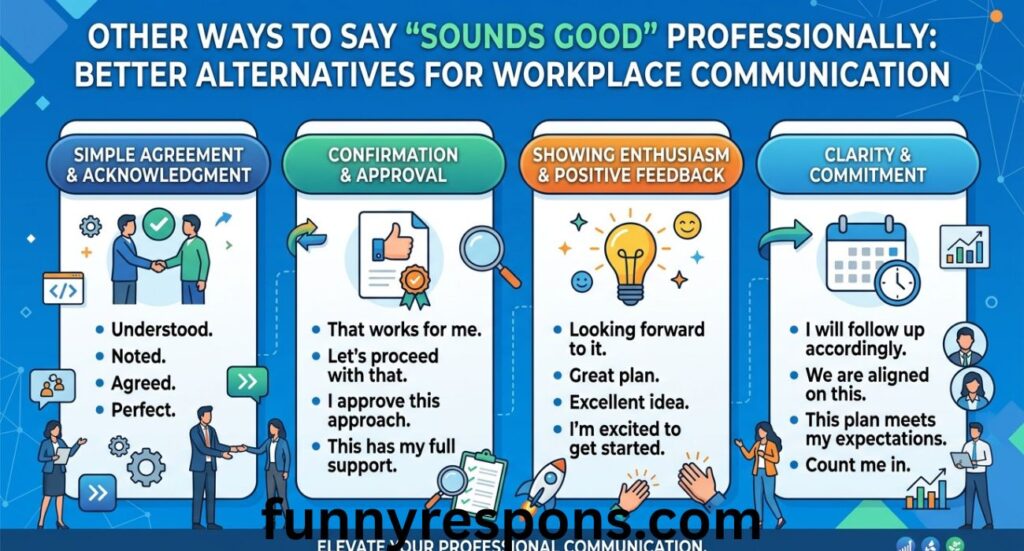
If you use “sounds good” every day, you are not alone. Many people rely on this phrase because it feels safe, simple, and easy to understand. However, repeating the same words can make emails, messages, and workplace conversations sound predictable. When you learn other ways to say sounds good professionally, you add variety to your communication and create stronger connections with coworkers, clients, and managers.
Strong communication is more than sharing information. It helps you build trust, show confidence, and leave a positive impression. Using different alternatives to sounds good allows you to match your tone to the situation. Sometimes you need formal language. Other times you need a friendly response. Developing this skill supports communication improvement, professional vocabulary enhancement, and stronger workplace communication skills.
Read Also : 40 Best Ways to Say “Nice to See You Again” (Meaning, Professional Uses, and Alternatives)
How Professional Alternatives Improve Workplace Communication
Choosing the right words can change how people view your message. Effective professional communication phrases help you express agreement without sounding repetitive. Whether you are writing emails, attending meetings, or responding in team chats, using different expressions shows flexibility and confidence. This small adjustment can strengthen your business communication language and improve everyday interactions.
Modern workplaces value clear communication. Using professional ways to say sounds good demonstrates attention to detail and professionalism. It also helps with professional email responses, business email etiquette, and professional writing skills. Instead of relying on one phrase repeatedly, you can use a range of alternative agreement expressions, approval phrases, and positive response alternatives that fit different situations.
| Phrase Type | Best Use |
| Formal Agreement | Emails, client meetings, presentations |
| Neutral Agreement | Team chats, workplace discussions |
| Casual Agreement | Friendly workplace conversations |
| Enthusiastic Agreement | Project launches, celebrations |
| Supportive Agreement | Team collaboration and feedback |
35 Other Ways to Say Sounds Good Professionally
1. That works for me
The phrase that works for me is one of the most reliable sounds good synonyms available. It communicates acceptance clearly while maintaining a professional tone. Because it sounds cooperative and respectful, it works well in emails, meetings, and project discussions.
Many professionals use that works for me when confirming schedules, approving plans, or agreeing with recommendations. The phrase shows flexibility without sounding passive. It encourages smooth collaboration and supports positive workplace relationships.
When someone suggests a meeting time or project deadline, this response feels natural and professional. Among all agreement and approval phrases, this option remains one of the most versatile choices for modern business communication.
2. I’m in
The phrase I’m in adds enthusiasm to your response. It shows more than simple agreement. It tells others that you are ready to participate and contribute. This makes it useful during team projects and collaborative activities.
In workplace settings, I’m in often appears during brainstorming sessions or voluntary initiatives. It signals commitment and engagement while maintaining a friendly tone. Many managers appreciate responses that demonstrate active involvement.
Although casual, this phrase can still fit professional environments when company culture supports informal communication. It helps create engaging communication and promotes teamwork through positive participation.
3. Absolutely
The word absolutely communicates strong agreement and confidence. It is one of the most effective formal agreement phrases because it expresses certainty without unnecessary complexity. The response sounds professional and decisive.
Leaders frequently use absolutely when approving ideas, supporting proposals, or confirming decisions. The word delivers a sense of assurance that helps build trust and credibility in workplace conversations.
When used appropriately, absolutely strengthens confident communication and demonstrates conviction. It is particularly valuable when responding to clients or senior management because it reflects confidence and professionalism.
4. Sure thing
The phrase sure thing creates a friendly and approachable tone. While less formal than some alternatives, it still communicates willingness and support. This makes it useful in many internal workplace conversations.
Employees often use sure thing when responding to requests for assistance or confirming simple tasks. The phrase reassures colleagues that their request is manageable and accepted without hesitation.
Because it sounds warm and helpful, sure thing supports supportive communication and positive workplace interactions. It is especially effective when maintaining friendly relationships with coworkers.
5. All right
The expression all right offers a balanced response that works in many situations. It neither sounds overly enthusiastic nor overly formal. This flexibility makes it a dependable option.
Many professionals choose all right when confirming plans or acknowledging instructions. The phrase communicates understanding and acceptance while maintaining a calm and neutral tone.
As one of the most practical professional conversation phrases, all right helps keep discussions moving smoothly. It supports efficient communication without adding unnecessary complexity.
6. Looks good
The phrase looks good is commonly used when reviewing documents, presentations, reports, or visual materials. It signals approval while remaining concise and professional.
Managers frequently use looks good after reviewing drafts or project updates. The response confirms satisfaction and allows work to move forward without lengthy explanations.
Because workplace communication often involves reviews and approvals, looks good remains one of the most valuable professional response examples available. It delivers clear feedback in a positive manner.
7. Fine by me
The phrase fine by me expresses agreement while maintaining a relaxed tone. It communicates acceptance without creating pressure or unnecessary excitement.
Many teams use fine by me when discussing scheduling options or making routine decisions. The phrase shows cooperation and flexibility, which helps maintain a positive working environment.
As one of several useful casual agreement expressions, this response works best in workplaces where communication feels conversational and approachable.
8. No problem
The expression no problem reassures others that their request is manageable. It removes uncertainty and helps create a positive atmosphere during workplace interactions.
Customer service teams often use no problem because it conveys willingness and confidence. The phrase makes people feel comfortable asking for assistance or clarification.
Strong workplace etiquette language often includes reassuring phrases like no problem. When used appropriately, it supports positive relationships and effective communication.
9. Got it
The phrase got it communicates understanding and agreement at the same time. It confirms that you received information and are ready to act on it.
Managers and employees frequently use got it in project discussions, task assignments, and team communications. The phrase is brief but highly effective.
Because clarity matters in professional environments, got it supports strong communication skills development and helps reduce misunderstandings during daily operations.
10. Cool with me
The phrase cool with me creates a relaxed and friendly tone. It indicates acceptance while keeping the conversation informal and approachable.
Many younger professionals use cool with me during casual workplace discussions. It helps create a comfortable atmosphere and encourages open communication among team members.
Although informal, this phrase can strengthen workplace relationships when used appropriately. It contributes to friendly responses and more natural conversations.
11. Works like a charm
The phrase works like a charm communicates confidence in a plan, tool, or process. It suggests that something will function effectively and produce positive results.
Teams often use works like a charm when discussing solutions that have already proven successful. The phrase adds optimism and positivity to workplace conversations.
As one of many expressive responses, it brings energy to communication while still conveying approval and confidence in the proposed approach.
12. Sure
The word sure remains one of the simplest and most flexible ways to express agreement. Its strength comes from its versatility and ease of use.
Professionals frequently use sure in emails, messages, and conversations when responding to straightforward requests. The word is concise yet effective.
Because it works in many situations, sure remains a valuable part of professional communication vocabulary and everyday workplace interactions.
13. Sounds great
The phrase sounds great communicates enthusiasm and approval. Unlike neutral responses, it adds energy and positivity to the conversation.
Many professionals use sounds great when discussing opportunities, project ideas, or upcoming events. The phrase demonstrates excitement while remaining professional.
Among all professional expressions, sounds great is particularly effective for creating positive momentum and encouraging collaboration across teams.
14. Okay by me
The phrase okay by me offers a polite and balanced way to agree with a suggestion. It sounds relaxed yet professional enough for many workplace settings. When you want to approve a plan without sounding overly formal, this phrase works well and keeps communication flowing naturally.
Many employees use okay by me when discussing meeting schedules, project timelines, or team decisions. It communicates acceptance while showing flexibility. The phrase helps maintain a cooperative atmosphere and supports productive conversations between coworkers and managers.
As one of the most practical verbal agreement alternatives, okay by me allows you to express approval without repeating the same language repeatedly. It fits naturally into emails, chats, and workplace discussions.
15. That’s fine
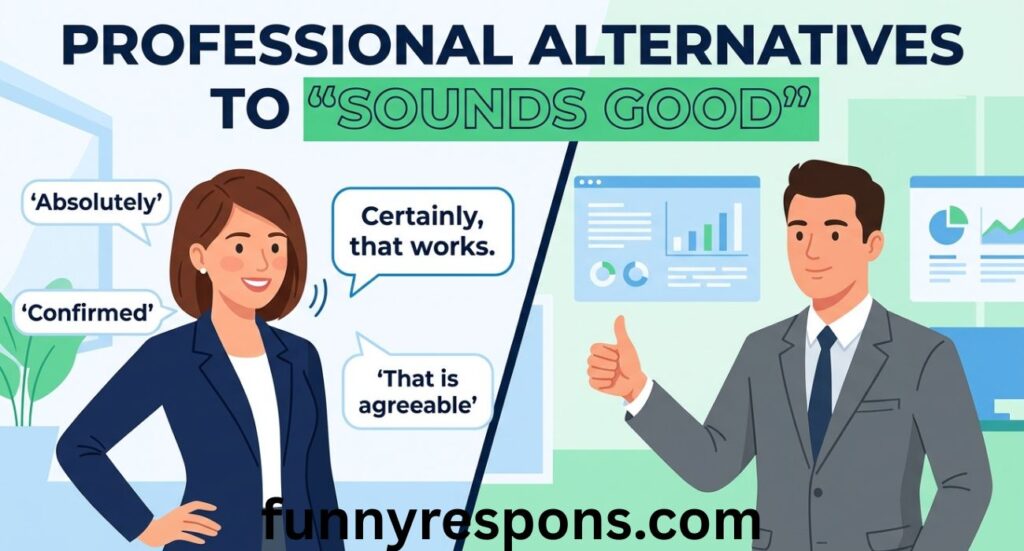
The phrase that’s fine is straightforward and easy to understand. It communicates agreement clearly and avoids confusion. While it may not sound highly enthusiastic, it effectively shows acceptance of a proposal or suggestion.
Professionals often use that’s fine when discussing minor changes, scheduling updates, or adjustments to plans. The phrase keeps conversations moving without creating unnecessary complexity or excessive formality.
Among common acceptance phrases, that’s fine remains useful because it delivers a clear message. It supports efficient communication and works well in many professional environments.
16. I’m okay with that
The phrase I’m okay with that expresses comfort with a decision or proposal. It reassures others that you support the suggested direction and have no concerns about moving forward.
Managers and team members frequently use I’m okay with that during collaborative discussions. The phrase promotes openness and helps create a positive environment where everyone feels heard and respected.
This response works particularly well when discussing project updates, strategy changes, or workflow adjustments. It contributes to strong workplace collaboration language and encourages productive teamwork.
17. That’s cool
The phrase that’s cool creates a casual and friendly atmosphere. It communicates agreement while keeping the conversation relaxed and approachable.
Many modern workplaces encourage conversational communication styles. In those environments, that’s cool helps employees express acceptance naturally while maintaining positive relationships with colleagues.
Although informal, this phrase can support effective everyday communication phrases when used in the right setting. Understanding workplace culture helps determine when this response is appropriate.
18. No worries
The expression no worries reassures others and reduces stress during conversations. It communicates that a request, change, or adjustment is not causing any inconvenience.
Customer-facing professionals often use no worries because it creates a calm and supportive tone. Clients and coworkers appreciate responses that make interactions feel easy and comfortable.
As part of effective professional communication phrases, this expression promotes trust and helps build stronger workplace relationships through reassurance and positivity.
19. You got it
The phrase you got it communicates commitment and readiness to act. It tells the other person that their request has been understood and will be handled promptly.
Many service professionals and team leaders use you got it when responding to requests or confirming responsibilities. The phrase creates confidence and demonstrates reliability.
Strong workplace responses often include language that reflects accountability. You got it does exactly that by showing ownership and willingness to follow through.
20. I’m down
The phrase I’m down is an informal expression that shows enthusiasm and willingness to participate. It works best in relaxed workplace cultures and friendly team environments.
Employees may use I’m down when discussing team-building events, voluntary projects, or collaborative activities. The phrase signals excitement and engagement.
As one of the more casual natural conversation alternatives, it helps conversations feel authentic and approachable. However, formal business situations may require more professional wording.
21. Definitely
The word definitely expresses strong agreement and confidence. It removes uncertainty and shows that you fully support the proposed idea or action.
Professionals often use definitely when confirming plans, approving recommendations, or supporting strategic decisions. The word creates a sense of certainty that can strengthen workplace communication.
Because confidence matters in business settings, definitely serves as one of the strongest positive confirmation responses available. It communicates commitment clearly and effectively.
22. Go for it
The phrase go for it combines agreement with encouragement. Instead of simply accepting an idea, it motivates the other person to move forward confidently.
Leaders frequently use go for it when supporting innovation, creative thinking, or independent decision-making. The phrase empowers employees and encourages action.
Within effective professional ways to say sounds good, this response stands out because it promotes confidence while expressing approval and support.
23. Sure, why not
The phrase sure why not conveys relaxed acceptance and openness. It suggests that you see no reason to object and are comfortable moving forward.
Many workplace conversations involve low-risk decisions where a simple response is enough. In these situations, sure why not provides a friendly and natural way to agree.
As one of several useful response variations, it helps diversify communication and prevents repetitive language from appearing in daily interactions.
24. Okay, sounds good
The phrase okay sounds good combines acknowledgment and agreement. It confirms that you understand the suggestion and approve of it at the same time.
Professionals often use okay sounds good in emails, instant messages, and team discussions. The phrase remains popular because it feels natural and universally understood.
Even when exploring creative alternatives to sounds good, this variation still has value. It works particularly well when quick confirmation is needed.
25. That’s works for me
The phrase that’s works for me is commonly intended as a variation of that works for me. It communicates agreement and acceptance in a straightforward manner.
When discussing schedules, deadlines, or project decisions, this phrase indicates that the proposed option is acceptable and practical. It supports smooth collaboration and efficient planning.
Among many agreement examples, this expression highlights the importance of clear communication. Choosing wording that feels natural helps improve workplace interactions and understanding.
26. Certainly
The word certainly delivers a professional and confident response. It communicates clear agreement while maintaining a polished tone that works well in business environments. Many professionals prefer this phrase because it sounds respectful and decisive.
In workplace communication, certainly is often used when responding to client requests, confirming tasks, or approving recommendations. The phrase demonstrates reliability and professionalism without sounding overly formal or distant.
Among the most effective formal agreement phrases, certainly helps strengthen credibility. It allows you to express support clearly while maintaining a positive and cooperative attitude.
27. Consider it done
The phrase consider it done goes beyond simple agreement. It tells the other person that you not only accept the request but also intend to complete it efficiently and promptly.
Managers and team members frequently use consider it done when accepting responsibilities or handling important tasks. The phrase creates confidence because it signals commitment and accountability.
As one of the strongest professional response examples, this expression demonstrates action-oriented thinking. It helps build trust and reinforces a dependable professional image.
28. Happy to help
The phrase happy to help combines agreement with a positive attitude. It shows willingness to assist while creating a friendly and approachable tone.
Many customer service representatives and workplace professionals use happy to help when responding to questions, requests, or support needs. The phrase makes interactions feel more personal and welcoming.
This response supports supportive communication and enhances workplace relationships. It encourages collaboration while maintaining professionalism and courtesy.
29. I agree
The phrase I agree is simple, direct, and highly effective. It clearly communicates alignment with another person’s idea, opinion, or recommendation.
Professionals often use I agree during meetings, presentations, and strategic discussions. The phrase helps establish consensus and encourages productive decision-making among teams.
As one of the most straightforward agreement and approval phrases, it provides clarity without unnecessary wording. This makes it valuable in both formal and informal settings.
30. That sounds perfect
The phrase that sounds perfect adds enthusiasm while expressing approval. It communicates that a proposal meets expectations and requires no major adjustments.
Many professionals use that sounds perfect when discussing schedules, project plans, event arrangements, or client recommendations. The phrase creates positive energy and reinforces confidence in the decision.
Among popular enthusiastic responses, this option helps maintain a constructive atmosphere. It encourages momentum and supports effective workplace collaboration.
31. Agreed
The word agreed is concise yet powerful. It confirms alignment with an idea or decision while keeping communication efficient and professional.
Business leaders frequently use agreed during negotiations, planning sessions, and team discussions. The phrase helps move conversations forward without lengthy explanations.
As one of the most useful professional expressions, agreed works especially well when quick confirmation is needed in emails or workplace messaging platforms.
32. I support that
The phrase I support that communicates agreement while also showing encouragement. It indicates that you believe in the proposed idea and want it to succeed.
Organizations often use this phrase during planning meetings, strategy discussions, and collaborative projects. It helps create a culture where employees feel valued and supported.
Strong workplace communication skills involve more than approval alone. Expressions like I support that strengthen teamwork and encourage constructive dialogue.
33. That makes sense
The phrase that makes sense acknowledges the logic behind a suggestion or decision. It shows that you understand and agree with the reasoning being presented.
Professionals commonly use that makes sense during problem-solving discussions and project reviews. The phrase validates ideas while encouraging thoughtful conversation.
As one of the most practical alternative agreement expressions, it demonstrates active listening and helps build mutual understanding among team members.
34. I’m on board
The phrase I’m on board communicates support and participation. It tells others that you agree with the direction being proposed and are ready to contribute.
Many teams use I’m on board when launching new initiatives, implementing changes, or discussing future plans. The phrase creates a sense of shared commitment and teamwork.
Within modern business communication language, this expression remains popular because it combines agreement, enthusiasm, and collaboration in a natural way.
35. Let’s do it
The phrase let’s do it transforms agreement into action. Rather than simply approving an idea, it encourages immediate progress and forward movement.
Project teams often use let’s do it when finalizing decisions or preparing to begin a new task. The phrase generates momentum and helps maintain excitement around shared goals.
As one of the most energetic positive response alternatives, it promotes action, confidence, and teamwork while keeping communication friendly and engaging.
Professional Alternatives to Sounds Good for Business Emails

Business emails require language that sounds clear, polished, and respectful. While “sounds good” is acceptable, using different expressions can help your message feel more professional. Many successful professionals rely on professional ways to say sounds good because varied language improves readability and strengthens workplace communication.
When responding to managers, clients, or coworkers, selecting the right wording matters. Using professional email responses such as “absolutely,” “that works for me,” or “looks good to me” helps create a positive impression. These small language choices contribute to stronger business email etiquette and more effective communication.
Read Also : Since vs Sense: Complete English Grammar Guide for Clear Writing in USA English
Best Sounds Good Synonyms for Workplace Communication
Every workplace has different communication styles. Some organizations prefer formal language, while others encourage casual conversations. Learning various sounds good synonyms allows you to adjust your tone based on the situation and audience.
Strong workplace communication skills involve choosing responses that fit naturally within discussions. Whether you use “got it,” “definitely,” or “I’m okay with that,” each phrase serves a different purpose. Expanding your communication toolkit helps create smoother interactions and stronger professional relationships.
Creative Alternatives to Sounds Good That Sound Natural
Repeating the same phrase throughout the day can make communication feel robotic. Exploring creative alternatives to sounds good helps your conversations sound more genuine, engaging, and memorable without sacrificing professionalism.
Natural language creates stronger connections between people. Using phrases like “sounds great,” “you got it,” or “go for it” adds personality to workplace interactions. These natural conversation alternatives make communication feel more authentic while maintaining a professional image.
How to Express Agreement Professionally in Any Situation
Knowing how to express agreement professionally is a valuable workplace skill. Different situations require different levels of formality, which means one phrase may not work everywhere. Developing flexibility allows you to communicate with confidence.
Professionals who master alternative agreement expressions often appear more polished and adaptable. Whether responding during meetings, presentations, emails, or client discussions, choosing the right words improves clarity and helps establish trust with colleagues and stakeholders.
Powerful Approval Phrases That Build Professional Credibility
The language you use reflects your professionalism. Effective approval phrases communicate support, confidence, and cooperation while helping conversations move forward. Strong approval language also reduces confusion and promotes efficient decision-making.
Using expressions such as “absolutely,” “certainly,” and “that works for me” demonstrates confidence without sounding arrogant. These responses contribute to confident communication and help create a workplace environment where collaboration and productivity thrive.
Formal Agreement Phrases for Professional Settings
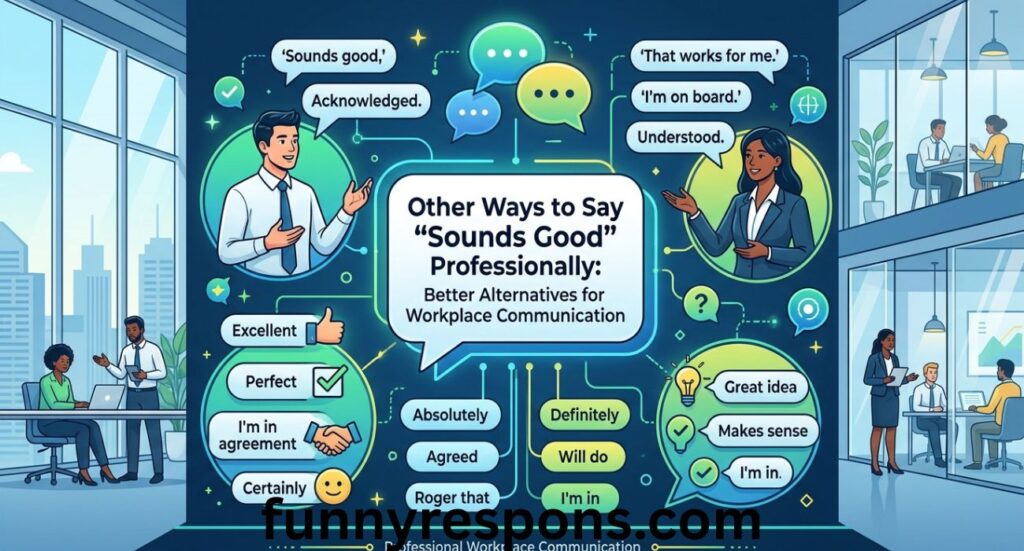
Formal communication often requires precise wording. During client meetings, executive presentations, and official correspondence, using professional language helps maintain credibility and respect throughout the conversation.
Common formal agreement phrases allow professionals to communicate approval without sounding overly casual. Expressions like “definitely,” “absolutely,” and “I’m okay with that” help deliver clear messages while supporting effective business communication language across different industries.
Positive Response Alternatives That Improve Communication
Positive language has a direct impact on workplace culture. Choosing constructive and encouraging responses helps conversations remain productive while creating stronger connections between team members.
Effective positive response alternatives contribute to overall communication improvement because they make discussions feel collaborative and solution-focused. Small changes in wording often lead to better engagement, increased trust, and more successful workplace interactions.
Professional Conversation Phrases for Modern Workplaces
Today’s workplaces rely heavily on digital communication. Emails, messaging platforms, and virtual meetings require professionals to communicate clearly while maintaining an approachable tone.
Using effective professional conversation phrases helps employees navigate daily interactions with confidence. Expressions such as “looks good to me,” “got it,” and “no worries” provide clear communication while supporting productive teamwork and collaboration.
Alternative Agreement Expressions That Enhance Workplace Relationships
Agreement plays an important role in successful teamwork. However, constantly repeating the same phrase can make communication feel repetitive and less engaging over time.
Learning different alternative agreement expressions helps conversations feel fresh and thoughtful. These variations demonstrate strong communication skills development while encouraging positive interactions that strengthen workplace relationships and team dynamics.
Communication Vocabulary That Makes You Sound More Professional
A strong professional vocabulary helps you communicate ideas more effectively. Expanding your range of responses allows you to adapt to different situations while maintaining clarity and professionalism.
Investing in better communication vocabulary supports long-term career growth. Whether you are writing emails, participating in meetings, or managing projects, varied language improves professional expressions, enhances credibility, and contributes to stronger workplace success.
Best Professional Alternatives to Sounds Good for Different Situations
Choosing the right phrase depends on the situation. Formal business emails often require more polished language, while team chats may allow casual responses. Understanding context helps professionals select the most effective wording.
The table below shows how different expressions fit various workplace situations. Using a mix of these responses improves professional conversation phrases, strengthens business conversations, and helps you express agreement professionally in a more natural way.
| Situation | Recommended Alternative |
| Client Email | Absolutely |
| Team Meeting | That works for me |
| Project Approval | Looks good to me |
| Quick Chat Response | Got it |
| Team Collaboration | I’m okay with that |
| Friendly Workplace Discussion | That’s cool |
| Leadership Support | Go for it |
| Customer Service Response | No worries |
| Formal Approval | Definitely |
| Internal Communication | All right |
Common Mistakes When Replacing Sounds Good
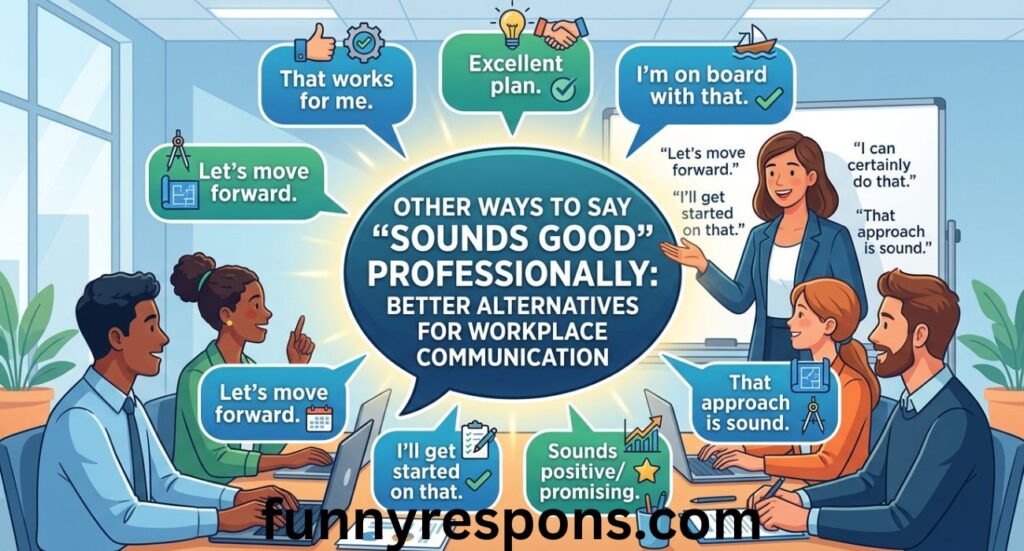
Many people focus only on finding new phrases and forget about context. A phrase that sounds perfect in a team chat may feel too casual in a client presentation. Understanding your audience remains one of the most important parts of effective communication.
Another common mistake involves using the same alternative repeatedly. Even when using other ways to say sounds good professionally, repetition can still make communication feel predictable. Rotating different expressions helps conversations remain fresh and engaging.
Successful communication depends on balance. The best professionals combine polite agreement phrases, professional email responses, confident approval, professional writing skills, and strong communication vocabulary to create meaningful interactions that feel authentic and effective.
FAQs
What is a professional way to say “sounds good”?
A professional way to say “sounds good” includes phrases like “that works for me,” “absolutely,” “looks good to me,” and “I agree.” These expressions show approval while keeping communication polished.
Is “sounds good” acceptable in professional emails?
Yes, “sounds good” is acceptable in many workplace emails, especially informal ones. However, using varied professional communication phrases can make your responses sound more thoughtful.
What are the best alternatives to “sounds good” at work?
Some of the best alternatives include “that works for me,” “definitely,” “I’m on board,” “got it,” and “I’m okay with that.” The right choice depends on the situation and tone.
How can I sound more professional when agreeing with someone?
You can sound more professional by using clear agreement and approval phrases that match the context. Words like “absolutely,” “certainly,” and “I support that” create confident communication.
Conclusion
Using Sounds Good Professionally helps you create better workplace conversations and stronger connections. Simple changes in your words can make your emails, meetings, and messages feel more professional. Phrases like “that works for me,” “absolutely,” and “sounds great” help you show agreement in a clear way. These expressions also improve your confidence and make your communication more effective.
Good communication skills grow with practice. Learning different ways to agree helps you choose the right phrase for every situation. Professional language shows respect, teamwork, and a positive attitude. By using these alternatives, you can make your daily conversations smoother and build a strong professional image.