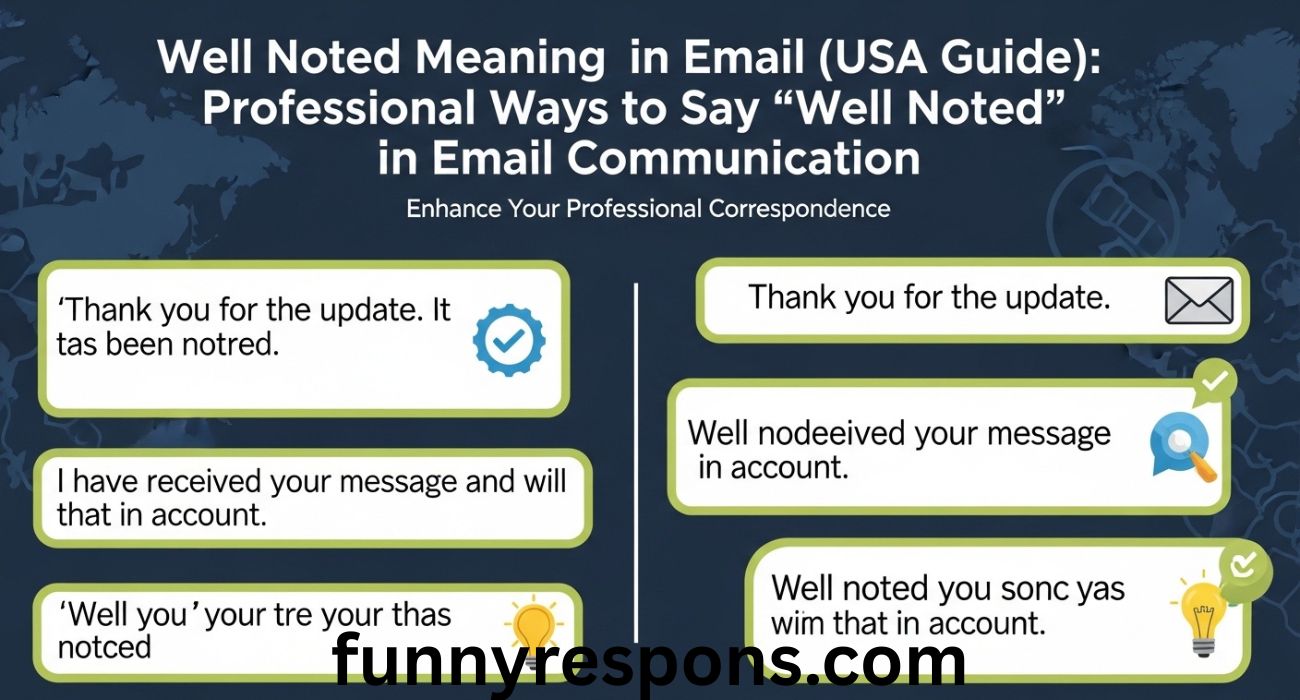
Well Noted Meaning in Email (USA Guide): Professional Ways to Say “Well Noted” in Email Communication
“well noted” is a simple phrase used in email communication. It means you have received a message and you understand it clearly. People use it in workplace communication to give quick confirmation in business communication. It keeps replies short and direct.
Many people use “well noted” in daily professional communication because it is fast and easy. It often appears in workplace email responses when time matters. However, it can feel a bit too short in formal corporate communication and may sound incomplete in some situations.
This phrase is mainly used for message acknowledgment in emails. It helps show that you have read and understood information in business communication. Still, in professional writing, better email response language can improve clarity in emails and make communication more complete.
Read Also : Funny Ways to Say I Love You: 35 Creative, Cute, and Funny Alternatives
1. Understood
Understood is a simple email communication phrase used to confirm clarity in workplace communication. It shows you received the message without confusion and keeps business communication direct and efficient in daily professional environments.
In professional communication, it helps maintain a clean email tone and improves clarity in emails. Many people in the USA use it in workplace messaging for quick response confirmation language.
However, in formal corporate communication, it may feel too short. Expanding it improves professional writing style and strengthens workplace email responses in structured business communication.
2. Acknowledged
Acknowledged is a formal business communication phrase used to confirm receipt of a message. It is widely used in corporate communication where structured and professional email response language is required.
This phrase improves message acknowledgment and strengthens clarity in emails. It is commonly used in customer service communication and formal workplace email responses.
However, in casual workplace messaging, it may feel stiff. Simpler phrases like got it or understood are often preferred depending on email tone.
3. Got it
Got it is a casual phrase used in workplace communication to confirm understanding quickly. It is common in internal email communication where speed matters more than formality.
It improves email tone by making responses feel natural and human. It is widely used in team messaging and supports communication skills in fast-paced environments.
However, in formal corporate communication, it is not ideal. More structured phrases like acknowledged are preferred for professional correspondence.
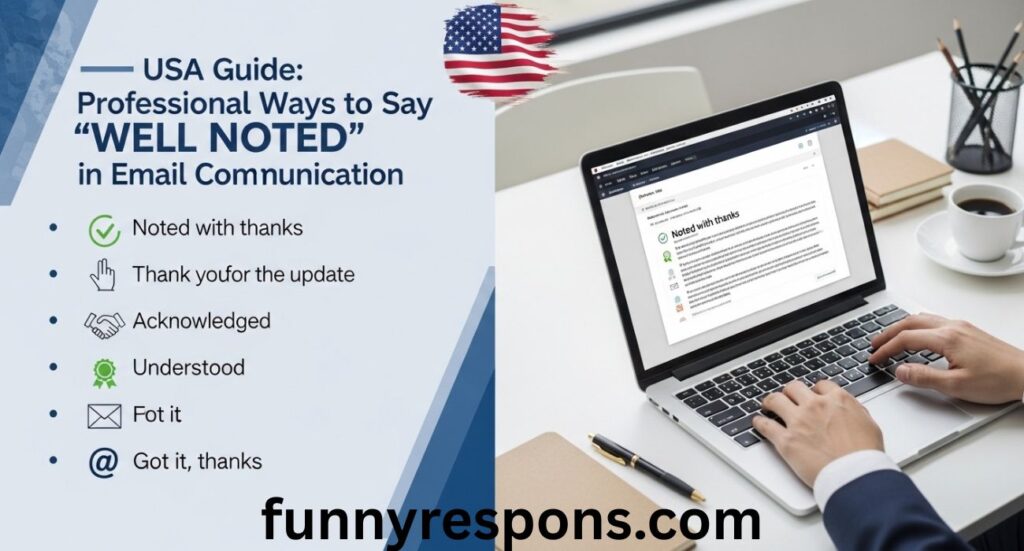
4. Noted with thanks
Noted with thanks is a polite email etiquette phrase used in professional communication. It confirms both acknowledgment and appreciation in workplace communication.
It improves corporate communication by balancing politeness and clarity in emails. It is often used in structured business communication environments.
However, in casual messaging, it may feel slightly formal. Simpler alternatives like got it are often used depending on tone.
5. Understood and acknowledged
Understood and acknowledged is a strong confirmation phrase in business communication. It shows complete clarity and message receipt in corporate communication.
It improves professional writing style by removing confusion and strengthening clarity in emails. It is used in formal workplace email responses.
However, in casual communication, it can feel heavy. Simpler phrases like got it are more common in informal workplace messaging.
6. I’ve received your message
I’ve received your message confirms message delivery in email communication. It is used in workplace communication to ensure clarity in business communication.
It improves professional communication by adding structure and politeness. It is common in customer service communication and corporate environments.
However, it should often be followed by action to avoid sounding incomplete in formal email response language.
7. I understand
I understand is a natural phrase used in email communication. It confirms clarity in workplace communication without sounding formal or robotic.
It improves communication skills because it feels human and simple. It is commonly used in business communication for direct responses.
However, in formal corporate communication, expanding the sentence improves clarity in emails and professional writing style.
8. I’ve made a note of that
I’ve made a note of that shows attention in email communication. It confirms information has been recorded for future use in workplace communication.
It improves professional correspondence by showing organization. It is used in business communication where tracking tasks is important.
However, in casual messaging, it may feel slightly formal depending on tone and communication skills.
9. Copy that
Copy that is a casual workplace communication phrase used for quick confirmation in email communication. It is common in internal business communication.
It improves email tone by making responses fast and simple. It supports efficient communication skills in team environments.
However, it is not suitable for formal corporate communication or client-facing professional correspondence.
10. I’ve got the message
I’ve got the message is a conversational phrase used in email communication to confirm understanding. It feels natural in workplace communication.
It improves email response language by making communication feel human and relaxed in business communication environments.
However, in formal corporate communication, it may sound too casual for professional correspondence.
11. Point taken
Point taken is used in business communication when acknowledging feedback. It shows understanding in workplace communication clearly.
It improves communication skills by showing acceptance of suggestions or corrections in corporate communication environments.
However, in formal writing, it may need expansion for clearer email etiquette phrasing.
12. Message received
Message received is a short and clear email communication phrase. It confirms receipt in workplace communication efficiently.
It improves corporate communication by being direct and simple. It is commonly used in fast business environments.
However, it may feel too brief in formal email writing without additional context.
13. I’ve processed that
I’ve processed that shows deeper understanding in email communication. It reflects thoughtful review in workplace communication.
It improves professional writing style by showing analysis rather than simple receipt in business communication.
However, in casual messaging, simpler phrases like got it are more commonly used.
14. All clear
All clear is a simple confirmation phrase used in workplace communication. It confirms understanding in email communication quickly.
It improves email tone in informal business communication and is often used in team environments.
However, in formal corporate communication, it may sound too casual for professional use.
15. I’ll take it from here
I’ll take it from here shows responsibility in business communication. It indicates task ownership in workplace communication clearly.
It improves professional communication by showing confidence and leadership in corporate communication environments.
However, it may require supporting detail in formal email response language for clarity.
16. Consider it done
Consider it done is a confident business communication phrase. It shows readiness to complete tasks in workplace communication.
It improves email tone by giving assurance and clarity in professional communication environments.
However, in formal settings, it may be softened for better clarity in emails.
17. I’ve noted your request
I’ve noted your request is a formal phrase in business communication. It confirms acknowledgment in workplace communication clearly.
It improves corporate communication by showing responsibility and attention to detail in professional environments.
However, in casual messaging, simpler phrases are often preferred depending on tone.
18. All received
All received is a short workplace communication phrase. It confirms receipt clearly in email communication.
It improves communication efficiency in fast business communication environments.
However, it may feel too brief in formal corporate communication.
19. I acknowledge that
I acknowledge that is a formal business communication phrase. It confirms understanding in corporate communication settings.
It improves professional writing style and is often used in structured email environments.
However, it is not commonly used in casual workplace messaging.
20. Understood loud and clear
Understood loud and clear adds emphasis in workplace communication. It confirms strong clarity in email communication.
It improves email tone in informal business communication environments.
However, in formal corporate communication, it may sound too expressive.
21. Consider it acknowledged
Consider it acknowledged is a formal business communication phrase. It confirms understanding in structured workplace communication.
It improves professional correspondence and is used in formal communication environments.
However, it may feel overly formal in casual messaging.
22. Absolutely understood
Absolutely understood shows strong confirmation in email communication. It improves clarity in workplace communication clearly.
It strengthens professional communication by showing certainty and full understanding.
However, in informal messaging, it may feel slightly heavy in tone.
23. I’ve received your point
I’ve received your point is used in feedback communication. It confirms understanding in workplace communication clearly.
It improves corporate communication by showing engagement and active listening in professional environments.
However, it may need expansion in formal email writing for clarity.
24. I hear you
I hear you is a conversational phrase in email communication. It shows empathy in workplace communication clearly.
It improves email tone by making communication feel human and natural in business communication.
However, in formal corporate communication, it may feel too informal.
25. I appreciate the update

I appreciate the update is a polite email communication phrase. It shows gratitude in workplace communication clearly.
It improves professional communication by adding warmth and clarity in business communication environments.
However, in strict corporate communication, it is often combined with action statements for stronger tone.
Read Also : Have a Great Rest of Your Week in the USA: Meaning, Alternatives
26. I confirm receipt
I confirm receipt is a formal email communication phrase used in workplace communication to clearly acknowledge that a message has been received. It is often used in structured business communication environments where clarity and precision matter.
It improves professional communication by removing ambiguity and strengthening message acknowledgment. In corporate communication, it is commonly used in official workplace email responses where documentation and clarity in emails are important.
However, in casual workplace messaging, it may feel too formal. Simpler phrases like got it or understood are often preferred depending on email tone and communication style.
27. Received and understood
Received and understood is a clear business communication phrase that confirms both delivery and comprehension of a message. In workplace communication, it helps maintain direct and structured email response language.
It improves email tone by combining acknowledgment and clarity in one phrase. It is commonly used in corporate communication where precise workplace email responses are needed for smooth coordination.
However, in informal communication, it may feel slightly heavy. Simpler alternatives like got it are more commonly used in daily workplace messaging.
28. I’ve taken note
I’ve taken note is a professional email communication phrase used to confirm that information has been recorded or mentally acknowledged in workplace communication.
It improves professional writing style by showing attention and responsibility. In business communication, it is often used when tracking instructions or updates in structured corporate communication environments.
However, in casual workplace messaging, it may feel slightly formal. Simpler phrases like noted or got it are often used depending on email tone.
29. Everything is noted
Everything is noted is a workplace communication phrase used to confirm that all shared information has been acknowledged. It is commonly used in business communication where multiple details are provided.
It improves clarity in emails by reassuring the sender that nothing has been missed. It is often used in corporate communication for organized and structured workplace email responses.
However, in strict formal writing tone, it may feel slightly casual. More formal phrases may be preferred in legal or executive communication.
30. I have understood the instruction
I have understood the instruction is a clear and formal business communication phrase used in workplace communication to confirm full comprehension of directions.
It improves professional communication by removing confusion and strengthening email response language. It is often used in structured corporate communication environments where accuracy and responsibility matter.
However, in casual workplace messaging, it may feel too long. Simpler phrases like understood are often preferred depending on communication style.
31. I will proceed accordingly
I will proceed accordingly is a professional email communication phrase used to confirm understanding and action in workplace communication.
It improves corporate communication by showing responsibility and readiness. It is commonly used in business communication when instructions require execution in structured environments.
However, in informal messaging, it may feel too formal. Simpler responses like got it or on it are often used in quick workplace communication.
32. This is noted
This is noted is a short and formal workplace communication phrase used to confirm message acknowledgment in email communication.
It improves professional communication by keeping responses concise and structured. It is often used in corporate communication where clarity in emails is required without extra explanation.
However, in casual workplace messaging, it may feel slightly rigid. Simpler phrases like noted or got it are more commonly used.
33. I have taken this into account
I have taken this into account is a thoughtful business communication phrase used in workplace communication to show consideration of information or feedback.
It improves professional writing style by showing analysis and attention to detail. It is commonly used in corporate communication during planning or decision-making processes.
However, in fast-paced workplace messaging, it may feel too long. Simpler phrases are often preferred depending on email tone and urgency.
34. I understand the message clearly
I understand the message clearly is a direct email communication phrase used to confirm full comprehension in workplace communication.
It improves clarity in emails by removing ambiguity and strengthening message acknowledgment. It is commonly used in business communication where precision is important.
However, in casual workplace messaging, it may feel slightly formal. Simpler responses like understood are often used in informal communication.
35. Your message is noted
Your message is noted is a polite and structured business communication phrase used in workplace communication to confirm receipt of information.
It improves professional communication by maintaining respectful tone and clarity in emails. It is often used in customer service communication and formal corporate communication environments.
However, in informal messaging, it may feel slightly rigid. Simpler alternatives are often preferred depending on communication style.
Well Noted Email Alternatives for Professional Workplace Communication
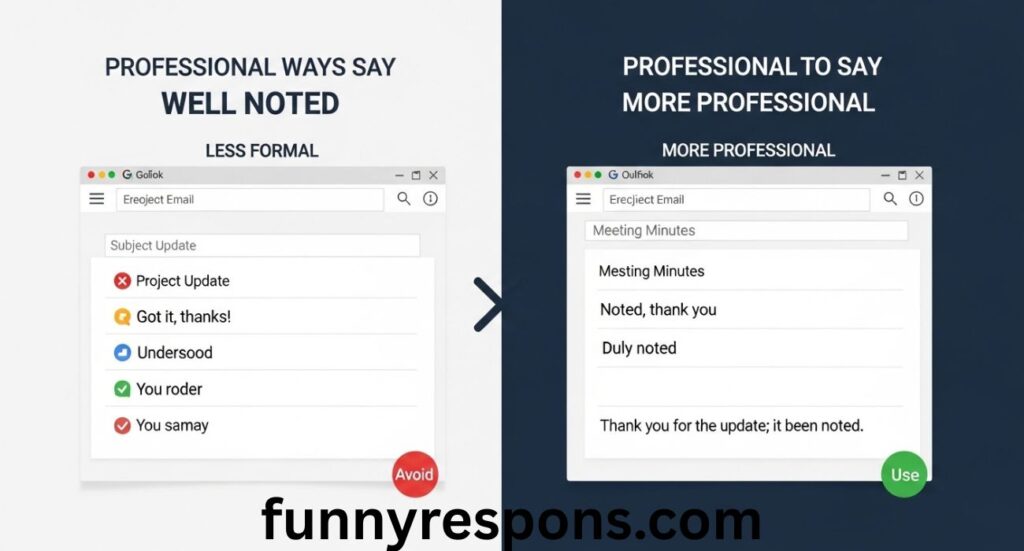
Well noted email alternatives help you sound more natural in professional communication instead of repeating the same phrase. In workplace communication, variety improves clarity in emails and makes your responses feel more human. Many professionals in the USA now prefer flexible business email wording that matches tone and situation instead of relying on one fixed phrase.
Using these alternatives improves email etiquette and strengthens professional writing style. It also helps you adjust tone based on context, whether you are replying to a manager, client, or teammate. In corporate communication, this flexibility improves message acknowledgment and builds smoother workplace email responses across different business communication settings.
How Email Communication Changes Workplace Tone and Clarity
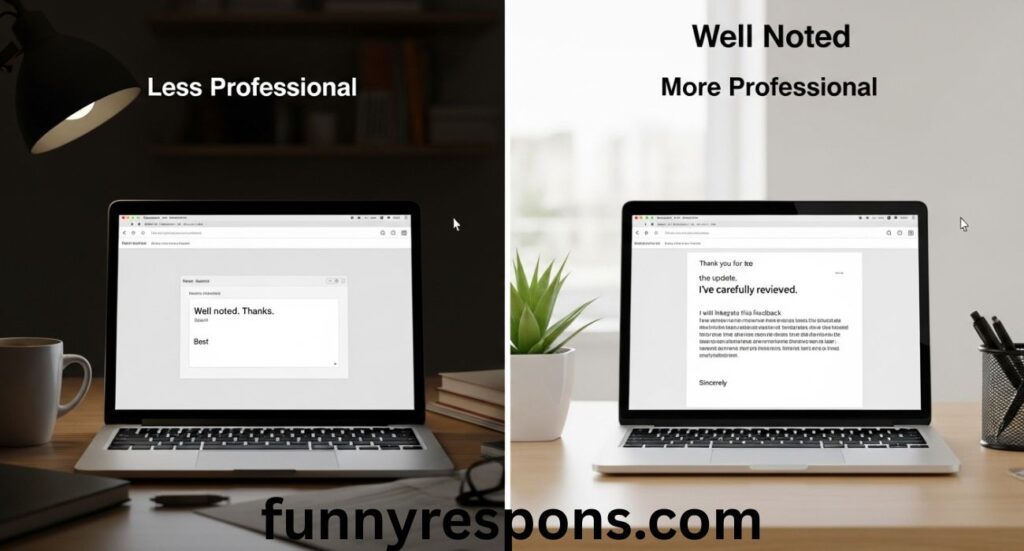
Email communication plays a major role in shaping workplace communication because tone affects how your message is received. A simple phrase like “noted” can sound cold, while a fuller response improves clarity in emails. Strong business communication depends on balancing professionalism with human tone.
Good email tone improves trust and reduces misunderstandings in corporate communication. When you use clear email response language, your message feels respectful and complete. This improves communication skills and supports better professional correspondence in both formal and informal workplace environments.
Best Professional Email Phrases to Replace “Well Noted”
Professional email phrases that replace “well noted” help you sound more polished in business communication. Instead of repeating the same wording, you can use phrases like acknowledged, understood, or I’ve noted your request. These improve workplace email responses and strengthen clarity in emails.
In corporate communication, using varied email etiquette phrases shows stronger communication skills. It also helps you match tone with context, whether you are replying formally or casually. This improves professional writing style and makes business email wording more effective in daily workplace communication.
Why Message Acknowledgment Matters in Business Communication
Message acknowledgment is important in business communication because it confirms that information has been received and understood. Without it, workplace communication can become unclear and lead to mistakes. Simple email response language helps maintain structure in professional communication.
Clear acknowledgment improves corporate communication by reducing confusion and improving workflow efficiency. It also strengthens professional correspondence because the sender knows their message has been read. This small habit significantly improves clarity in emails and supports better communication skills in office environments.
Email Etiquette Phrases That Improve Professional Writing Style
Email etiquette phrases help shape how you sound in workplace communication. Instead of short replies, using structured phrases improves clarity in emails and makes communication more respectful. This is especially important in corporate communication where tone matters as much as content.
Strong email etiquette improves professional writing style and helps you build better relationships at work. It also supports smoother business communication by ensuring your message is polite and clear. Over time, this improves overall communication skills in professional environments.
Workplace Email Responses That Sound Natural and Human
Workplace email responses should sound natural, not robotic. Overusing phrases like “well noted” can make communication feel repetitive. Instead, using varied business email wording improves tone and makes your message feel more human in daily workplace communication.
Natural responses improve professional communication because they feel conversational yet respectful. This balance is important in corporate communication where clarity in emails must combine with personality. It also improves email tone and strengthens professional correspondence in modern business environments.
How to Improve Clarity in Emails Using Simple Language
Clarity in emails is essential for effective workplace communication. Simple language helps avoid confusion and ensures your message is understood quickly. In business communication, short and clear email response language is often more effective than complex wording.
Using simple phrases improves corporate communication and strengthens professional writing style. It also reduces misunderstandings in workplace email responses. When your message is easy to read, communication skills improve naturally, making professional correspondence smoother and more efficient.
Common Synonyms for Well Noted in Business Emails
Synonyms for well noted are widely used in business communication to avoid repetition. Words like acknowledged, understood, and received help improve email phrasing variations. These alternatives make workplace communication more dynamic and less repetitive.
Using synonyms improves professional communication by allowing better control over tone. It also strengthens email etiquette phrases and supports clearer corporate communication. This flexibility improves message acknowledgment and helps maintain effective workplace email responses in different situations.
Why Email Tone Affects Professional Communication Success
Email tone plays a major role in professional communication because it shapes how your message is interpreted. A neutral or unclear tone can cause confusion in workplace communication. That is why choosing the right business communication wording is important.
A balanced tone improves corporate communication by making messages respectful and clear. It also strengthens professional correspondence and improves clarity in emails. Good tone control directly improves communication skills and helps build trust in workplace relationships.
Improving Workplace Messaging with Better Email Response Language
Workplace messaging becomes more effective when you use strong email response language. Instead of relying on one phrase like “well noted,” using varied expressions improves clarity and engagement in business communication.
Better language improves professional communication by making responses more meaningful. It also enhances corporate communication because it reduces confusion and improves understanding. Over time, this leads to stronger communication skills and more effective professional correspondence in daily work environments.
How to Say “Noted” Professionally in Email
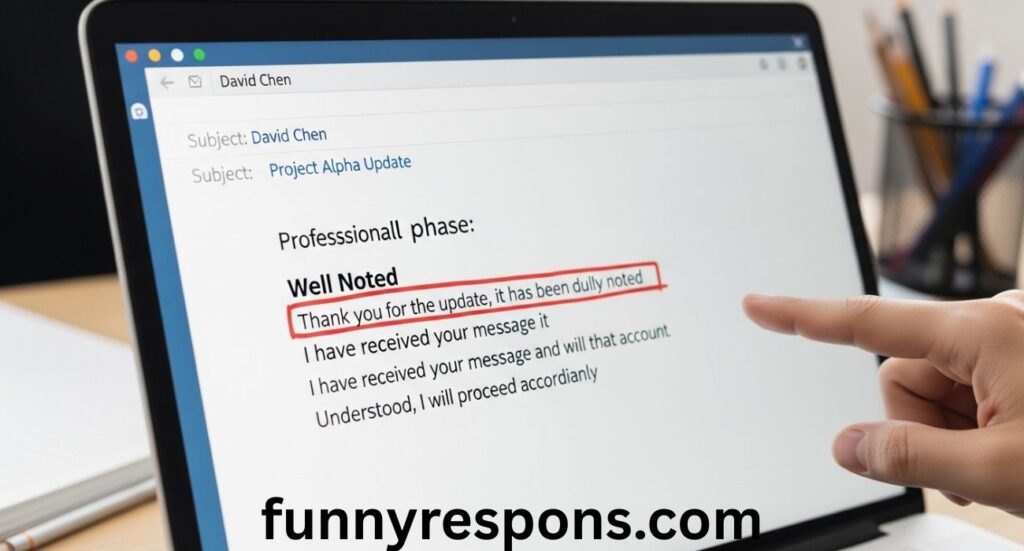
Saying “noted” in email communication can sound too short or unclear in workplace communication. A better approach uses fuller phrases that show understanding and respect. In business communication, clear wording improves email tone and helps avoid confusion. You can say “I have noted your message and will proceed accordingly” to sound more professional and complete in daily corporate communication.
Professional communication works better when you add clarity in emails instead of using one-word replies. Using complete sentences improves email response language and strengthens workplace email responses. In formal writing tone, simple and polite expressions help build trust. This approach supports better communication skills and makes business email wording more effective in real workplace situations.
Well Noted Your Below Email With Thanks
“Well noted your below email with thanks” sounds polite but feels slightly outdated in modern email communication. In workplace communication, it is better to use clearer and smoother sentences. You can say “Thank you for your email, I have noted the details” to improve clarity in emails and sound more natural in business communication.
Good corporate communication focuses on clarity, respect, and smooth flow. Instead of repeating old phrases, use updated email etiquette phrases that improve tone. This helps in professional communication and makes workplace email responses more effective. Simple and clear language strengthens communication skills and improves overall email response language in daily office work.
Well Noted
The phrase “well noted” is commonly used in email communication, but it often feels too short in workplace communication. In business communication, short replies can sound incomplete. A better version is “noted with thanks, I will take care of it,” which improves clarity in emails and makes the message more professional and complete.
In corporate communication, full sentences always improve tone and understanding. Using improved email response language helps build stronger professional communication. Instead of single words, complete phrases show respect and clarity. This approach improves workplace email responses and supports better communication skills in daily professional writing situations.
Well Noted and Will Do Accordingly
“Well noted and will do accordingly” is often used in business communication to confirm action. However, it can sound slightly mechanical in workplace communication. A clearer version is “I have noted your instructions and will proceed accordingly,” which improves clarity in emails and creates a more natural professional tone.
Strong corporate communication focuses on readability and respect. Improving email tone helps your message sound more complete and professional. Better email response language supports clear workplace email responses and avoids confusion. This approach strengthens communication skills and improves overall professional writing style in daily business communication.
How to Reply “Noted” to Boss
Replying “noted” to a boss in email communication should always sound respectful and complete. In workplace communication, short replies may feel too informal. A better option is “acknowledged, I will handle this promptly,” which improves clarity in emails and shows responsibility in business communication.
Professional communication with a boss requires clear and polite wording. Strong email etiquette phrases help improve tone and build trust. Using full sentences instead of one-word replies strengthens corporate communication and improves workplace email responses. This approach also improves communication skills and supports better professional writing in daily office situations.
FAQs
What does “well noted” mean in an email?
“Well noted” means you have received and understood the message. It is used in email communication to confirm acknowledgment in a short and formal way.
Is “well noted” professional in workplace emails?
Yes, “well noted” is professional, but it can feel a bit short. In business communication, fuller phrases often sound clearer and more polite.
What can I say instead of “well noted” in emails?
You can say “acknowledged,” “understood,” or “I’ve noted your request.” These improve email tone and sound more natural in workplace communication.
Should I use “well noted” with my boss or clients?
You can use it, but it’s better to expand it. In corporate communication, a complete sentence sounds more respectful and clearer in email responses.
Conclusion
The phrase well noted plays a small but important role in everyday email communication. It helps you confirm that you have read and understood a message in a clear and simple way. In workplace communication, people often use it to save time while still showing respect. However, it can sound too short in some situations, so adding more words often improves clarity in emails and strengthens professional communication. Good email etiquette helps you build better trust and smoother conversations in business communication.
At the same time, you should not depend only on well noted in professional writing. Many better email response language options exist, and they improve tone and make your message sound more complete. In corporate communication, clear and polite wording always supports better understanding. When you choose the right phrase, you improve communication skills and make your workplace email responses more effective and professional.