ENM Meaning | What Does ENM Mean in Text and Dating?
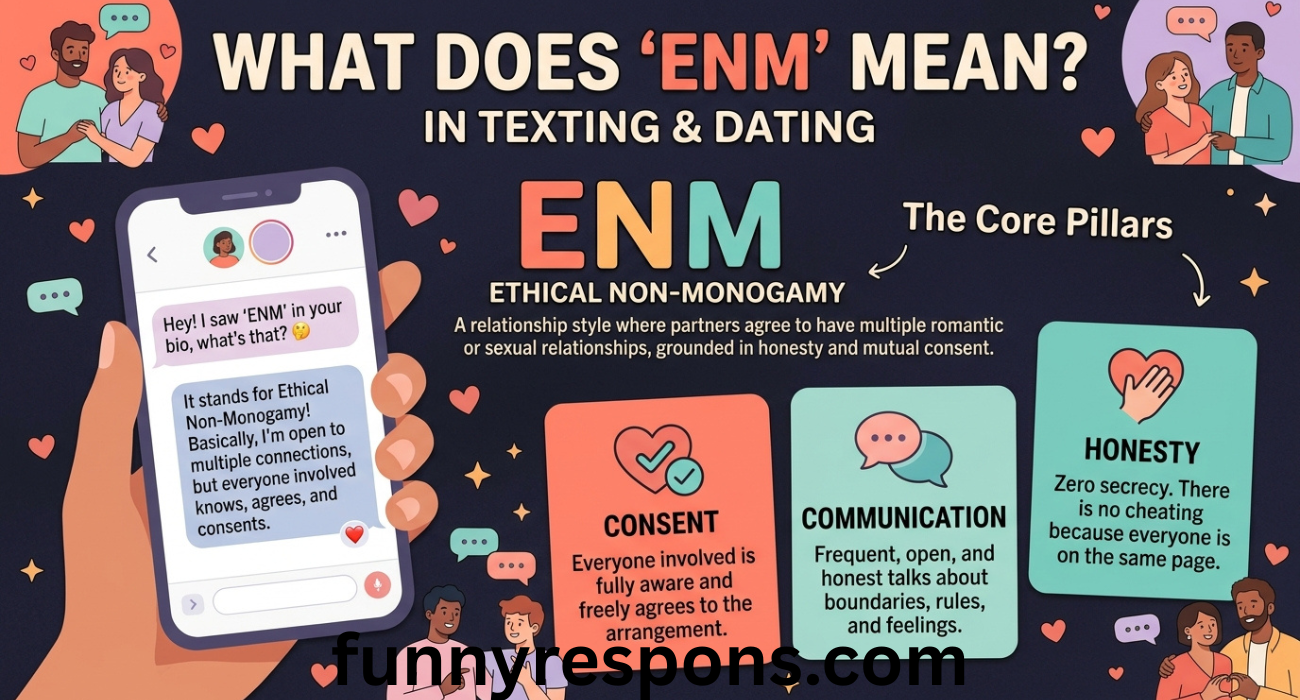
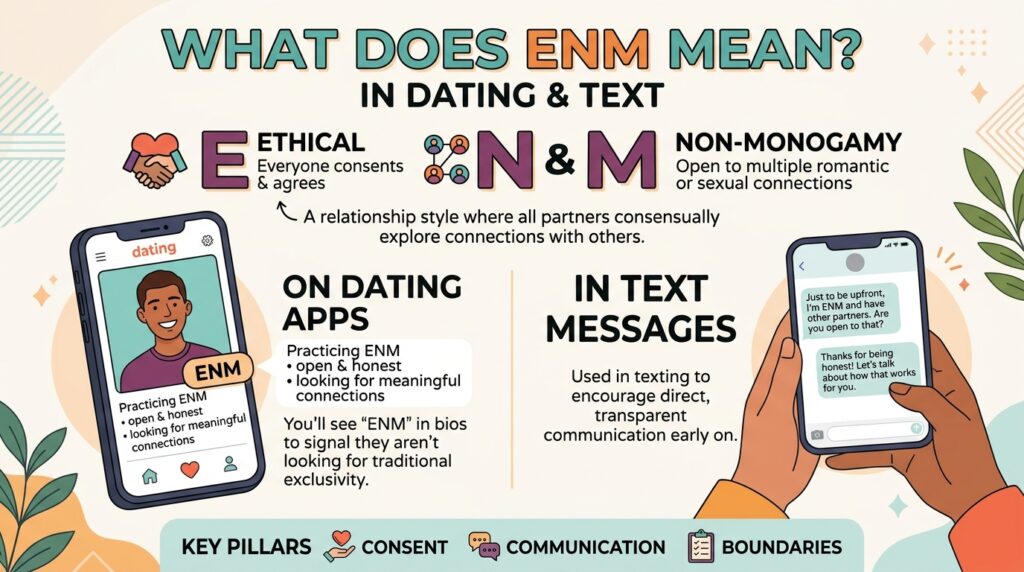
ENM usually stands for ethical non-monogamy, a relationship approach in which everyone involved knows about and agrees to romantic or sexual connections outside an exclusive partnership. It focuses on honesty, informed consent, open communication, and mutually agreed relationship boundaries.
If you see ENM on a dating profile, in a text message, or on social media, the person is often describing their relationship structure or dating preferences. It doesn’t automatically mean someone is cheating, avoiding commitment, or looking for casual sex. The exact meaning depends on the situation and the agreements between the people involved.
What Does ENM Mean?
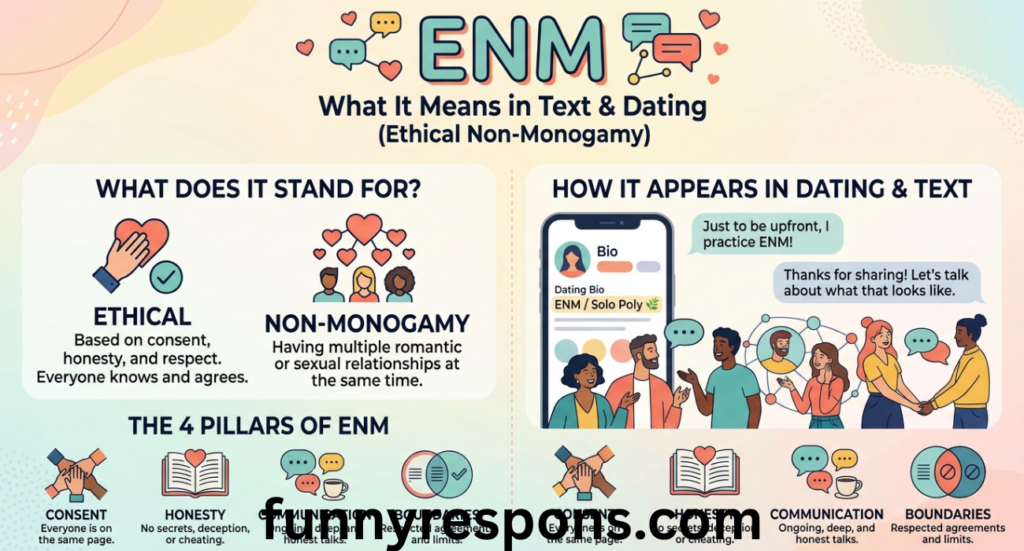
ENM means ethical non-monogamy. It describes a relationship arrangement in which people agree that one or more partners may have romantic or sexual connections with other people. Everyone affected understands the arrangement and gives informed consent.
Traditional monogamous relationships generally involve romantic or sexual exclusivity, depending on the couple’s agreement. An ENM relationship follows a different set of expectations. Partners discuss what is acceptable, establish personal boundaries, and communicate openly about their needs.
The word ethical matters. ENM isn’t simply having multiple partners. It involves honesty, transparency, and respect for everyone’s choices. Secretly seeing someone outside an exclusive relationship without permission isn’t ethical non-monogamy because it violates the existing agreement.
ENM is an umbrella term rather than one specific relationship style. Some people maintain multiple romantic relationships, while others allow sexual connections outside their primary partnership. The arrangement depends on the individuals and the boundaries they establish together.
Read Also : RSVP Meaning | What It Stands For & How to Use It (Complete Guide)
ENM Meaning in Text and Dating
The ENM meaning in text is usually the same as its general meaning: ethical non-monogamy. People use this abbreviation when discussing relationships, explaining their dating preferences, or asking about another person’s approach to commitment.
For example, someone might text, “I’m ENM, so I prefer to be upfront about my relationship structure.” This tells the other person that they practice ethical non-monogamy and want potential partners to understand their situation.
In dating, ENM often helps people identify relationship compatibility early. Someone who practices ENM may be looking for additional romantic connections, sexual partners, or people who are comfortable with a non-exclusive relationship. However, the abbreviation alone doesn’t explain the person’s exact expectations.
You may also encounter ENM in conversations about exclusivity, jealousy, commitment, and relationship boundaries. If someone mentions being ENM, it’s best to ask what that means for them rather than assume every non-monogamous person follows the same rules.
What Does ENM Stand For?
ENM stands for ethical non-monogamy.
Each part of the term describes an important feature of the relationship approach:
- Ethical: Everyone involved deserves honesty, respect, and the freedom to make informed choices.
- Non-monogamy: The relationship doesn’t require complete romantic or sexual exclusivity between partners.
ENM is also described as consensual non-monogamy. Both terms refer to arrangements in which the people involved agree to the relationship structure. Some people prefer ENM because it emphasizes the responsibility and ethical communication involved.
The ENM full form doesn’t specify whether someone has one partner, several partners, or a particular relationship arrangement. It also doesn’t reveal whether they want emotional intimacy, casual sex, long-term commitment, or something else.
If you’re unsure what someone means by ENM, a simple question can help: “What does ethical non-monogamy look like for you?” This invites an honest conversation without making assumptions.
ENM vs. Polyamory: Are They the Same?
ENM and polyamory are related, but they aren’t exactly the same. ENM is the broader term for consensual relationship arrangements that allow some form of non-exclusivity. Polyamory is one type of ENM that involves the possibility of having multiple romantic or loving relationships with the knowledge and consent of everyone involved.
For example, a person in an open relationship may have a committed partner and agree to sexual connections with other people without pursuing additional romantic relationships. A polyamorous person may have multiple romantic partners and build meaningful emotional connections with each of them.
Other forms of ethical non-monogamy include swinging and certain forms of relationship anarchy. These approaches can differ in their expectations, boundaries, and attitudes toward romantic commitment. Not everyone uses the same labels, and individuals may define their relationships differently.
Here’s a simple comparison:
| Term | General meaning |
|---|---|
| ENM | An umbrella term for consensual non-monogamous relationship arrangements |
| Polyamory | The possibility of having multiple romantic or loving relationships |
| Open relationship | A relationship in which partners agree to certain connections outside the partnership |
| Monogamy | A relationship arrangement based on romantic or sexual exclusivity, as agreed by the partners |
| Swinging | An arrangement commonly centered on consensual sexual activities involving other people or couples |
The distinction is useful when discussing relationship compatibility. Someone who identifies as ENM may or may not practice polyamory. If you’re dating that person, ask about their specific arrangement instead of relying on the label alone.
How Context Changes the ENM Meaning
The meaning of ENM usually remains consistent, but its purpose can change with the conversation. On a dating profile, it may describe someone’s relationship preferences. In a private message, it may explain why a person doesn’t seek exclusivity. In an online discussion, it may refer to ethical questions about relationships.
Tone also matters. A person who says, “I’m ENM, and I want to be transparent about that,” is sharing personal information. Someone asking, “Are you open to ENM?” may be checking whether your relationship preferences are compatible.
The abbreviation doesn’t automatically indicate romantic interest, sexual interest, or a desire to start dating. It can be a neutral description of someone’s current relationship structure.
If the message is unclear, consider the wording and the relationship between the speakers. A direct question is usually more reliable than guessing from a short abbreviation.
ENM on Different Platforms
ENM can appear in dating profiles, direct messages, captions, and online communities. The platform may influence why someone uses it, but the abbreviation generally refers to ethical non-monogamy.
Dating Apps
On dating apps, ENM is often included in a profile to communicate relationship preferences before a match begins. Someone might write, “ENM and partnered,” “Looking for ENM-friendly connections,” or “Open to dating people who practice ENM.”
These descriptions can help users identify potential compatibility. However, they don’t necessarily explain the person’s current partners, preferred relationship style, or level of commitment.
If you’re considering dating someone who identifies as ENM, discuss exclusivity, time commitments, emotional expectations, and boundaries before making assumptions. You should also be clear about your own preferences.
Text Messages
In text messages, ENM often appears during conversations about dating, relationships, or personal values. People may use it to explain their circumstances without writing the full phrase every time.
For example:
“Just so you know, I’m ENM. I prefer to mention that before things get serious.”
This message communicates relationship information early. It doesn’t automatically mean the sender is asking for a date or proposing a particular arrangement.
If a friend mentions ENM while talking about their relationship, the abbreviation may simply provide context. You don’t need to treat it as an invitation or a request for personal advice.
Instagram and Social Media
The ENM meaning on Instagram is generally ethical non-monogamy. People may include the abbreviation in their bios, dating-related posts, captions, or discussions about relationship choices.
On TikTok, ENM may appear in videos about dating preferences, polyamory, communication, or relationship boundaries. Some creators explain their experiences, while others discuss common questions and misunderstandings.
Social media posts don’t always provide the full context of someone’s relationship. A person mentioning ENM isn’t necessarily describing every detail of their private life. It’s best to avoid drawing conclusions about their partners, intentions, or commitment based on a short bio or caption.
Group Chats and Online Communities
In group chats and online communities, ENM may appear in conversations about relationship advice, dating compatibility, consent, and communication. People may use it as shorthand when discussing different relationship structures.
For instance, a member of a relationship forum might write, “I’m new to ENM and trying to understand how people establish boundaries.” Here, the abbreviation identifies the topic rather than expressing romantic interest.
Some communities use additional terms related to polyamory, open relationships, and non-exclusive dating. If you encounter unfamiliar language, asking for clarification can prevent confusion and help keep the discussion respectful.
Real Conversation Examples
These original examples show how people might use ENM in everyday conversations. The meaning remains tied to ethical non-monogamy, but the purpose changes depending on the situation.
Example 1: Explaining a dating preference
Person A: “Are you looking for an exclusive relationship?”
Person B: “Not right now. I’m ENM and prefer dating people who understand that.”
Meaning: Person B practices ethical non-monogamy and isn’t necessarily seeking an exclusive relationship.
Example 2: Asking about a dating profile
Person A: “Your profile says ENM. What does that mean for you?”
Person B: “I have a committed partner, and we both agree that we can date other people.”
Meaning: Person B explains their specific relationship agreement.
Example 3: Checking compatibility
Person A: “I’m interested in you, but I’m only comfortable with monogamy.”
Person B: “Thanks for being honest. I practice ENM, so we might want different things.”
Meaning: Both people recognize a possible difference in relationship preferences.
Example 4: Discussing a friend
Person A: “My friend said she’s ENM. Is that the same as polyamory?”
Person B: “Not necessarily. Polyamory is one form of ethical non-monogamy.”
Meaning: The conversation distinguishes the broader term from one specific relationship style.
Example 5: Clarifying an online comment
Person A: “Someone commented ‘open to ENM’ under a dating post. What are they saying?”
Person B: “They may be open to ethical non-monogamous relationships, but you’d need to ask what they mean specifically.”
Meaning: The commenter is expressing a possible relationship preference, although the exact arrangement remains unclear.
Example 6: Setting a personal boundary
Person A: “Would you consider dating someone who’s ENM?”
Person B: “I respect that choice, but I prefer an exclusive relationship.”
Meaning: Person B communicates a personal preference without criticizing the other person’s relationship style.
Is ENM Rude or Offensive?
No. ENM isn’t inherently rude or offensive. It’s a neutral abbreviation for ethical non-monogamy, and people often use it to communicate relationship preferences clearly.
However, the way someone discusses ENM can affect how a message comes across. Using the term respectfully to describe your own relationship is different from using it to mock someone else’s choices. The abbreviation itself isn’t an insult.
Some people may feel uncomfortable with non-monogamous relationships because they prefer exclusivity or hold different personal values. That disagreement doesn’t make the term offensive. People can have different relationship preferences without disrespecting one another.
If someone tells you they’re ENM, you can ask questions if you’re genuinely interested. You can also explain that you’re looking for a monogamous relationship. A respectful response acknowledges the difference without pressuring either person to change.
Is ENM Flirty?
ENM isn’t inherently flirty. It describes a relationship structure, not a romantic signal or an expression of attraction.
On a dating app, mentioning ENM may help someone find people whose relationship preferences are compatible with theirs. In that setting, it can be part of a conversation that leads to dating, but the abbreviation alone doesn’t prove that someone is flirting with you.
In a casual text, the meaning depends on the surrounding message. For example, “I’m ENM, in case that’s relevant to you” may be an attempt to communicate openly. It could be relevant to a developing romantic connection, but it isn’t necessarily a direct invitation.
Look at the full conversation before interpreting the message. If you want to know whether someone is interested in you, ask about their intentions rather than assuming ENM means they’re making a move.
How to Reply to ENM
The best way to reply to ENM depends on your interest, your relationship preferences, and what the other person has said. You don’t need to understand every detail of ethical non-monogamy before responding. A clear, respectful message is a good starting point.
If You Want Clarification
If you’re unfamiliar with ENM or want to understand someone’s relationship structure, ask an open and respectful question.
You could say:
- “Thanks for sharing. What does ENM mean for you?”
- “Can you explain how your relationship works?”
- “Are you looking for romantic connections, sexual connections, or both?”
- “What boundaries do you usually discuss with a potential partner?”
These questions can help you understand the person’s expectations without assuming that all ENM relationships work alike. Ask only what you need to know to decide whether you’re comfortable with the situation.
If You’re Interested
If you’re open to dating someone who practices ENM, express your interest while discussing compatibility honestly.
Possible replies include:
- “Thanks for being upfront. I’d like to understand more about your relationship preferences.”
- “I’m open to learning about ENM. What are you looking for?”
- “I’m interested, but I’d like to discuss expectations and boundaries first.”
- “I appreciate your honesty. How do you approach commitment in your relationships?”
Being interested doesn’t mean you must agree to every arrangement. You can take time to understand the person’s expectations, communicate your own boundaries, and decide whether the relationship is right for you.
If ENM Isn’t for You
You can decline respectfully if you prefer monogamy or don’t feel comfortable with a non-exclusive relationship.
For example:
- “Thanks for telling me. I’m looking for a monogamous relationship.”
- “I respect your preferences, but I don’t think we’re compatible.”
- “I appreciate your honesty. ENM isn’t the right fit for me.”
- “I’m glad we discussed this early. I think we want different things.”
You don’t need to criticize someone’s relationship choices or provide a long explanation. Relationship compatibility depends on both people being comfortable with the arrangement. A polite, direct answer helps everyone understand where they stand.
When to Use ENM
Use ENM when you want to discuss ethical non-monogamy clearly and efficiently. It’s particularly useful in dating conversations, online profiles, relationship discussions, and communities where people understand the abbreviation.
Common situations include:
- Dating profiles: To communicate that you practice ethical non-monogamy or are open to dating people who do.
- Early dating conversations: To explain your relationship structure before expectations become unclear.
- Relationship discussions: To talk about consent, boundaries, exclusivity, and commitment.
- Online communities: To discuss non-monogamous relationships without repeatedly writing the full phrase.
- Compatibility conversations: To identify whether two people want similar relationship arrangements.
For example, “I’m ENM and value open communication” gives a potential partner useful information about your dating preferences. However, the abbreviation shouldn’t replace a conversation about what you want from a relationship.
Use the term accurately and explain your personal circumstances when necessary. People may understand ENM as a general concept but still have questions about your specific arrangement.
When to Avoid ENM
Although ENM is useful in the right setting, the abbreviation may confuse people who haven’t encountered it before. In those situations, writing out “ethical non-monogamy” can make your meaning clearer.
Avoid relying on ENM alone in formal documents, professional correspondence, or conversations where the abbreviation isn’t relevant. If you’re explaining your relationship preferences to someone unfamiliar with the term, introduce the full phrase first.
You should also avoid using ENM as a substitute for informed consent. Calling a relationship ethical doesn’t automatically make it so. Everyone involved needs to understand the arrangement and agree to the relevant boundaries.
Don’t assume someone is ENM because they have multiple partners, and don’t label another person’s relationship without understanding their circumstances. People may have different agreements, and outsiders may not know the full details.
Finally, avoid using the abbreviation to pressure someone into accepting a non-exclusive arrangement. Ethical non-monogamy depends on genuine agreement, not persuasion that disregards personal boundaries.
Common Mistakes About ENM
People sometimes misunderstand ENM because they assume every non-monogamous relationship follows the same rules. In reality, the term covers different arrangements, and each person’s expectations may be different.
Common mistakes include:
- Confusing ENM with cheating: Ethical non-monogamy involves informed consent and agreed boundaries. Cheating generally involves violating relationship agreements or hiding relevant behavior.
- Assuming ENM always means polyamory: Polyamory is one form of ENM, but not everyone who practices ENM seeks multiple romantic relationships.
- Thinking ENM means avoiding commitment: People can form committed, long-term relationships while practicing ethical non-monogamy.
- Assuming every ENM relationship allows the same activities: Partners establish their own agreements. One couple’s boundaries may differ from another’s.
- Treating ENM as a flirtatious message: The abbreviation describes a relationship approach. It doesn’t automatically indicate attraction or sexual interest.
- Believing ENM means there are no rules: Healthy non-monogamous relationships can include clear expectations, boundaries, and commitments.
- Assuming everyone must accept ENM: People can respect non-monogamy while choosing exclusive relationships for themselves.
Understanding these differences helps you interpret ENM more accurately. Rather than guessing, ask what the term means in the person’s particular situation.
Read Also : Sapiosexual Meaning | What Does Sapiosexual Mean?
Similar Terms to ENM
Several relationship terms overlap with ENM, but they don’t all mean the same thing. Understanding the differences can help you follow dating conversations and recognize what someone is describing.
- Consensual non-monogamy (CNM): A broad term for relationship arrangements in which the people involved agree to some form of non-exclusivity. It’s closely related to ENM.
- Polyamory: A relationship approach that allows for multiple romantic or loving connections with everyone’s knowledge and consent.
- Open relationship: An arrangement in which partners agree to certain romantic or sexual connections outside their partnership. The permitted activities depend on their agreement.
- Monogamy: A relationship structure based on romantic or sexual exclusivity, according to the partners’ expectations.
- Swinging: A relationship arrangement commonly involving consensual sexual activities with other people or couples.
- Relationship anarchy: An approach that emphasizes defining relationships according to the needs and agreements of the people involved rather than automatically following conventional relationship hierarchies.
- Exclusive dating: A dating arrangement in which people agree not to pursue other romantic or sexual connections, depending on what they have defined as exclusivity.
These terms describe different approaches to relationships, and people may use them in slightly different ways. If a label matters to you when dating someone, discuss what it means to that person instead of relying on the term alone.
Origin and Use of ENM
ENM is an abbreviation formed from the words ethical non-monogamy. It is used to describe consensual relationships that don’t follow conventional expectations of romantic or sexual exclusivity.
The term combines two ideas: non-monogamy describes a relationship structure that permits some form of non-exclusivity, while ethical emphasizes honesty, consent, and respect for agreed boundaries. Together, the words distinguish consensual arrangements from secret behavior that breaks an existing relationship agreement.
ENM is now recognizable in conversations about dating preferences, relationship structures, and personal boundaries. People may use it in dating profiles, text messages, social media bios, and discussions about polyamory or open relationships.
The abbreviation is especially useful when people want to communicate their relationship preferences briefly. However, the full phrase may be clearer when speaking with someone unfamiliar with the terminology.
The precise arrangement behind the label can vary from person to person. Understanding someone’s expectations requires communication rather than assumptions based on the abbreviation.
How Does an ENM Relationship Work?
An ENM relationship works through honesty, mutual agreement, and clear communication. Partners discuss whether they can date other people, form romantic connections, or have sexual relationships outside their existing partnership. Each person has the opportunity to express their needs and establish boundaries before making decisions about the relationship.
The exact arrangement varies between couples. Some prioritize emotional connections, while others focus on sexual freedom. Regular conversations help partners manage expectations, address concerns, and maintain trust. Ethical non-monogamy doesn’t eliminate commitment; it allows people to define commitment together.
What Does ENM Mean on a Dating Profile?
On a dating profile, ENM usually means the person practices ethical non-monogamy or seeks relationships that allow consensual non-exclusivity. They may already have a committed partner while remaining open to dating others. The label helps potential matches understand their relationship preferences before starting a conversation.
However, an ENM dating profile doesn’t explain every detail of someone’s relationship. It may not specify whether they practice polyamory, prefer casual dating, or seek long-term connections. If you’re interested, ask about their expectations, existing commitments, and relationship boundaries to determine compatibility.
Can You Have a Serious Relationship While Practicing ENM?
Yes, people can build serious, committed relationships while practicing ethical non-monogamy. ENM doesn’t automatically mean avoiding emotional intimacy, rejecting long-term commitment, or refusing to prioritize a partner. Some people maintain lasting partnerships while agreeing to additional romantic or sexual connections with others.
Commitment in an ENM relationship depends on the agreements between the people involved. Partners may discuss time, emotional availability, communication, and personal boundaries. A healthy arrangement requires honesty and mutual respect, just like any other relationship. What matters most is whether everyone’s expectations align.
What Are the Rules of an ENM Relationship?
ENM relationships don’t follow one universal set of rules. Partners create their own agreements based on their needs, comfort levels, and relationship goals. These agreements may cover dating other people, sexual health, emotional connections, privacy, time management, and how much information partners share with each other.
Clear boundaries help prevent misunderstandings, but they should reflect genuine consent rather than pressure or control. Partners may revisit their agreements as circumstances change. Open communication is essential because an arrangement that works for one couple may not suit another. Everyone involved should feel heard and respected.
How Do You Know If ENM Is Right for You?
ENM may suit you if you’re comfortable discussing relationship expectations, respecting personal boundaries, and considering consensual connections outside an exclusive partnership. You should also feel able to communicate your needs honestly and accept that your partner may develop connections with other people.
However, you don’t need to choose ENM to be open-minded or respectful. If you prefer romantic exclusivity, monogamy may better match your values and expectations. Consider your emotional needs, comfort with non-exclusivity, and relationship goals before making a decision. The right relationship structure is one that everyone involved freely accepts.
Quick Recap
ENM means ethical non-monogamy. It describes relationship arrangements in which everyone involved knows about and consents to romantic or sexual connections outside an exclusive partnership. Honesty, informed consent, open communication, and mutually agreed boundaries are central to the concept.
When you see ENM in a text, dating profile, or social media post, the person is usually describing their relationship structure or dating preferences. The abbreviation isn’t automatically rude, offensive, or flirty, and it doesn’t necessarily mean someone practices polyamory.
ENM can include different relationship styles, such as open relationships and polyamorous relationships. Each arrangement may have its own expectations and boundaries.
If someone tells you they’re ENM, ask what that means for them if you need clarification. You can express interest, ask about compatibility, or explain that you prefer monogamy. The goal is honest communication and mutual respect, even when two people want different kinds of relationships.
FAQs
What Does ENM Mean in Dating?
ENM means ethical non-monogamy, where partners agree they can have romantic or sexual connections with other people.
What Does V Mean in Dating?
A V relationship involves three people, with one person connected romantically to the other two, who may not be romantically involved with each other.
What’s the Difference Between ENM and Poly?
ENM is the broad term for consensual non-monogamous relationships, while poly usually refers to having multiple romantic relationships.
Is ENM the Same as Swinging?
No, ENM includes different relationship styles, while swinging usually focuses on consensual sexual experiences with others.
Conclusion
ENM means ethical non-monogamy, a relationship approach in which everyone involved agrees that romantic or sexual connections with other people are allowed. The ENM meaning in text and dating usually relates to relationship preferences, mutual consent, honesty, and personal boundaries. It can include different arrangements, such as open relationships and polyamory, but each relationship has its own expectations.
When someone mentions ENM on a dating profile, in a text message, or on social media, consider the context before interpreting their intentions. The term isn’t automatically rude, offensive, or flirty. If you’re unsure what someone means, ask respectfully about their relationship preferences. You can also explain your own boundaries clearly. Understanding ENM helps you communicate openly and recognize relationship compatibility without making assumptions.