Hubris Meaning | Definition, Examples, and Context
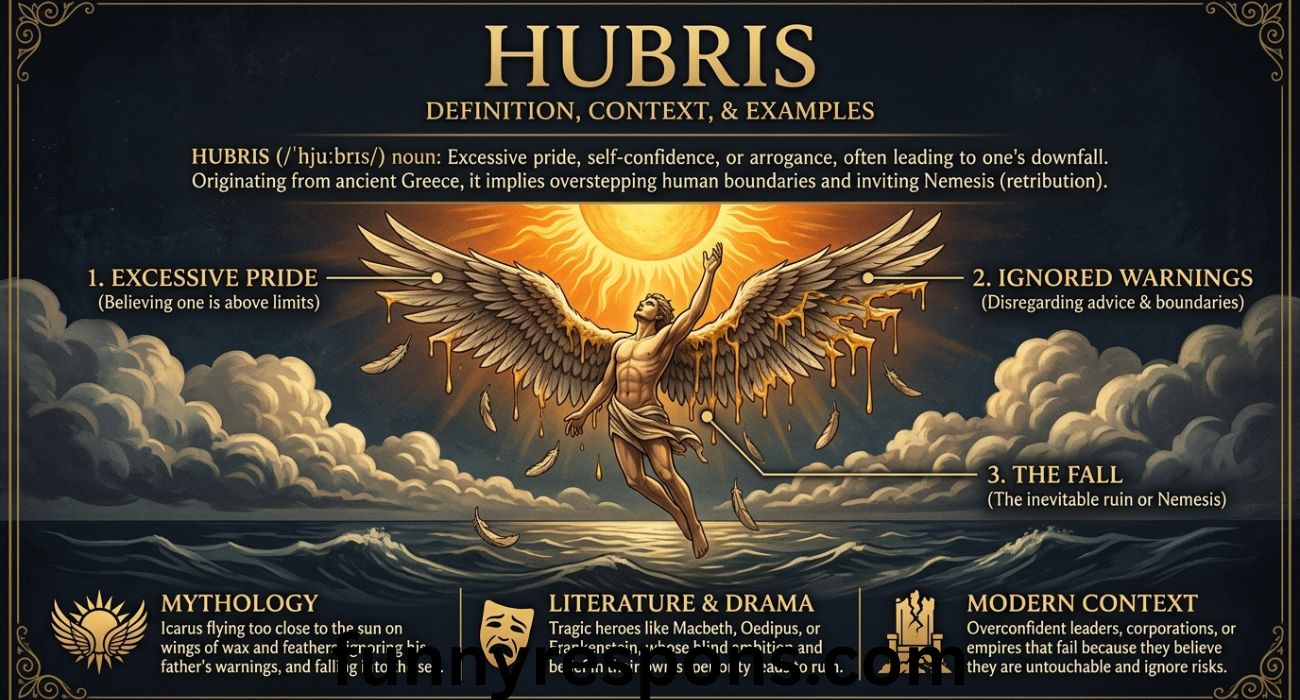
The hubris meaning refers to excessive pride or overconfidence that makes someone believe they are better, smarter, or more powerful than they really are. A person showing hubris may ignore advice, dismiss criticism, or assume they cannot fail. This attitude can lead to poor decisions and serious mistakes.
The word often describes people who think too highly of themselves and underestimate the risks of their actions. You might encounter it in everyday conversations, workplace discussions, political commentary, books, or movies. Unlike healthy confidence, hubris often involves an inflated sense of superiority and a refusal to recognize personal limitations.
For example, if a manager believes nobody can challenge their decisions and ignores warnings from experienced employees, someone might describe that behavior as hubris. The word usually carries a negative meaning because it suggests that excessive pride has affected a person’s judgment.
What Does Hubris Mean?

Hubris means excessive pride, arrogance, or overconfidence, especially when someone believes they are above criticism or ordinary limits. It describes an attitude in which a person’s confidence becomes unreasonable and causes them to underestimate other people, risks, or consequences.
In simple English, hubris is what happens when someone becomes so proud of their abilities that they stop recognizing their weaknesses. A confident person can accept feedback and admit mistakes. Someone displaying hubris may believe they are always right, even when clear evidence suggests otherwise.
For example, imagine a business owner who refuses to listen to employees because they believe their experience makes them incapable of making mistakes. If that attitude leads to poor decisions, it may be described as hubris.
The word is more common in formal English, literature, news analysis, and serious discussions than in casual texting. However, people can also use it in everyday conversation when they want to describe excessive pride or misplaced confidence.
Read Also : ENM Meaning | What Does ENM Mean in Text and Dating?
The Main Hubris Meaning Explained
The main idea behind hubris is pride that goes beyond reasonable self-confidence. It involves an exaggerated belief in one’s own importance, abilities, or authority. This belief can make someone ignore helpful advice, underestimate challenges, or treat other people as less capable.
Hubris is not simply feeling proud after accomplishing something difficult. Pride can be healthy when it comes from genuine effort, personal growth, or success. Hubris develops when pride becomes excessive and begins to affect a person’s behavior or judgment.
Consider these examples:
- Healthy confidence: “I’ve prepared well for this presentation, so I feel ready.”
- Overconfidence: “I know the material so well that I probably don’t need to practice.”
- Hubris: “Nobody here is qualified to question me, and there’s no chance my presentation could fail.”
The third example shows an inflated sense of superiority. The person doesn’t just trust their abilities; they dismiss the possibility of being wrong.
Hubris can also involve ignoring warnings and disregarding consequences. Someone may believe their reputation, intelligence, wealth, or position protects them from failure. When reality challenges that belief, their decisions can lead to embarrassment, conflict, or a major setback.
In short, hubris describes excessive pride that interferes with sound judgment. It often appears when someone stops learning from others because they believe they already know everything.
How Context Changes the Meaning
The basic definition of hubris remains the same, but the situation determines what the speaker wants to emphasize. In one conversation, it may describe a friend’s boastful attitude. In another, it may criticize a leader who ignores important warnings.
The word is not typical casual slang, and it doesn’t have a special, widely established meaning on TikTok or other social media platforms. When someone uses it online, they generally mean excessive pride, arrogance, or an unrealistic belief in their own superiority.
1. Everyday conversation
In everyday conversation, hubris describes someone acting as if they are too talented, intelligent, or important to make mistakes. It can refer to a person who constantly brags, refuses to accept advice, or believes ordinary rules don’t apply to them.
For example, a friend might say, “His hubris got in the way of a perfectly good plan.” This means his excessive pride prevented him from making a sensible decision.
The word sounds more formal than arrogance or being full of yourself. People may use it to make a criticism sound precise, especially when someone’s pride has caused a problem. In casual conversations, however, simpler words often sound more natural.
2. Workplace discussions
At work, hubris can describe a manager, executive, or employee who overestimates their abilities and ignores useful feedback. It may appear when someone dismisses colleagues’ concerns, takes unnecessary risks, or assumes their professional reputation guarantees success.
For example, a team leader might reject a coworker’s warning about a project deadline because they believe their experience makes them better at planning. If the project fails because the warning was ignored, the decision may be described as an example of hubris.
In professional discussions, the word can highlight a leadership problem rather than a simple personality difference. It suggests that excessive self-confidence has affected decision-making and prevented someone from considering other perspectives.
3. Literature or storytelling
In literature, hubris often describes a character whose excessive pride contributes to their downfall. The character may believe they are invincible, challenge powerful forces, or ignore warnings because they consider themselves superior to others.
Hubris has a particularly strong connection to Greek tragedy. In these stories, a character’s pride, ambition, or refusal to recognize limits can help bring about a tragic ending. The exact role of hubris varies by story, but it often reveals a gap between what a character believes and what they can actually control.
For example, a fictional king might believe his power makes him untouchable. He ignores repeated warnings and makes increasingly reckless choices until he loses his kingdom. His downfall illustrates the consequences of excessive pride.
Writers use hubris to develop characters, create conflict, and show how personal weaknesses can lead to serious mistakes.
4. Political or public commentary
In political commentary, hubris often describes a public figure who believes their authority or popularity makes them immune to criticism. It can also refer to a government or organization that assumes its power guarantees success.
For instance, a commentator might write, “The administration’s hubris led it to dismiss warnings from its own advisers.” The statement criticizes the administration’s excessive confidence and unwillingness to consider risks.
This use can carry a strong negative tone because it suggests that pride affected important decisions. However, calling something hubris is still an interpretation. To judge whether the criticism is fair, readers should consider the person’s actions, available evidence, and the circumstances surrounding the decision.
Is Hubris the Same as Arrogance?
Hubris and arrogance are closely related, but they are not always interchangeable.
Arrogance means having an exaggerated sense of one’s own importance or abilities, often accompanied by disrespect toward others. Hubris usually emphasizes excessive pride or overconfidence that leads someone to ignore limits, underestimate risks, or make poor decisions.
For example, a person who constantly interrupts others because they believe their opinions matter more may be described as arrogant. A company executive who believes their judgment is flawless, ignores repeated warnings, and makes a disastrous business decision may be described as displaying hubris.
The main difference is the emphasis. Arrogance often describes a person’s attitude toward themselves and other people. Hubris frequently highlights the dangerous consequences of excessive pride.
| Term | Meaning | Example |
|---|---|---|
| Hubris | Excessive pride that can lead to poor judgment or a downfall | The CEO’s hubris led him to ignore the risks. |
| Arrogance | An attitude of superiority toward others | Her arrogance made teamwork difficult. |
| Overconfidence | Believing too strongly in your abilities or chances of success | His overconfidence caused him to skip practice. |
| Pride | Satisfaction in your achievements, identity, or qualities | She felt pride in her work. |
| Self-assurance | A reasonable belief in your abilities | He answered the questions with self-assurance. |
These terms can overlap. An arrogant person may also display hubris, but the word hubris is especially useful when excessive pride contributes to a serious mistake or failure.
Real Conversation Examples
The following examples show how people might use hubris in everyday conversations, at work, and when discussing public behavior. The word often sounds serious or analytical, so its tone may be stronger than a simpler term such as overconfidence.
1: Friends
Alex: “Why did Jordan enter the tournament without practicing?”
Taylor: “He thought he was better than everyone else. Honestly, it was hubris.”
Meaning: Taylor believes Jordan’s excessive confidence made him underestimate his competition. The word suggests that his pride affected his judgment.
Another example:
Mia: “She turned down everyone’s advice and then complained when her plan failed.”
Noah: “That’s what happens when hubris takes over.”
Here, hubris means excessive pride that prevents someone from listening to others. The speaker is criticizing the person’s attitude, not simply saying they made an ordinary mistake.
2: Workplace
Employee A: “The director approved the launch without reviewing the safety concerns.”
Employee B: “That sounds like hubris. He assumed everything would work because the earlier projects succeeded.”
Meaning: The employee believes the director’s previous success created too much confidence. Instead of evaluating the risks, he relied on his belief that he could not fail.
A second example:
Manager: “We lost the client after rejecting their feedback.”
Colleague: “Maybe our hubris made us think we knew their needs better than they did.”
This use connects hubris with poor communication and an unwillingness to accept criticism.
3: Social commentary
Post: “Thinking your popularity makes you immune to consequences is pure hubris.”
Meaning: The writer is criticizing someone who believes their public image or influence protects them from accountability.
Another example:
Comment: “The team’s hubris was its biggest weakness. They treated every warning as an insult.”
The commenter suggests that excessive pride prevented the team from learning from others. In social media posts, the word often appears in serious criticism, discussions of leadership, or commentary about public behavior.
Is Hubris Rude or Insulting?
Hubris is not a swear word or inherently offensive term, but it can sound insulting when used to describe a person’s behavior. It usually carries a critical tone because it suggests that someone has too much pride or an inflated sense of superiority.
For example, saying “Your decision showed hubris” criticizes a particular action. Saying “You’re full of hubris” makes the criticism more personal by suggesting that excessive pride is part of the person’s character.
The setting also matters. In a formal review, essay, or political analysis, the word may sound thoughtful and precise. During a heated argument, it can sound harsh or condescending.
If someone uses the word about you, don’t assume they are attacking your entire personality. They may be criticizing a specific decision or your response to advice. The surrounding conversation can help you understand their intent.
If you want to describe the same concern more gently, you could say, “I think you may be underestimating the risks” or “You seem very confident, but we should consider the other possibilities.”
Is Hubris Always Negative?
Hubris generally has a negative connotation in modern English. It describes excessive pride or confidence that goes beyond reasonable limits, often with an implication of poor judgment. However, the word’s use does not automatically prove that a person has made a mistake or will experience a downfall.
For example, a person may describe a competitor’s ambitious plan as hubris because they think it is unrealistic. That description reflects the speaker’s judgment. Whether the plan is actually unreasonable depends on the evidence.
It is also useful to distinguish hubris from healthy confidence. Believing you can achieve a difficult goal is not hubris by itself. Neither is feeling proud after working hard or trusting your professional skills.
The problem arises when confidence becomes so excessive that someone refuses to consider criticism, ignores important limitations, or dismisses real risks. In that situation, hubris can contribute to poor decisions.
In literature, hubris may serve a specific storytelling purpose by showing a character’s flaw before their downfall. In everyday speech, it more often describes excessive pride or misplaced confidence in a real situation.
How to Use Hubris Correctly
Use hubris when you want to describe excessive pride, arrogance, or overconfidence that affects someone’s judgment. The word works especially well in essays, workplace analysis, literary discussions, and commentary about leadership or decision-making.
You can use it as a noun in sentences such as:
- “His hubris prevented him from accepting constructive criticism.”
- “The company’s success eventually turned into hubris.”
- “She recognized the hubris behind her earlier decision.”
- “The novel explores how hubris can destroy a powerful leader.”
These examples show how the word can describe a person’s attitude, a group’s behavior, or a theme in a story. You can also use the adjective hubristic to describe behavior marked by excessive pride or overconfidence. For instance, “His hubristic attitude made collaboration difficult.”
Appropriate uses
Hubris is appropriate when excessive pride is central to the situation. It can help you explain why a person dismissed advice, underestimated a challenge, or believed they were beyond failure.
Common situations include:
- Workplace analysis: “The executive’s hubris led him to ignore the team’s concerns.”
- Literary discussion: “The hero’s hubris contributes to his eventual downfall.”
- Political commentary: “Critics viewed the decision as an act of hubris.”
- Everyday conversation: “His hubris stopped him from admitting he needed help.”
The word is most effective when the situation involves more than ordinary confidence. It suggests that pride has become unreasonable or has interfered with sensible judgment.
When to avoid it
Avoid using hubris when you simply mean that someone feels proud, confident, or happy about an achievement. Those feelings are not automatically excessive or harmful.
For example, “I’m proud that I passed the exam” does not suggest hubris. The person is expressing satisfaction with a real accomplishment.
The word may also sound unnecessarily formal in a casual text. If a friend asks why someone keeps bragging, saying “He’s being arrogant” will usually sound more natural than saying “He’s displaying hubris.”
Finally, avoid using the word as a substitute for evidence. Someone who disagrees with you is not necessarily arrogant, and someone who makes a mistake does not automatically display hubris. Consider the person’s behavior and reasoning before applying the label.
How to Describe Hubris in Different Situations
You can describe hubris in several ways depending on the situation and the point you want to make. The following phrases help explain the behavior without repeating the same word.
| Situation | Natural description |
|---|---|
| Someone refuses advice | “Their pride prevented them from listening.” |
| A leader ignores risks | “The leader’s overconfidence affected the decision.” |
| A person acts superior | “They have an inflated sense of their own importance.” |
| A team assumes it cannot fail | “The team underestimated the challenge.” |
| A character causes their own downfall | “Their excessive pride contributed to their downfall.” |
| Someone dismisses criticism | “They believe they are above being questioned.” |
| A person takes unnecessary risks | “Their misplaced confidence led them to disregard the consequences.” |
These descriptions can help you communicate the meaning of hubris more clearly. For example, in a professional report, “The decision reflected excessive confidence and a failure to consider known risks” may be more useful than simply writing “The decision showed hubris.”
The more specific wording explains what went wrong and why it matters.
How to Reply When Someone Says “Hubris”
If someone uses the word hubris during a conversation, your reply should depend on whether they are criticizing you, making a joke, or expressing an opinion you disagree with. You don’t need to respond defensively just because the word sounds negative.
If They Are Criticizing You
If someone says your decision showed hubris, ask what behavior they mean. This helps you understand whether they are concerned about your confidence, your response to advice, or the risks you took.
You could reply:
- “What makes you think I was being overconfident?”
- “I understand your concern. Which part of my decision seemed unreasonable?”
- “I’ll consider that. I don’t want confidence to stop me from seeing the risks.”
- “I was confident in the plan, but I’m willing to review the feedback.”
These replies acknowledge the criticism without automatically agreeing with it. If the person points out a genuine problem, you can use their feedback to improve your judgment. If their criticism is vague, asking for a specific example can make the conversation more productive.
If They Are Joking
Sometimes friends use formal words like hubris humorously to tease someone who is bragging or acting overly confident. In that situation, a light response may fit better than a serious explanation.
For example:
Friend: “Your hubris is impressive. You haven’t even started the assignment yet.”
You: “Fair point. Maybe I should finish it before celebrating.”
Other possible replies include:
- “A little confidence never hurt anyone.”
- “All right, I’ll admit I might be getting ahead of myself.”
- “Let’s see if my confidence survives the results.”
The relationship and tone matter. If the comment feels friendly and playful, humor can keep the conversation relaxed. If it sounds hostile, you don’t have to treat it as a joke.
If You Disagree
You may disagree with someone who describes your behavior as hubris. Perhaps you believe your confidence comes from preparation rather than a sense of superiority. You can explain your reasoning without insulting the other person.
For example:
Colleague: “You rejected that suggestion out of hubris.”
You: “I understand why it looked that way, but I rejected it because the data didn’t support it. I’m open to reviewing other evidence.”
You could also say, “I don’t think confidence and hubris are the same thing” or “I agree that we should consider the risks, but I don’t believe the decision was based on excessive pride.”
A clear response focuses on actions, evidence, and reasoning. It is more useful than turning the discussion into an argument about who is more intelligent or capable.
When to Use the Word Hubris

Use hubris when you want to emphasize the connection between excessive pride and poor judgment. It is particularly suitable for situations where someone overestimates their abilities, dismisses warnings, or believes they are beyond ordinary limits.
The word works well in formal writing, essays, news analysis, leadership discussions, and conversations about books or movies. It can also add precision to everyday speech when a simpler word does not fully capture the problem.
For example, “The founder’s hubris caused him to ignore customer complaints” suggests that his inflated confidence affected his business decisions. The sentence says more than simply stating that he was proud or ambitious.
Hubris can also describe a broader pattern of behavior. A person who repeatedly dismisses advice because they believe they know better may show hubris over time.
Choose the word when the situation supports its stronger meaning. If you only want to describe someone who feels confident, use self-assured. If you mean someone who treats others as inferior, arrogant may be more precise.
Read Also : RSVP Meaning | What It Stands For & How to Use It (Complete Guide)
When to Avoid Hubris
Avoid using hubris when a simpler or more accurate word communicates your meaning. Because it usually implies excessive pride and flawed judgment, using it for ordinary confidence can make your statement sound unfair or exaggerated.
For example, describing a student as hubristic simply because they volunteer to answer a difficult question may be unjustified. The student might be well prepared rather than overconfident.
The word can also sound overly formal in casual messages. If you’re texting a friend about someone who keeps bragging, “He’s acting arrogant” will usually sound more natural.
Be careful when discussing real people, especially in professional or public settings. Labeling someone as displaying hubris is an interpretation of their behavior, not an objective fact in every situation. Explain what they did and why you think excessive pride influenced their decision.
A specific description is often clearer and fairer than a broad judgment about someone’s character.
Common Mistakes About Hubris
Several misunderstandings can make people use the word incorrectly.
- Confusing hubris with healthy confidence: Confidence means trusting your abilities. Hubris involves excessive pride or overconfidence that can distort judgment.
- Treating hubris and arrogance as identical: The words overlap, but arrogance often emphasizes a superior attitude toward others, while hubris often highlights excessive pride and its consequences.
- Assuming every mistake shows hubris: People make mistakes for many reasons, including limited information, bad luck, or poor planning. Hubris is more specifically connected to excessive pride or overconfidence.
- Using hubris to mean ambition: Wanting success or pursuing a challenging goal does not automatically indicate hubris. The word suggests an unreasonable attitude toward one’s abilities or limits.
- Assuming the term is always a personal insult: It can criticize behavior, a decision, a leadership style, or a fictional character. Context determines how personal or harsh it sounds.
- Thinking hubris is internet slang: It is an established English word, not a term limited to texting or social media. Online users generally use its standard meaning.
- Confusing pride with superiority: Feeling proud of an accomplishment is normal. Hubris suggests that pride has become excessive or has affected someone’s judgment.
Understanding these differences helps you use the word accurately and recognize what another person means when they use it.
Hubris vs. Similar Terms
Hubris shares meaning with several words related to pride, confidence, and self-importance. However, each term has a slightly different emphasis.
| Word | Definition | Main difference from hubris |
|---|---|---|
| Arrogance | An attitude of superiority or exaggerated self-importance | Often focuses on how someone treats others. |
| Pride | Satisfaction in one’s achievements, qualities, or identity | Can be healthy or unhealthy. |
| Overconfidence | Excessive belief in one’s abilities or chances of success | Focuses on confidence that exceeds what the situation justifies. |
| Conceit | An exaggerated opinion of one’s own abilities or attractiveness | Often emphasizes excessive self-admiration. |
| Vanity | Excessive concern with one’s appearance, qualities, or achievements | Often centers on admiration and recognition. |
| Egotism | Excessive focus on oneself and one’s importance | Emphasizes self-centeredness. |
| Presumption | Acting as if you have a right or authority that may not be justified | Focuses on unwarranted assumptions or actions. |
| Self-assurance | Confidence in one’s own abilities or judgment | Can be positive and does not imply excessive pride. |
Hubris vs. pride: Pride can reflect genuine achievement, self-respect, or satisfaction. Hubris refers to excessive pride that may cause someone to ignore their limits.
Hubris vs. overconfidence: Overconfidence means believing too strongly in your abilities or likelihood of success. Hubris often adds a sense of superiority or disregard for warnings and consequences.
Hubristic meaning: Hubristic is the adjective form of hubris. It describes behavior, attitudes, or decisions marked by excessive pride or overconfidence. For example, “His hubristic decision left the team unprepared for failure.”
These distinctions help you choose the most accurate word for the situation. If you mean confidence without a negative judgment, self-assurance may be appropriate. If you mean pride that contributes to poor decisions, hubris is often a better fit.
Where the Word Comes From
The word hubris comes from ancient Greek, where hybris referred to behavior involving excessive pride, arrogance, or an affront to proper limits. Its historical meaning is especially associated with ancient Greek literature and tragedy.
In Greek tragedy, hubris often appears when a character acts as if their power or abilities place them above ordinary human limitations. The character may dismiss warnings, challenge authority, or refuse to recognize the consequences of their choices. These actions can contribute to the character’s downfall.
The concept remains familiar in modern English, especially in literature, history, politics, and discussions of leadership. Today, people use hubris to describe excessive pride or confidence that leads someone to underestimate risks or disregard advice.
The related adjective hubristic describes someone or something that displays this attitude. Both words are more formal than everyday expressions such as being full of yourself or getting too big for your boots.
Hubris Meaning in Everyday Life
Hubris can appear in everyday life when someone believes their opinions are always right or refuses to accept advice. For example, a student may ignore a teacher’s guidance because they think they know everything. This behavior shows excessive pride rather than healthy confidence. Understanding hubris helps you recognize when pride starts affecting decisions, relationships, and personal growth.
People who display hubris often struggle to admit mistakes or accept different viewpoints. They may dismiss helpful feedback and believe their success makes them superior to others. Over time, this attitude can create misunderstandings and damage relationships. Recognizing these behaviors allows you to understand the word more clearly and distinguish arrogance from ordinary self-confidence.
Hubris vs. Arrogance: What Is the Difference?
Hubris and arrogance both describe excessive pride, but they have slightly different uses. Arrogance usually refers to someone acting as though they are better or more important than others. Hubris often suggests extreme pride or overconfidence that causes a person to underestimate risks, ignore advice, or make serious mistakes. Both words generally carry a negative meaning.
For example, an arrogant person may speak rudely to coworkers because they believe they are superior. A person showing hubris may reject expert advice and make a risky decision because they believe failure is impossible. The key difference is that hubris often highlights overconfidence and its consequences, while arrogance focuses more on a person’s superior attitude.
Examples of Hubris in Literature and Mythology
Hubris has a long history in literature, especially in ancient Greek tragedies. Writers often used the concept to show how excessive pride can lead powerful characters toward failure. A character might ignore warnings, challenge authority, or believe they can escape the consequences of their actions. These choices often become the starting point of the character’s downfall.
In modern books, movies, and stories, hubris can describe a leader who believes nobody can defeat them or a hero who refuses to listen to advice. Such characters often lose what they value because they overestimate their abilities. These examples make hubris easier to understand and show why the word frequently appears in literary analysis.
How Hubris Can Lead to Failure and Downfall
Hubris can lead to failure when excessive confidence prevents someone from recognizing danger or learning from mistakes. A business owner, for example, might ignore customer feedback because they believe their company cannot fail. By refusing to consider useful information, they may make poor decisions that harm their business. This illustrates how unchecked pride can affect judgment.
The consequences of hubris can include damaged relationships, missed opportunities, financial losses, or a loss of trust. People may stop offering advice when they feel their opinions are never respected. Over time, the person displaying hubris may face problems that could have been avoided through humility and careful thinking. Listening to others can help prevent these outcomes.
How to Use Hubris in a Sentence Correctly
The word hubris is a noun used to describe excessive pride or overconfidence. You can use it in conversations, essays, workplace discussions, and formal writing when someone’s pride affects their behavior or decisions. For example, “His hubris prevented him from accepting helpful advice.” This sentence shows how excessive confidence can stop someone from learning.
Another example is, “The manager’s hubris led to several costly mistakes.” You can also write, “The novel explores how hubris contributes to the hero’s downfall.” In each sentence, hubris describes more than simple confidence. It suggests pride that has become excessive or harmful. Using the word in the right context makes your writing more precise and meaningful.
Quick Recap
The hubris meaning is excessive pride or overconfidence that can make someone believe they are superior, ignore criticism, or underestimate the consequences of their actions. The word usually has a negative connotation because it suggests that pride has interfered with sound judgment.
Hubris differs from healthy confidence, ordinary pride, and ambition. It is especially useful when discussing poor decisions, leadership failures, political behavior, or literary characters whose excessive pride contributes to their downfall. Although it can sound insulting when directed at a person, its tone depends on the situation and the speaker’s intent.
When using hubris, focus on the behavior that supports the description. If someone simply feels proud or prepared, another word may fit better. If excessive pride causes them to dismiss warnings or act as if they cannot fail, hubris is an appropriate choice.
FAQs
What does it mean if someone has hubris?
Hubris means excessive pride or overconfidence that makes someone think they are always right or cannot fail.
What is hubris vs. arrogance?
Arrogance means acting superior to others, while hubris often involves excessive pride that leads to poor decisions.
What is a synonym for hubris?
Common synonyms for hubris include arrogance, conceit, excessive pride, and overconfidence.
What is an example of hubris?
A leader ignores everyone’s warnings because they believe they cannot fail, then makes a costly mistake.
Conclusion
The hubris meaning is excessive pride or overconfidence that makes someone believe they are better, smarter, or beyond failure. It often leads people to ignore advice, dismiss criticism, and underestimate risks. Unlike healthy confidence, hubris carries a negative meaning because it can affect judgment and contribute to serious mistakes. The word appears in everyday conversations, workplace discussions, political commentary, and literature, especially when excessive pride leads to a downfall.
When using hubris, consider the situation and the speaker’s tone. It can sound critical or insulting when directed at someone personally, so choose your words carefully. If someone uses it in a text or conversation, look at their message to understand their intent. Remember, confidence is not always arrogance, and ordinary pride is not hubris. Use the word when excessive pride clearly affects someone’s behavior or decisions.