Pre vs Post: Understand the Difference and Use These Prefixes Correctly
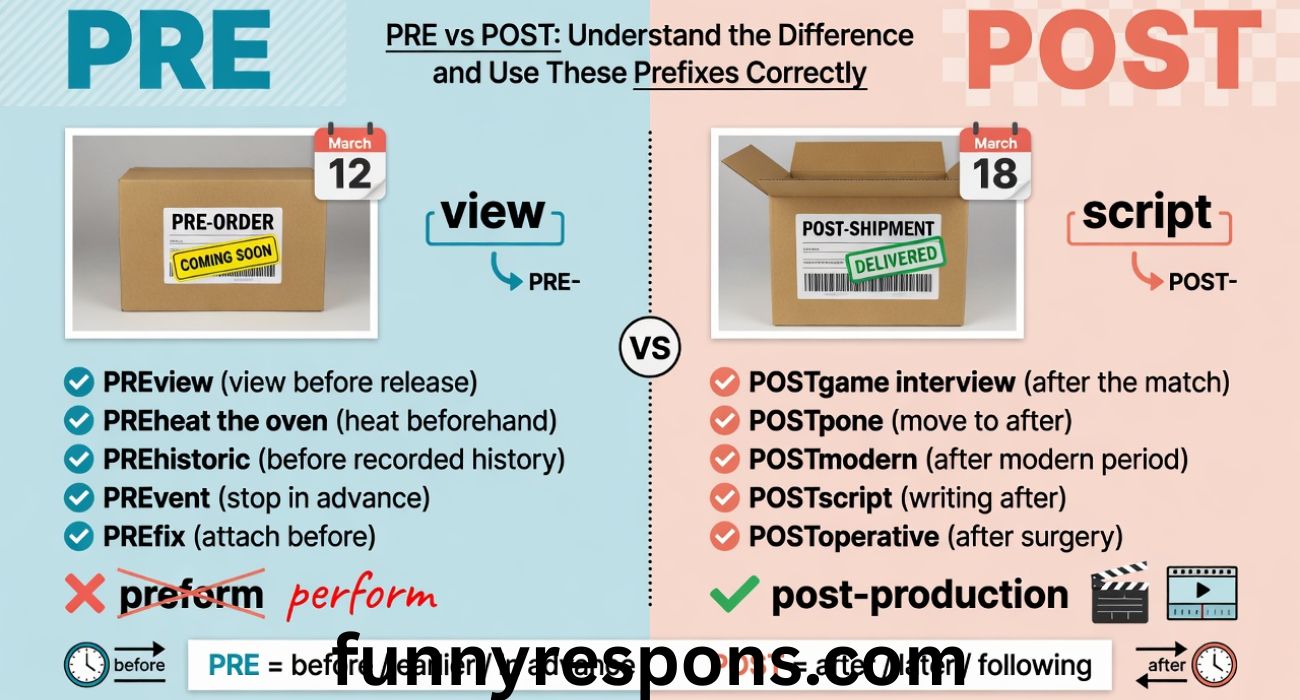
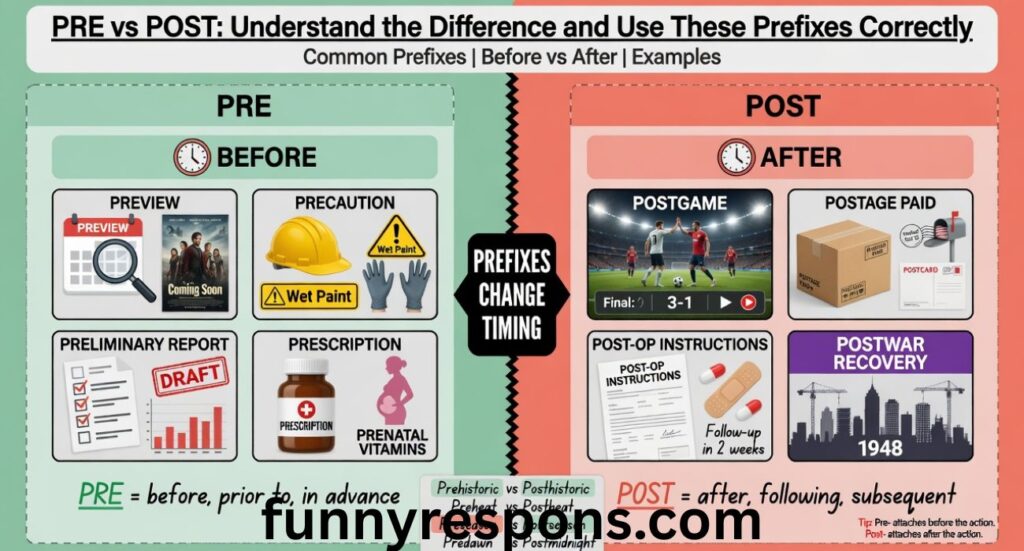
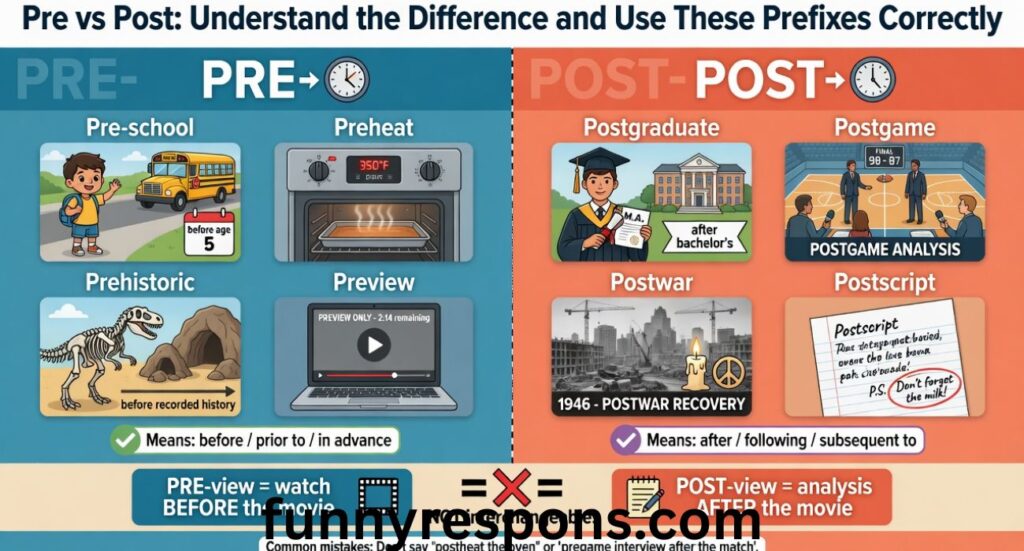
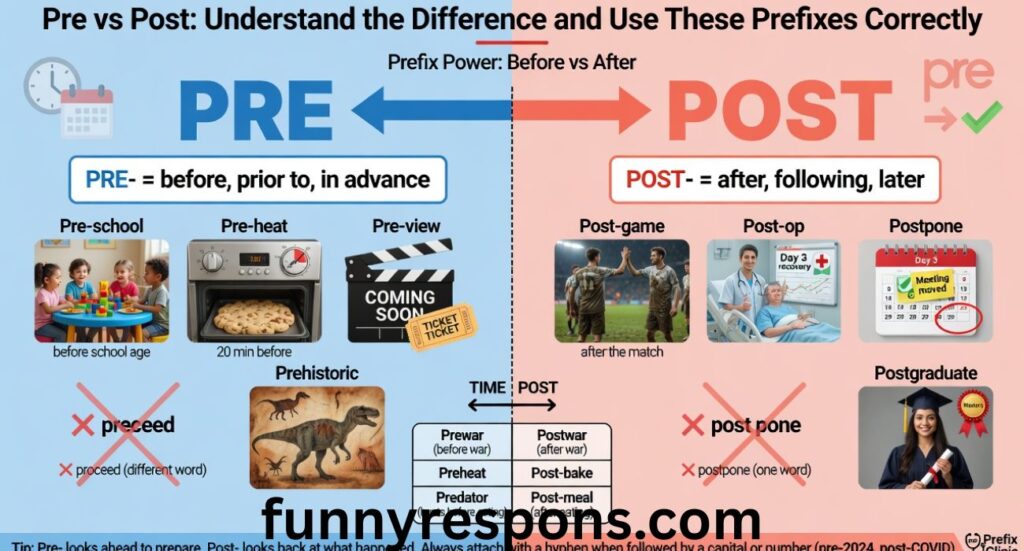
Pre vs Post shows the difference between actions that happen before and after an event. The word pre means before while the word post means after something happens. People use these prefixes in grammar, education, technology, healthcare, and everyday communication to explain time clearly and correctly.
Many people confuse Pre vs Post because both prefixes look similar in spelling and structure. A small mistake can change the full meaning of a sentence and create confusion for readers. Learning these simple prefixes helps students, writers, and professionals communicate clearly with confidence every day.
You can find Pre vs Post in schools, offices, hospitals, fitness plans, and social conversations across daily life. Words like pre-test, post-test, pre-workout, and post-workout help explain the order of events in a simple way. Understanding these prefixes improves grammar skills, writing clarity, and overall communication in easy English.
| Prefix | Meaning | Example | Timing |
| Pre | Before | Pre-exam practice | Happens earlier |
| Post | After | Post-exam review | Happens later |
How Pre and Post Shape Meaning
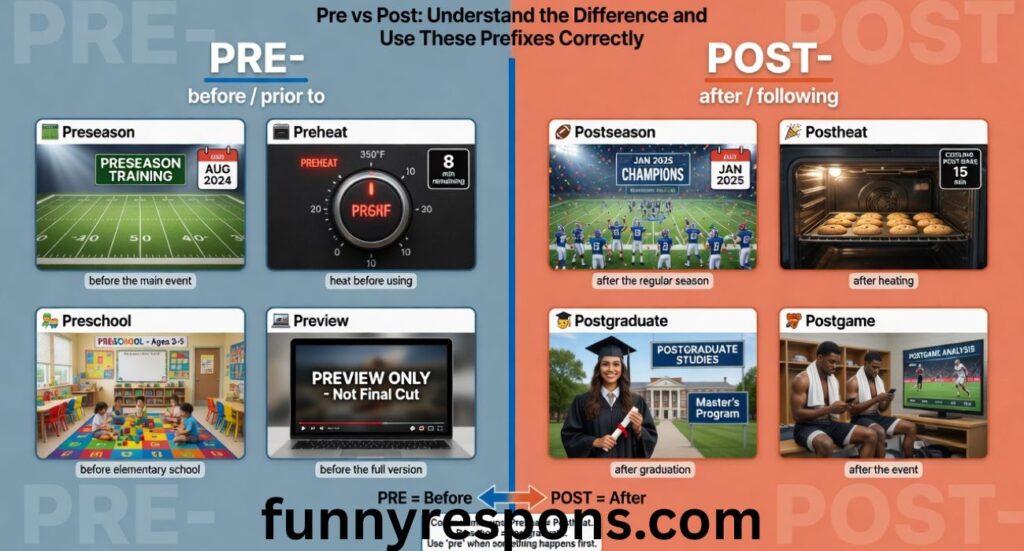
The difference between pre vs post shapes the meaning of almost every sentence where timing matters. Imagine reading instructions that mention a pre-flight checklist when the writer actually meant a report after landing. Confusion appears immediately. These prefixes work like road signs for readers. They quietly direct the brain toward understanding whether an action occurs before or after an event. That simple structure makes communication smoother and easier to follow.
Writers in the United States use these prefixes daily in schools, offices, hospitals, and digital communication. Teachers assign pre-class reading before lessons begin and encourage post-class discussion afterward. Fitness coaches recommend stretching during a pre-workout warm-up and recovery exercises during post-workout recovery. These patterns help readers understand order and sequence quickly. Good writing depends on clarity and proper timing words make every sentence feel natural.
Read Also : Have a Great Rest of Your Week in the USA: Meaning, Alternatives, and Email Writing Guide
The Science Behind Pre and Post
Language experts call these prefixes temporal markers because they organize time inside a sentence. The human brain naturally associates preparation with pre and reflection with post. That is why phrases like pre-medical screening feel connected to prevention while post-surgery recovery sounds linked to healing afterward. Readers process these patterns quickly because the brain prefers organized timelines instead of scattered information.
Psychologists also explain that structured language reduces confusion during learning. For example, students understand classroom routines faster when teachers separate activities into pre-exam preparation and review sessions afterward. Hospitals rely heavily on timing language because patient instructions must stay crystal clear. Imagine the danger if a doctor mixed up pre-exercise stretching with recovery advice after training. Correct usage protects understanding and improves communication in real life.
Pre vs Post in Language Patterns
English follows predictable language patterns and that makes pre vs post easier to learn over time. Most words beginning with pre describe actions before a main event. Words starting with post describe reactions, summaries, or outcomes afterward. Readers unconsciously expect this structure. A phrase like pre-interview preparation sounds natural because preparation happens before speaking with an employer.
You can also see these patterns in business communication and online writing. Companies perform pre-launch test procedures before releasing software and later publish post-launch update notes to fix problems. Bloggers often write post-event summary articles after conferences or sports games. These consistent patterns help readers understand timing immediately. Once you notice them, proper usage becomes second nature and writing starts flowing more smoothly.
Common Mistakes with Pre and Post
Many people accidentally reverse these prefixes and create confusing sentences. Someone may write pre-party cleanup when they actually mean cleaning after guests leave. That small mistake changes the timeline completely. Another common error appears in fitness language when writers mention post-workout warm-up instead of preparation beforehand. These mix-ups sound awkward because the brain instantly notices the wrong sequence.
Editing carefully solves most of these problems. Before using either prefix, ask one simple question: does this action happen before or after the event? That trick works almost every time. In schools and workplaces across America, clear communication matters more than fancy vocabulary. Using pre-holiday recap incorrectly instead of a reflection afterward can confuse readers quickly. Simple timing awareness keeps your writing polished and professional.
Pre and Post in Technology Terms
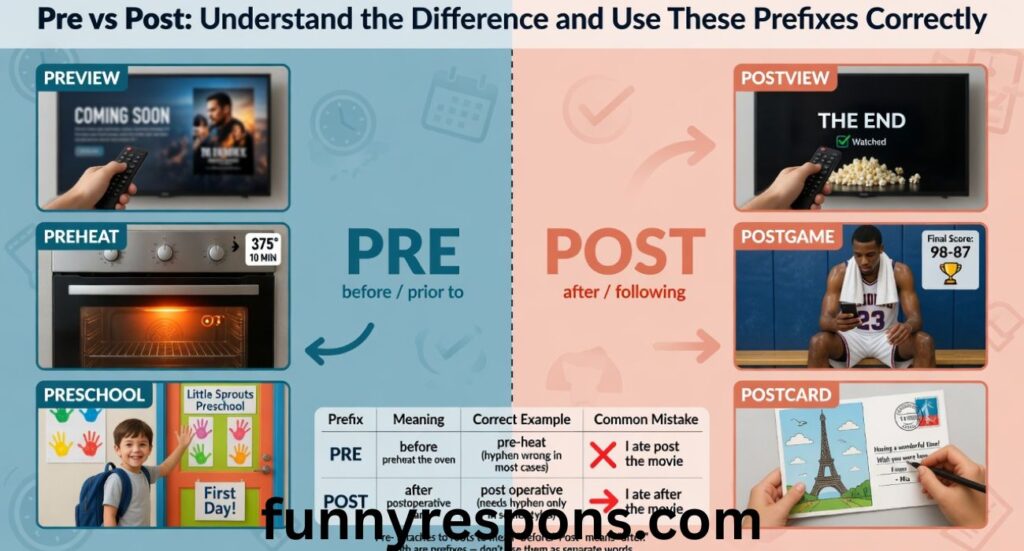
Technology uses pre vs post language constantly because timing matters during digital processes. Software developers run pre-launch test procedures before releasing products to users. After launch, teams publish post-launch update files to repair bugs and improve performance. These terms appear everywhere in smartphone manuals, online tutorials, and customer support guides across the United States.
Photography and video editing also depend heavily on these prefixes. Cameras may include pre-configured settings to help beginners start quickly. Editors later apply post-processing filters to improve colors and lighting after taking photos. Mobile devices often include pre-installed apps ready to use immediately after purchase. These examples show how timing language helps technology users understand exactly when actions should happen.
| Technology Term | Meaning |
| Pre-installed apps | Apps added before purchase |
| Post-processing filters | Editing after photos are taken |
| Pre-configured settings | Settings prepared in advance |
| Post-launch update | Fixes added after release |
Pre and Post in History and Culture
Historians often divide major events into periods using pre and post labels. These terms help readers understand social change more clearly. A pre-war architecture style reflects design before conflict while post-war reconstruction explains rebuilding efforts afterward. Without these labels, historical timelines would feel messy and difficult to follow.
Cultural studies also rely on timing prefixes to explain social evolution. Writers discuss pre-industrial societies when describing life before factories transformed economies. Meanwhile, post-industrial societies focus on technology and service industries after manufacturing declined. Historians also examine pre-colonial traditions to understand customs before outside influence changed communities. These terms provide context and make complex history easier for readers to understand.
Visualizing Pre vs Post
Visual learning helps many people remember grammar concepts faster. Think of a straight timeline with a checkpoint in the middle. Anything before that checkpoint belongs to pre while everything afterward belongs to post. This simple image makes difficult grammar feel more practical. Students often understand pre-event checklist and post-event summary terms faster once they visualize the timeline.
Air travel offers another useful example. Airlines provide a pre-flight briefing before takeoff so passengers understand safety instructions. After landing, workers may complete reports about the flight afterward. Visualizing these stages helps readers connect words to actions naturally. That connection improves memory and reduces grammar mistakes in everyday writing, especially in classrooms and workplaces.
Tips to Master Pre and Post Usage
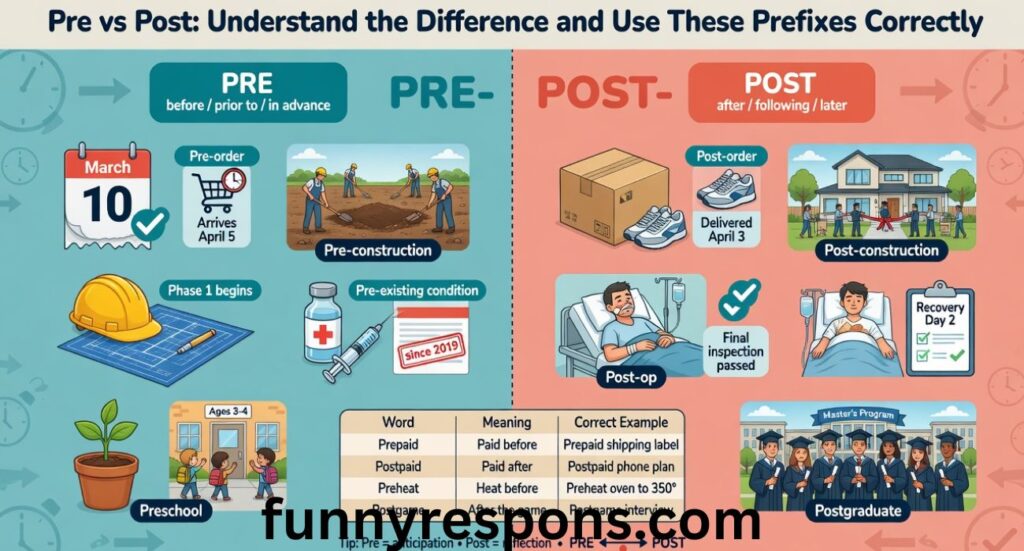
The easiest way to master pre vs post is through repetition and observation. Pay attention to signs, emails, news articles, and advertisements around you. You will notice phrases like pre-appointment reminders before doctor visits and post-appointment notes afterward. Real-world exposure trains your brain faster than memorizing grammar definitions from textbooks.
Practice also matters. Rewrite confusing sentences and test yourself by replacing incorrect prefixes. Students improve quickly when working with examples like pre-dinner prep before cooking and post-dinner cleanup afterward. Reading aloud helps too because awkward timing sounds unnatural immediately. Over time, these patterns become automatic and your communication feels smoother and more confident.
Quick Tricks to Remember Pre vs Post
One easy memory trick connects pre with prepare and post with process. Preparation happens before an event while processing usually happens afterward. This shortcut works well for students, office workers, and anyone learning English grammar. Picture a race where athletes complete a pre-workout warm-up before running and recovery exercises after finishing.
Another helpful method involves visual checkpoints. Imagine standing at a doorway during an event. Everything before entering uses pre while everything after leaving uses post. A pre-meeting agenda happens before discussion begins and post-meeting minutes summarize what happened later. Small tricks like these make grammar easier without feeling overwhelming or complicated.
Pre vs Post in Everyday Communication
Daily communication becomes clearer once you understand timing prefixes properly. Families use phrases like pre-party checklist before celebrations and discuss details afterward during a recap. Office workers schedule pre-lunch discussion meetings and later send summaries after lunch ends. These tiny prefixes guide conversations naturally and help people stay organized without long explanations.
American English relies heavily on concise communication and that is why prefixes matter so much. Whether someone discusses healthcare, education, technology, or social events, correct timing words improve understanding instantly. Even casual conversations become more precise when people distinguish between preparation and reflection. Mastering pre vs post strengthens grammar, improves confidence, and makes everyday writing easier to understand.
Read Also : I Hope Everything is Going Well: Meaning, Alternatives, and Better Ways to Write It in the USA
Why Pre vs Post Matters in Professional Writing
Clear communication shapes how readers understand your message and timing words play a huge role in that process. Many workplace mistakes happen because employees misuse prefixes like pre and post in reports, emails, or schedules. A phrase such as pre-launch meeting immediately tells readers the discussion happens before release. Accurate wording saves time and prevents unnecessary confusion during important business communication.
Professional writers often rely on timing language to organize projects and workflows smoothly. Marketing teams prepare pre-campaign strategy plans before advertising starts and review post-campaign analysis reports afterward. These small prefixes help teams track progress clearly. When writers understand the difference between pre and post, documents become more precise, polished, and easier for readers to trust and follow.
Understanding Pre vs Post in Education
Schools use pre and post terminology every day because learning follows a sequence. Teachers assign pre-reading activities before lessons begin and encourage reflection through post-reading discussion afterward. Students understand expectations faster when instructions clearly explain timing. These prefixes create structure inside classrooms and help learners organize information without feeling overwhelmed by complicated directions.
Educational testing also depends heavily on proper timing language. Schools often compare pre-assessment scores with results collected later to measure improvement. This system helps teachers track student growth accurately. Parents, students, and educators all benefit when communication stays clear. Using correct prefixes in academic writing makes assignments easier to understand and strengthens overall communication skills for long-term success.
The Role of Pre and Post in Healthcare Communication
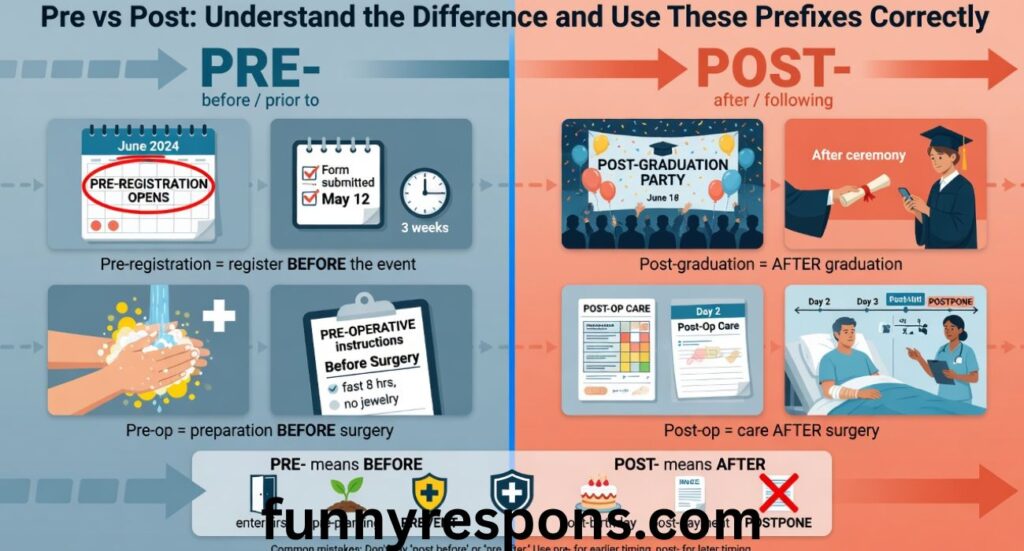
Healthcare workers depend on accurate timing language because patient safety matters greatly. Doctors explain pre-operative instructions before surgery begins and later provide post-operative care details for recovery. These prefixes guide patients through medical procedures step by step. Without clear timing words, misunderstandings could affect treatment plans and create unnecessary stress for patients and their families.
Hospitals across the United States use pre and post terminology to improve organization and efficiency. Nurses often complete pre-treatment evaluations before medication begins and monitor recovery afterward through detailed follow-ups. This structured communication keeps healthcare systems running smoothly. Patients also feel more confident when instructions use clear language that explains exactly what happens before and after treatment.
Pre vs Post in Fitness and Wellness
Fitness experts constantly use pre and post terminology because workouts follow a natural sequence. Trainers encourage athletes to complete a pre-workout warm-up before exercise to reduce injury risk. After training ends, people focus on stretching, hydration, and recovery techniques. These timing words help gym members understand healthy routines and create safer exercise habits for long-term wellness.
Nutrition advice also depends heavily on timing language. Many fitness coaches recommend pre-workout meals for energy and discuss recovery foods after intense activity. Understanding when to eat, stretch, or recover improves athletic performance significantly. Clear communication helps beginners avoid mistakes and gives experienced athletes a better understanding of how preparation and recovery support physical health.
How Businesses Use Pre and Post Strategies
Businesses rely on pre and post planning because successful projects need organization from start to finish. Companies often create pre-launch marketing campaigns before introducing products to customers. After release, teams analyze sales, feedback, and performance reports. These stages help organizations improve future strategies and understand how customers respond to products and services in real-world situations.
Customer service departments also use timing-based communication daily. Representatives may send pre-appointment reminders before meetings and request feedback through surveys afterward. These systems improve customer experience and reduce scheduling problems. Businesses that communicate clearly build stronger trust with clients. Proper use of pre and post language creates smoother workflows and more professional interactions in competitive industries.
Pre vs Post in Social Media Content
Social media creators use timing prefixes constantly while planning online campaigns and digital content. Influencers often share pre-event announcements before live streams, concerts, or product launches. After events finish, creators upload highlights, reactions, and summaries. These terms help followers understand the content timeline quickly and make online communication feel organized instead of chaotic or confusing.
Brands also rely on timing language to improve audience engagement online. Marketing teams publish post-event recap videos to keep conversations active after promotions end. Timing-based captions increase clarity and encourage interaction from followers. As digital communication grows rapidly in America, understanding pre and post terminology helps creators deliver smoother and more professional online experiences for audiences.
Common Grammar Rules for Pre and Post
Grammar rules for pre and post remain simple once readers understand timing relationships. Most words using pre describe actions, preparation, or planning before events occur. Words using post usually explain results, reactions, or reflections afterward. This pattern appears repeatedly in business writing, education, healthcare, and technology. Recognizing these structures improves grammar confidence and helps writing sound more natural.
Many grammar mistakes happen because writers focus only on vocabulary instead of timing. A sentence becomes awkward when prefixes conflict with the actual sequence of events. Reading sentences aloud often reveals problems quickly. If a phrase sounds confusing, checking whether the action happens before or after the event usually solves the issue immediately and improves overall sentence clarity.
Pre vs Post in Daily Planning
Daily routines become easier to manage when people understand timing language clearly. Families create pre-travel checklists before vacations and review expenses afterward through organized summaries. These small communication habits improve planning and reduce stress. Even household routines feel smoother when everyone understands whether tasks happen before or after an important activity or scheduled event.
Work schedules also benefit from proper timing terms. Employees may receive pre-shift instructions before beginning duties and complete reports later at the end of the day. Clear wording prevents mistakes and keeps responsibilities organized. Good communication saves time because readers immediately understand what actions require preparation and what tasks involve review or follow-up afterward.
Why Students Should Learn Pre vs Post Early
Learning timing prefixes early helps students build stronger grammar habits throughout school and beyond. Young learners often encounter terms like pre-reading assignment or post-reading activity during classroom lessons. Understanding these patterns improves reading comprehension because students instantly recognize the sequence of actions. Strong language skills also make writing assignments easier and more organized over time.
Students who master pre and post terminology communicate more confidently in essays, presentations, and group projects. They avoid confusing sentence structures and explain ideas more clearly. Teachers appreciate writing that follows logical timelines because it improves readability. Early understanding of these prefixes supports academic growth and prepares students for professional communication later in life.
Easy Ways to Practice Pre vs Post Every Day
The best way to improve grammar skills involves daily practice using real-world examples. People can learn timing prefixes by paying attention to signs, advertisements, and conversations around them. Words like pre-sale tickets or post-game interview appear frequently in everyday life. Noticing these patterns helps readers connect grammar concepts with practical communication naturally and comfortably.
Simple writing exercises also strengthen understanding quickly. Try creating sentences about daily routines such as preparing meals, attending meetings, or exercising. For example, someone may complete pre-trip planning before traveling and organize photos afterward. Practicing these examples regularly builds confidence. Over time, using pre and post correctly becomes automatic and improves both written and spoken English.
FAQs
What is the main difference between Pre vs Post?
The main difference is timing. Pre means something happens before an event while post means it happens after the event.
How do you use Pre and Post correctly in a sentence?
Use pre for preparation or actions before something happens and use post for activities or results afterward. For example, pre-workout meal and post-workout recovery.
Why do people confuse Pre vs Post?
People often confuse these prefixes because both relate to the same event or activity. However, one refers to before and the other refers to after.
Where are Pre and Post commonly used?
These prefixes appear in education, healthcare, technology, fitness, business communication, and everyday conversations across American English.
Conclusion
Understanding Pre vs Post helps students and writers use English more clearly. The word pre means before while post means after. These small prefixes change the meaning of many sentences in school, work, and daily life. People use them in healthcare, fitness, technology, and communication every day. Simple examples like pre-test and post-test make the difference easy to remember. Good grammar becomes easier when you understand timing words correctly.
Learning Pre vs Post also improves reading and writing skills. Clear sentences help readers understand ideas quickly without confusion. Students can use these prefixes in essays, emails, and classroom tasks with confidence. Writers often use pre for preparation and post for results or follow-up activities. Regular practice with real examples makes these terms easy to use naturally. Strong communication starts with simple grammar rules and correct word choices.