Waiting for Your Response: Meaning, Tone, and Smarter Ways to Communicate in Email Writing
Waiting for Your Response means you are expecting someone to reply to your message.
It shows that you need an answer before you can take the next step.
People often use this phrase in emails, chats, and workplace communication.
Many people use this phrase every day in office work and business communication.
It can sound simple, but it can also feel direct depending on the situation.
Because of this, writers often try different phrases to sound more polite.
Waiting for Your Response is commonly used in professional and formal messages.
It helps keep communication clear when decisions or feedback are needed.
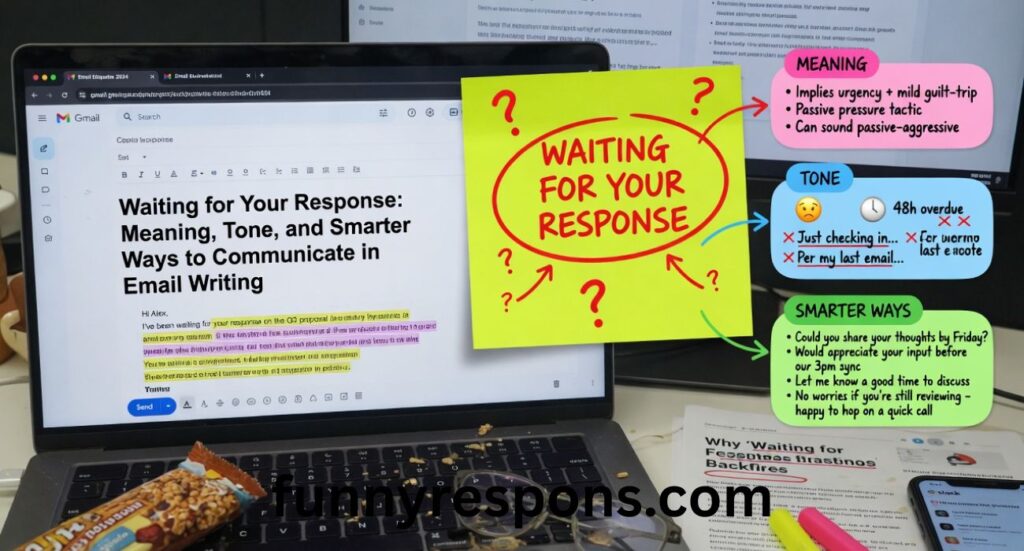
People often replace it with softer phrases to improve tone and relationship.
What Does “Waiting for Your Response” Mean?
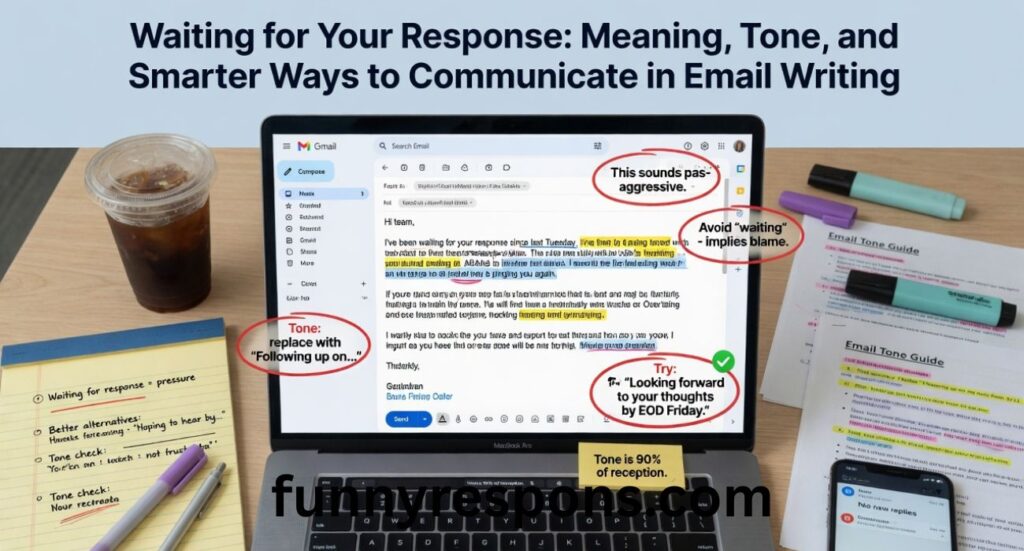
waiting for your response means you are expecting someone to reply before you take the next step. In everyday workplace messaging, it acts as a clear signal that action depends on the other person. It is widely used in client communication, approvals, and project discussions where timing matters.
In simple terms, it creates a pause in the conversation. You send information, then wait. However, tone changes how it feels. A manager using it for deadlines may sound strict, while a colleague using it for feedback may sound neutral. That is why response time management plays a big role in modern communication.
Read Also : 40+ Heartfelt Alternatives to “Rest in Peace” With Meaning, Quotes, and Sympathy Messages
Is It Professional/Polite to Say “Waiting for Your Response”?
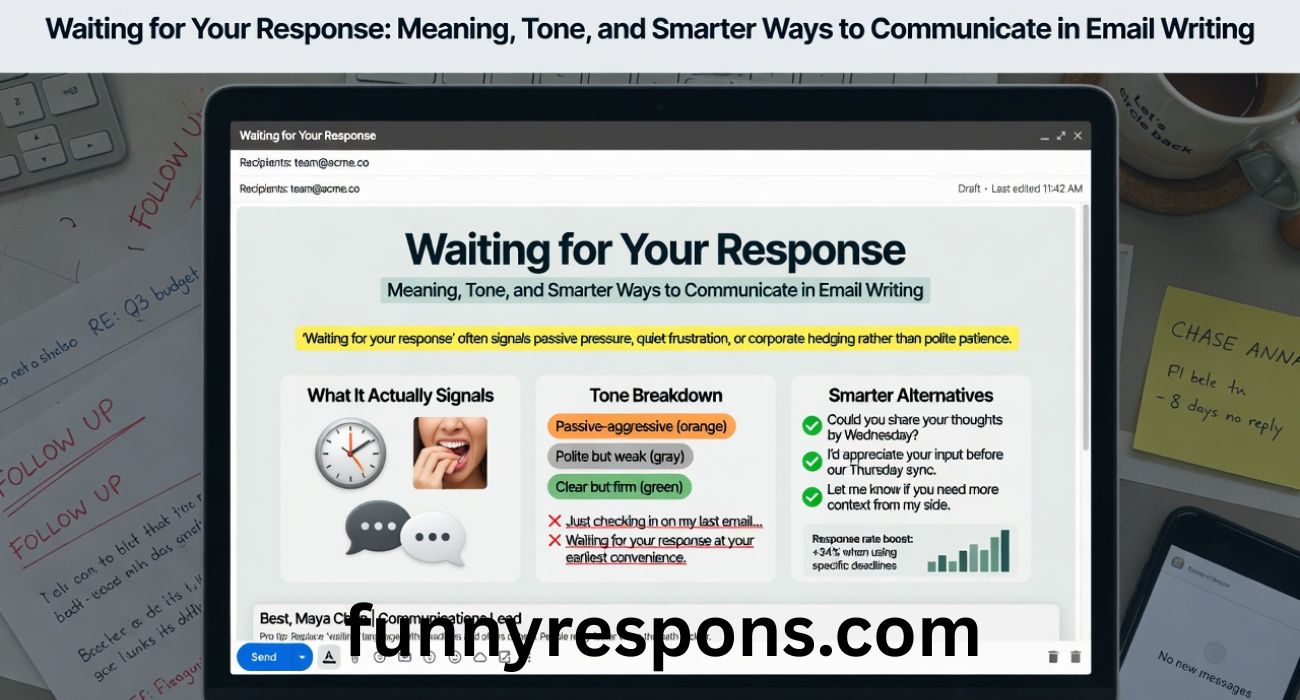
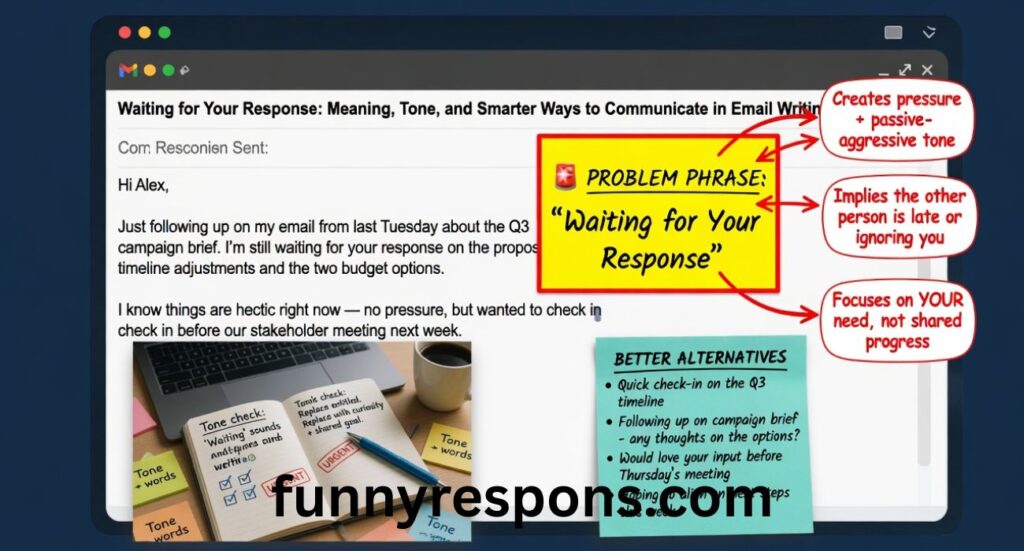
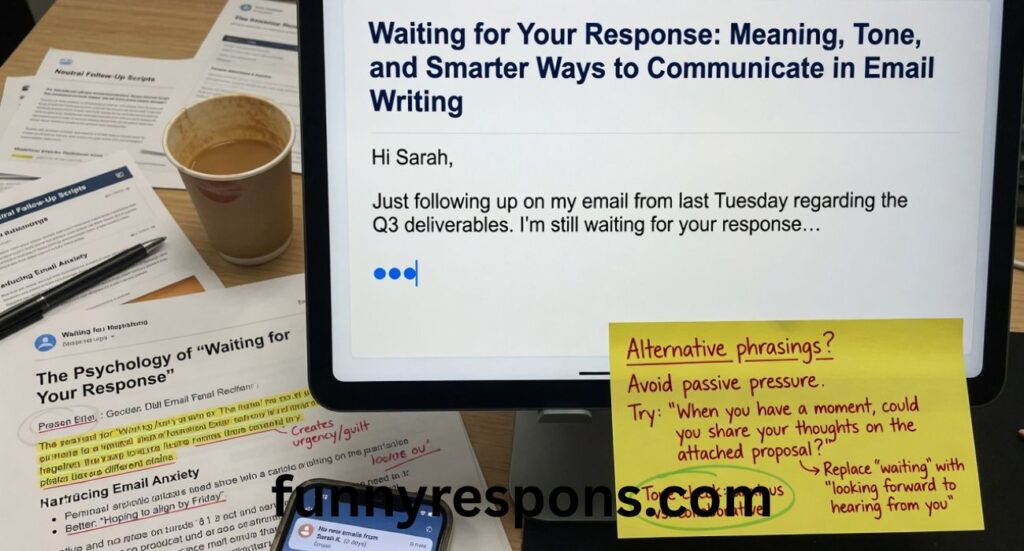
Yes, it is professional, but only when used carefully. In business communication, this phrase can feel either neutral or slightly direct. On its own, it may sound too blunt, especially in long email threads. That is why many people in the USA prefer softer phrasing in email etiquette.
For example, “waiting for your response” feels plain. But “I am looking forward to your feedback at your convenience” feels more respectful. This small change improves tone optimization in writing and strengthens interpersonal communication in workplace settings.
Why You Need Alternatives to “Waiting for Your Response”
Using the same phrase repeatedly makes communication feel flat. In modern professional writing, people expect variety because it shows emotional awareness. When you switch between phrases like let me know what you think or just wanted to follow up, your message feels more engaging.
Different situations need different tones. For example, let’s keep the conversation going encourages collaboration, while hope to hear from you soon feels friendly and open. These variations improve message engagement strategies and help build smoother collaboration workflow in teams.
Advantages And Disadvantages Of Using “Waiting For Your Response”
The phrase waiting for your response is useful, but it is not perfect. It works well for clarity, especially in structured workplace messaging, but it can also feel too direct in sensitive communication.
| Aspect | Advantage | Disadvantage |
| Clarity | Easy to understand | Can sound too direct |
| Professional use | Works in formal emails | May feel slightly cold |
| Speed | Encourages quick replies | Can feel pressuring |
| Flexibility | Fits many situations | Lacks emotional tone |
Because of this balance, many professionals prefer softer phrases like your feedback is valuable or looking to hear your input in customer response handling.
Alternatives to “Other Ways to Say Waiting for Your Response”
There are many ways to replace waiting for your response depending on tone, urgency, and context. These alternatives help improve professional writing, strengthen feedback request communication, and make your messages feel more human in business communication.
Each phrase carries a slightly different emotional weight. For example, eagerly awaiting your reply sounds enthusiastic, while just circling back feels calm and neutral. Choosing the right one improves tone optimization in writing and builds better relationships.
1. Eagerly Awaiting Your Reply
Eagerly awaiting your reply is commonly used in business communication when you want to show interest in a response. It adds emotion while staying professional. In USA email etiquette, it signals active engagement without sounding too demanding or strict.
This phrase often appears in follow-up emails and client communication where tone matters. It improves message engagement strategies by showing enthusiasm. People use it when they want replies without pressure but still need timely updates for smooth workplace messaging flow.
In professional writing, it helps balance urgency and friendliness. However, overuse can feel repetitive. That is why writers combine it with other phrases. It supports better tone optimization in writing and improves interpersonal communication in daily business exchanges.
2. Looking Forward to Hearing From You
Looking forward to hearing from you is one of the most common phrases in email etiquette. It is widely used in USA business communication because it feels polite, friendly, and professional at the same time, without sounding too direct or harsh.
It is often used in client communication and workplace messaging when waiting for updates. The phrase improves response time management by gently reminding the reader to reply. It works well in both formal and semi-formal situations.
In professional writing, it supports smooth follow-up emails and builds trust. It is simple, natural, and effective. Many professionals prefer it because it maintains strong interpersonal communication while keeping the tone respectful and easy to understand.
3. Anticipating Your Feedback
Anticipating your feedback is used in business communication when expecting detailed input. It feels structured and formal. In USA professional writing, it is often used in reports, proposals, and project discussions where thoughtful responses are important.
This phrase is common in project updates and collaboration workflow situations. It helps set expectations for review. It improves feedback request communication by showing that input is not just wanted but needed for progress.
In workplace messaging, it supports clear communication and reduces confusion. It also enhances tone optimization in writing. However, it should be used carefully because it feels more formal than casual alternatives like “what are your thoughts”.
4. Waiting for Your Input
Waiting for your input is a direct phrase used in business communication when decisions depend on another person. It is common in USA workplace messaging where clarity and speed are important for project progress and team coordination.
It is widely used in collaboration workflow and project updates. The phrase shows dependency on feedback or approval. It helps improve response time management by making expectations clear without unnecessary complexity in communication.
In professional writing, it is simple and effective. However, it may feel slightly plain if overused. That is why writers often mix it with softer phrases to improve message engagement strategies and maintain better interpersonal communication.
5. I’m At Your Convenience
I’m at your convenience is a polite phrase in email etiquette used to reduce pressure on the reader. It is common in USA business communication when you want to sound respectful and flexible about timing.
This phrase is often used in client communication where patience matters. It supports better response time management by allowing the recipient to reply when ready. It helps build trust and comfort in professional interactions.
In professional writing, it improves tone and reduces urgency. It works well in follow-up emails and soft reminders. However, it should not replace clear deadlines when timing is critical for workplace messaging and project execution.
6. Awaiting Your Thoughts
Awaiting your thoughts is a soft and polite phrase used in business communication. It is common in USA email etiquette when you want feedback or opinions instead of simple confirmation or approval.
It is useful in message engagement strategies because it encourages discussion. In collaboration workflow, it helps invite ideas and improves shared decision-making. It feels respectful and open, which strengthens communication between teams or clients.
In professional writing, it supports natural conversation flow. It is often used in follow-up emails when decisions are pending. However, it should be balanced with simpler phrases to avoid sounding too formal or repetitive.
7. Hope to Hear from You Soon
Hope to hear from you soon is a friendly phrase in interpersonal communication. It is widely used in USA business communication because it sounds warm, polite, and non-demanding while still expecting a response.
It is common in client communication and workplace messaging when you want to maintain a positive tone. It improves message engagement strategies by creating a gentle reminder without pressure or urgency.
In professional writing, it works in both formal and informal settings. It supports good email etiquette and helps maintain strong relationships. It is especially useful in follow-up emails where tone must stay friendly and respectful.
8. Let Me Know at Your Earliest Convenience
Let me know at your earliest convenience is a respectful phrase in business communication. It is widely used in USA professional writing when you want a response but still respect the other person’s time.
It is often used in client communication and approval requests. It supports better response time management by encouraging timely replies without sounding aggressive. It helps maintain professionalism in structured conversations.
In workplace messaging, it is effective for formal situations. It improves tone optimization in writing by balancing urgency and politeness. However, overuse can make communication feel repetitive in long follow-up emails.
9. Excited to Hear Back From You
Excited to hear back from you adds energy to business communication. It is commonly used in USA workplace messaging when the sender wants to show enthusiasm about a reply or upcoming decision.
This phrase improves message engagement strategies by adding positivity. It is useful in client communication and creative discussions where tone should feel lively and open instead of formal or rigid.
In professional writing, it builds emotional connection. It works well in follow-up emails when you want to sound approachable. However, it should be avoided in very formal email etiquette situations where strict tone is required.
10. Let Me Know What You Think
Let me know what you think is a simple phrase in email etiquette. It is widely used in USA business communication because it sounds natural and conversational while requesting feedback or opinion.
It is commonly used in feedback request communication and workplace messaging. It improves collaboration workflow by encouraging open discussion and making communication feel less formal and more human.
In professional writing, it is effective for quick responses. It supports strong message engagement strategies and works well in follow-up emails. It helps maintain a balanced and friendly tone in daily communication.
11. Looking Forward to Hearing From You
Looking forward to hearing from you is a standard phrase in business communication. It is widely used in USA email etiquette because it feels polite, neutral, and professional in almost every situation.
It is commonly used in client communication and workplace messaging. It helps manage response time management by gently encouraging replies. It works well in structured and formal conversations.
In professional writing, it is one of the safest phrases. It supports strong tone optimization in writing and keeps communication smooth. It is often used in follow-up emails where professionalism is required.
12. Just Wanted to Follow Up
Just wanted to follow up is a soft phrase used in follow-up emails. It is common in USA business communication when you want to remind someone without sounding pushy or impatient.
It is widely used in workplace messaging and client communication. It supports better message engagement strategies by keeping communication light and respectful while still reminding the reader about pending action.
In professional writing, it is effective for maintaining flow in ongoing conversations. It helps improve response time management and ensures discussions stay active without harming interpersonal communication tone.
13. Any Thoughts on This?
Any thoughts on this is a conversational phrase in email etiquette. It is commonly used in USA business communication when you want quick feedback or informal opinions.
It is useful in collaboration workflow and workplace messaging. It improves message engagement strategies by inviting responses in a natural and open way, making communication feel less formal and more interactive.
In professional writing, it works well for brainstorming and idea sharing. It is often used in follow-up emails where decisions are still flexible and feedback is important.
14. Let Me Know What Works Best for You
Let me know what works best for you is a flexible phrase in business communication. It is common in USA email etiquette when scheduling or planning discussions.
It supports better response time management by allowing the recipient to choose timing. It improves interpersonal communication by showing respect for the other person’s availability and preferences.
In professional writing, it is useful in workplace messaging. It helps strengthen collaboration and improves tone optimization in writing by keeping communication polite, flexible, and considerate.
15. Let’s Keep the Conversation Going
Let’s keep the conversation going is a dynamic phrase in business communication. It is used in USA workplace messaging to encourage ongoing discussion instead of ending communication too quickly.
It improves message engagement strategies by keeping interaction active. It is useful in collaboration workflow where ideas are still developing and more input is needed for progress.
In professional writing, it creates a friendly tone. It supports strong interpersonal communication and works well in follow-up emails where continued discussion is important for decision-making.
16. Looking Forward to Your Feedback
Looking forward to your feedback is a structured phrase in email etiquette. It is widely used in USA business communication when expecting review or evaluation.
It is common in project updates and client communication. It helps improve feedback request communication by clearly showing that input is expected before final decisions are made.
In professional writing, it supports clarity and respect. It enhances tone optimization in writing and is often used in follow-up emails for formal communication settings.
17. When You Have a Moment, Let Me Know
When you have a moment, let me know is a polite phrase in business communication. It is widely used in USA email etiquette when you want to reduce urgency.
It is helpful in workplace messaging and client communication. It improves response time management by allowing flexible timing while still expecting a reply when possible.
In professional writing, it supports calm and respectful tone. It is commonly used in follow-up emails where patience and understanding are important for maintaining good relationships.
18. Can’t Wait to Hear From You
Can’t wait to hear from you is an enthusiastic phrase in interpersonal communication. It is widely used in USA business communication when the sender feels excited about a response.
It improves message engagement strategies by adding emotional energy. It is often used in workplace messaging and informal client communication where tone can be friendly and expressive.
In professional writing, it works best in casual settings. It supports positive relationships but should be avoided in strict formal email etiquette situations.
19. Waiting to Hear Your Take
Waiting to hear your take is a modern phrase in business communication. It is commonly used in USA workplace messaging when asking for opinions or analysis.
It improves collaboration workflow by encouraging input and discussion. It is useful in feedback request communication where detailed responses are needed for decision-making.
In professional writing, it sounds conversational and natural. It supports strong message engagement strategies and works well in informal follow-up emails.
20. What Are Your Thoughts?
What are your thoughts is a direct question used in email etiquette. It is widely used in USA business communication because it encourages immediate engagement.
It is common in workplace messaging and feedback request communication. It helps improve collaboration workflow by inviting open discussion and shared decision-making.
In professional writing, it is simple and effective. It supports strong interpersonal communication and works well in both formal and informal follow-up emails.
21. Your Feedback Is Valuable
Your feedback is valuable is a respectful phrase in business communication. It is widely used in USA client communication to show appreciation for input.
It improves message engagement strategies by making the recipient feel important. It is often used in feedback request communication where opinions directly influence decisions or improvements.
In professional writing, it builds trust and respect. It enhances tone optimization in writing and is common in structured follow-up emails and project discussions.
22. Looking to Hear Your Input
Looking to hear your input is a collaborative phrase in business communication. It is widely used in USA workplace messaging when teamwork and shared decisions are required.
It improves collaboration workflow by encouraging participation. It is useful in project updates where feedback shapes final outcomes and decisions.
In professional writing, it feels respectful and structured. It supports strong message engagement strategies and is common in follow-up emails involving group discussions.
23. Whenever You’re Ready, Let Me Know
Whenever you’re ready, let me know is a calm phrase in email etiquette. It is used in USA business communication when timing is flexible.
It supports better response time management by removing pressure. It is common in client communication where patience and comfort are important for maintaining relationships.
In professional writing, it improves tone and reduces stress. It is useful in follow-up emails and helps maintain positive interpersonal communication.
24. Just Circling Back
Just circling back is a common phrase in follow-up emails. It is widely used in USA business communication when checking on previous messages or pending updates.
It improves message engagement strategies by gently reminding without pressure. It is useful in workplace messaging where ongoing communication is important for progress.
In professional writing, it is short and effective. It supports response time management and is often used in client communication to keep conversations active.
25. Ping Me When You’re Free
Ping me when you’re free is a casual phrase in workplace messaging. It is widely used in USA business communication in informal digital chats.
It improves interpersonal communication by sounding relaxed and friendly. It is common in collaboration workflow where quick replies are expected but not required immediately.
In professional writing, it should be used carefully. It works best in informal follow-up emails or team chats rather than formal email etiquette situations.
Read Also : Funny Ways to Say Hello: Funny Ways to Say Hello in Text Messages (USA Guide)
26. I Will Be Waiting for Your Response and Variations
I will be waiting for your response is a formal phrase in business communication. It is used in USA email etiquette when expecting clear action or confirmation from the recipient.
It appears in workplace messaging and official client communication. It supports response time management by making expectations explicit, especially in structured or deadline-driven situations.
In professional writing, it should be softened when possible. It can affect tone optimization in writing, so writers often pair it with polite phrases to maintain strong interpersonal communication.
27. I Will Be Waiting for Your Response
I will be waiting for your response. It is a direct and formal phrase in business communication. It is commonly used in contracts, official emails, and structured workplace messaging.
It clearly signals expectation in response time management. It is often used in project updates where approval or confirmation is required before moving forward with tasks or decisions.
In professional writing, it is effective but firm. It should be balanced with polite tone elements to maintain good email etiquette and avoid sounding too strict.
28. We Are Waiting for Your Reply to Proceed Further
We are waiting for your reply to proceed further and is used in business communication when action depends on response. It is common in USA project updates and approval workflows.
It improves collaboration workflow by clearly linking progress to feedback. It is often used in client communication where next steps depend on decisions or confirmations.
In professional writing, it ensures clarity. However, it should be softened to maintain better tone optimization in writing and improve interpersonal communication.
29. Awaiting Your Reply
Awaiting your reply is a short formal phrase in email etiquette. It is widely used in USA business communication for official messages and structured communication.
It is common in workplace messaging and project updates. It helps maintain clarity in response time management and ensures expectations are clearly understood.
In professional writing, it is efficient and professional. It works best in formal follow-up emails but may feel too rigid in casual communication.
30. I’m Eagerly Awaiting Your Response
I’m eagerly awaiting your response is an expressive phrase in business communication. It is used in USA email etiquette when the sender is highly interested in feedback.
It improves message engagement strategies by showing emotional involvement. It is common in client communication and workplace messaging where enthusiasm supports stronger interaction.
In professional writing, it should be used carefully. It is effective in friendly follow-up emails, but may feel too emotional for strict formal settings.
31. Kindly Awaiting Your Response
Kindly awaiting your response is a polite phrase in email etiquette and business communication. It shows respect while requesting a reply in a soft and professional way.
It is widely used in client communication and structured workplace messaging. It helps improve response time management by gently reminding the reader without pressure or urgency.
In professional writing, it supports strong tone optimization in writing. It works well in formal follow-up emails, but should be varied to avoid repetition in long communication threads.
32. We Are Waiting for Your Reply to Proceed Further
We are waiting for your reply to proceed further is common in business communication when actions depend on approval. It clearly connects next steps with the recipient’s decision.
This phrase often appears in project updates and structured workflows where delays can affect timelines. It helps set expectations without confusion or miscommunication.
However, it can sound slightly firm in tone. Adding polite wording improves email etiquette and makes workplace messaging feel more balanced.
33. Awaiting Your Reply
Awaiting your reply is a short and formal expression used in email etiquette. It communicates expectation quickly without unnecessary words or emotional tone.
It is widely used in official letters, approvals, and customer response handling where clarity matters more than friendliness.
Still, it may feel stiff in casual workplace messaging. Adding context improves interpersonal communication and softens the overall message.
34. I’m Eagerly Awaiting Your Response
I’m eagerly awaiting your response shows anticipation in interpersonal communication. It expresses interest while still remaining professional in most situations.
It is often used in interviews, proposals, and time-sensitive business communication where outcomes depend on feedback or approval.
However, it can feel emotionally strong. Using variation improves tone optimization in writing and keeps messages balanced and natural.
35. Kindly Awaiting Your Response
kindly awaiting your response is a polite phrase used in formal email etiquette. It shows respect and patience toward the recipient’s time.
It is common in administrative and official client communication where tone must stay respectful and structured.
However, it may feel slightly traditional. Simpler phrasing can improve modern workplace messaging while keeping professionalism intact.
36. Please Let Me Know Your Thoughts
please let me know your thoughts encourages feedback in feedback request communication. It invites open discussion in a simple and friendly way.
It works well in teams where collaboration and idea sharing are important for better decisions and smoother workflows.
This phrase supports strong workplace messaging because it feels natural, direct, and easy for others to respond to.
37. I Would Appreciate Your Feedback
i would appreciate your feedback is a respectful phrase used in business communication. It shows gratitude and professionalism in advance.
It is often used in reports, proposals, and structured reviews where detailed input is needed for improvement.
This phrase strengthens interpersonal communication by showing respect, but it works best when paired with clear context.
38. Looking Forward to Your Response
looking forward to your response is one of the most common phrases in email etiquette. It is polite, neutral, and widely accepted.
It works well in client communication because it feels warm without adding pressure or urgency to the message.
This phrase is versatile and safe, making it a reliable choice in almost all professional writing situations.
39. Just Checking In on This
just checking in on this is a soft reminder used in follow-up emails. It helps restart conversations without sounding pushy or demanding.
It is useful in workplace messaging when responses are delayed and gentle reminders are needed to move things forward.
This phrase works best in ongoing communication, especially when maintaining a friendly tone in professional relationships matters.
40. I Hope This Finds You Well and I’m Following Up
i hope this finds you well and i’m following up combines politeness with purpose in email etiquette. It opens warmly before requesting attention.
It is commonly used in client communication to maintain goodwill while gently reminding the recipient about previous messages.
However, it can feel long. Simplifying improves readability while preserving respectful tone and strong interpersonal connection.
41. Please Respond When You Have a Chance
please respond when you have a chance is a relaxed phrase used in modern workplace messaging. It reduces pressure on the recipient.
It works well in collaborative environments where flexibility supports better teamwork and smoother response time management.
This phrase encourages natural replies and helps maintain friendly tone in ongoing professional conversations.
42. Let Me Know at Your Convenience
let me know at your convenience is a polite phrase used in email etiquette. It shows respect for the reader’s time and priorities.
It is widely used in both formal and informal business communication where timing is flexible but a response is still needed.
This phrase supports calm and professional messaging, improving tone and strengthening respectful interpersonal communication in workplace settings.
Professional Ways to Say Waiting for Your Response in Email Communication
In modern email etiquette, people rarely stick to just one phrase like waiting for your response. Instead, they choose wording that matches tone, urgency, and relationship. In the USA workplace, this shift helps messages feel more natural and less robotic. Strong communication improves clarity and reduces misunderstandings in daily business communication and client interactions.
Using varied phrases also improves professional writing because it keeps emails fresh and engaging. Instead of sounding repetitive, you guide the reader gently toward action. This small change improves response time management and builds smoother workflows. Over time, it also strengthens trust in interpersonal communication, especially in long term professional relationships.
Polite Alternatives to Waiting for Your Response for Workplace Messaging
Politeness matters a lot in workplace messaging, especially when you are waiting for updates. Saying waiting for your response can sometimes feel too direct. That is why professionals use softer expressions like hoping to hear back or checking in. These alternatives improve tone and help maintain respectful business communication in teams and client settings.
In the USA, people prefer messages that balance clarity and kindness. Using polite phrasing improves customer response handling and reduces pressure on the reader. It also supports better feedback request communication because people feel more comfortable replying. This leads to smoother collaboration and healthier professional relationships across projects.
Best Email Etiquette Phrases Instead of Waiting for Your Response
Strong email etiquette is more than grammar. It is about how your message feels to the reader. Instead of waiting for your response, professionals often say looking forward to hearing from you or at your convenience. These phrases reduce tension and make communication feel more respectful and cooperative in tone.
Good etiquette also improves professional writing because it reflects emotional awareness. When you adjust tone properly, your emails feel easier to respond to. This increases engagement and supports better response time management. Over time, it builds a reputation for clear and thoughtful communication in business environments.
Business Communication Strategies Using Better Follow Up Phrases
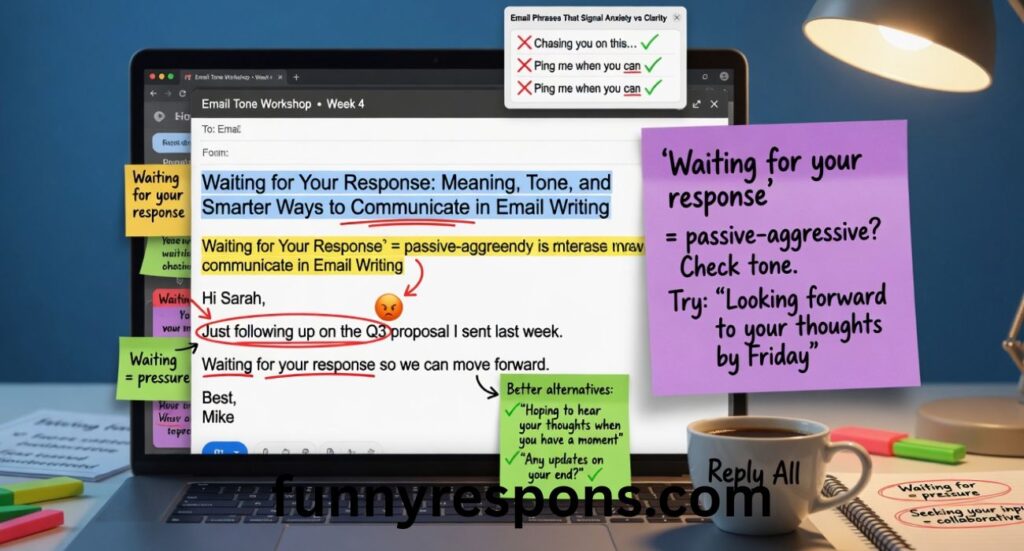
In business communication, follow up messages are common, but tone decides success. Instead of waiting for your response, professionals use phrases like just circling back or wanted to follow up. These expressions keep conversations moving without sounding demanding. They also help maintain smooth communication in fast paced corporate environments.
Using better phrasing improves collaboration workflow because people feel less pressured. It also increases reply rates since messages feel respectful and clear. In client facing situations, this approach strengthens trust and improves long term engagement. Small changes in wording often create big improvements in professional outcomes.
Client Communication Tips for Requesting Timely Responses Politely
In client communication, tone can decide whether a relationship grows or weakens. Instead of waiting for your response, professionals often use phrases like your feedback is valuable or looking forward to your input. These expressions show respect and encourage cooperation without creating pressure or discomfort in the conversation.
Clients respond better when messages feel supportive rather than demanding. Using polite language improves feedback request communication and increases trust. It also enhances customer response handling, especially in service based industries. Over time, this leads to stronger relationships and more consistent collaboration between teams and clients.
How Tone Optimization Improves Response Rates in Emails
tone optimization in writing plays a major role in how quickly people respond. A message that feels polite and clear often gets faster replies than one that sounds strict. Instead of waiting for your response, softer phrases like when you have a moment let me know can improve engagement.
Good tone also supports message engagement strategies because it reduces resistance in communication. Readers feel respected and are more likely to reply quickly. In professional environments, this leads to better response time management and smoother workflows. Small tone adjustments can significantly improve communication success rates.
Follow Up Email Examples That Sound Natural and Human
Writing follow up emails is part of everyday workplace messaging, but sounding natural is important. Instead of waiting for your response, professionals often use phrases like just checking in or hope to hear from you soon. These expressions feel human and keep communication friendly without pressure.
Natural language improves interpersonal communication because it feels less robotic. It also helps maintain long term professional relationships. When people feel comfortable reading your message, they are more likely to respond. This improves collaboration and keeps projects moving smoothly in business environments.
Improving Collaboration Workflow with Better Response Phrasing
Strong collaboration workflow depends on clear and respectful communication. Instead of waiting for your response, teams often use phrases like let’s keep the conversation going or any thoughts on this. These expressions invite participation and make communication feel more inclusive and open.
Better phrasing improves teamwork because people feel involved rather than pressured. It supports smoother project updates and faster decision making. When communication feels balanced, teams work more efficiently. This leads to better productivity and stronger cooperation across departments in professional environments.
Customer Response Handling Through Clear and Polite Language
In customer response handling, wording directly affects satisfaction. Instead of waiting for your response, businesses often use phrases like at your convenience or we appreciate your feedback. These expressions show respect and help customers feel valued during interactions.
Clear and polite language improves trust and reduces frustration. It also strengthens business communication by making instructions easier to understand. When customers feel respected, they respond faster and more positively. This leads to better service experiences and long term loyalty in competitive markets.
How Professional Writing Improves Communication Clarity and Engagement
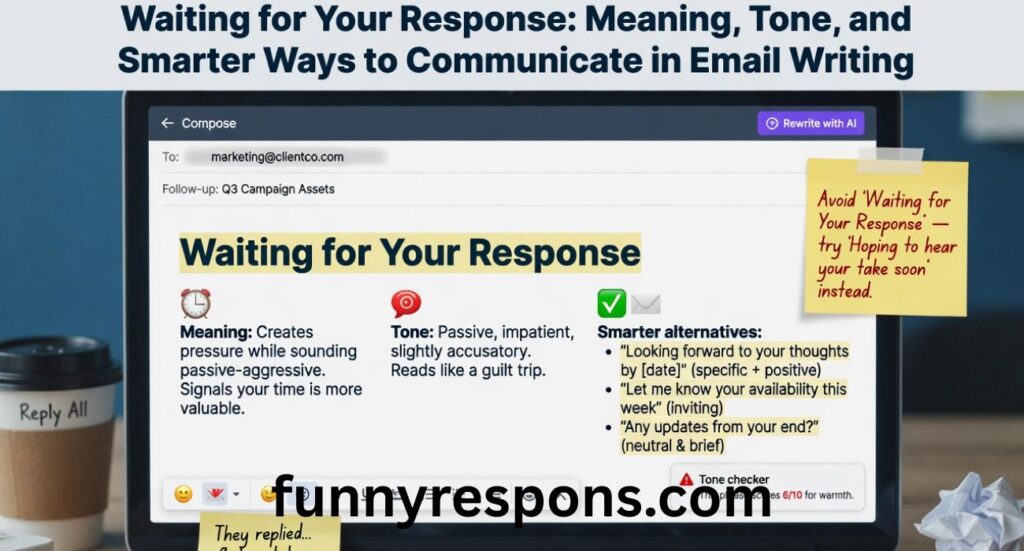
professional writing is not just about grammar. It is about clarity, tone, and purpose. Instead of waiting for your response, writers often choose phrases that match intent, such as looking to hear your input or excited to hear back from you.
Clear writing improves email etiquette and reduces confusion in communication. It also increases engagement because messages feel easier to understand. When writing is structured and natural, readers respond faster. This creates smoother workflows and better results in both personal and professional communication environments.
FAQs
What does “Waiting for Your Response” mean?
It means you are expecting someone to reply before you move forward. It is commonly used in emails and workplace communication to request a reply politely or directly.
Is “Waiting for Your Response” polite in emails?
Yes, it can be polite, but tone matters. Adding phrases like “at your convenience” or “looking forward to your response” makes it sound more respectful and professional.
When should I use “Waiting for Your Response”?
You should use it when you need a clear reply to continue a task, project, or decision. It works best in formal or work-related communication where action depends on feedback.
What are better alternatives to “Waiting for Your Response”?
Better options include “looking forward to hearing from you,” “just checking in,” or “I’d appreciate your feedback.” These sound more natural and improve tone in professional communication.
Conclusion
Waiting for Your Response is a common phrase in everyday emails and workplace messages. It simply shows that a reply is needed before the next step can happen. People use it in business communication, client communication, and project updates. It helps keep tasks clear and organized. However, the tone of this phrase can feel direct, so many professionals choose softer alternatives to sound more polite and natural.
Using better expressions instead of Waiting for Your Response can improve email etiquette and make messages easier to read. Simple phrases like looking forward to hearing from you or just checking in can create a friendlier tone. Good communication depends on clear words and respectful language. When you choose your words carefully, you build stronger professional relationships and improve understanding in every message you send.