Totalling vs Totaling: Complete Guide to Spelling Difference in American English Writing
Totalling vs Totaling shows the difference in spelling for the same word in English.
It refers to adding numbers to find a final sum or total.
Both forms have the same meaning but follow different English rules.
Many people get confused when they see both spellings in writing.
This small difference can affect school work and office documents.
Learning the correct form helps you avoid simple writing mistakes.
Totalling vs Totaling is common in finance, school, and daily calculations.
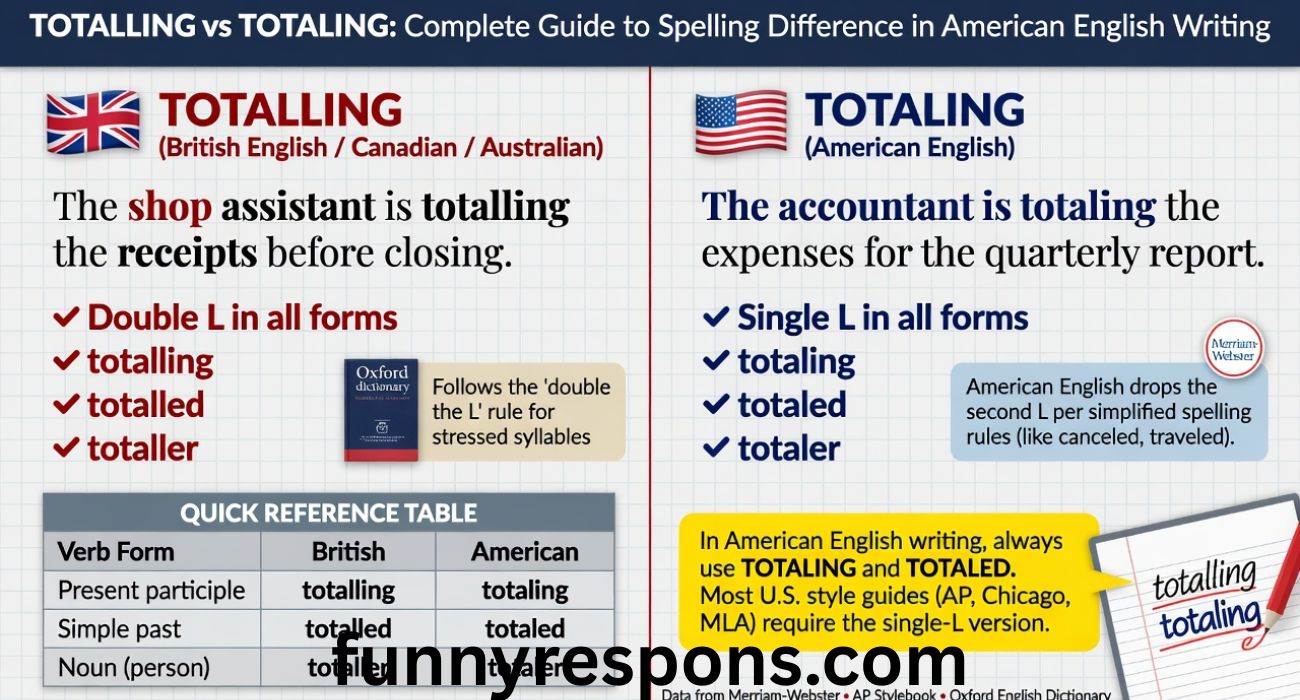
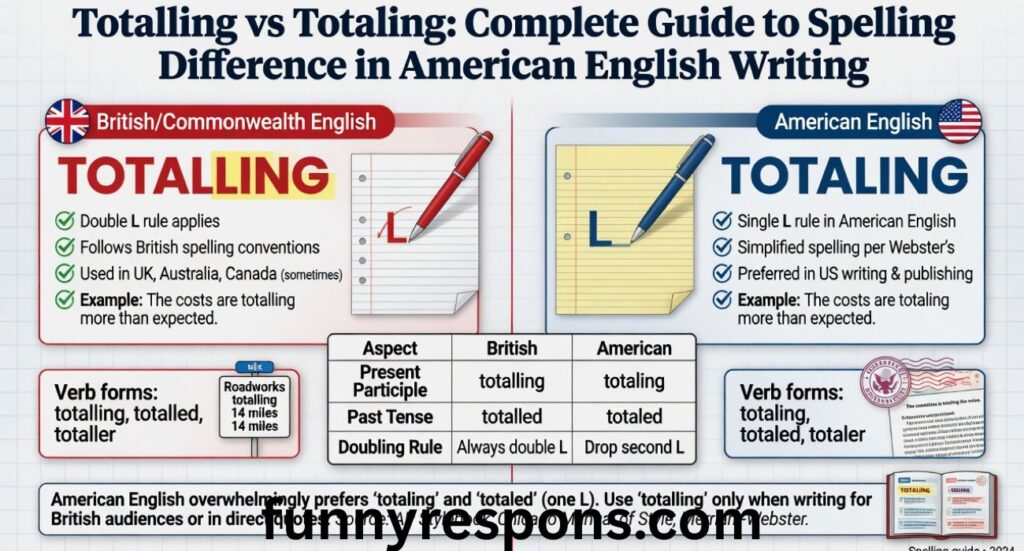
American English uses “totaling” while British English uses “totalling.”
Understanding this helps you write clearly and correctly in every situation.
Totalling vs Totaling Meaning in Simple English
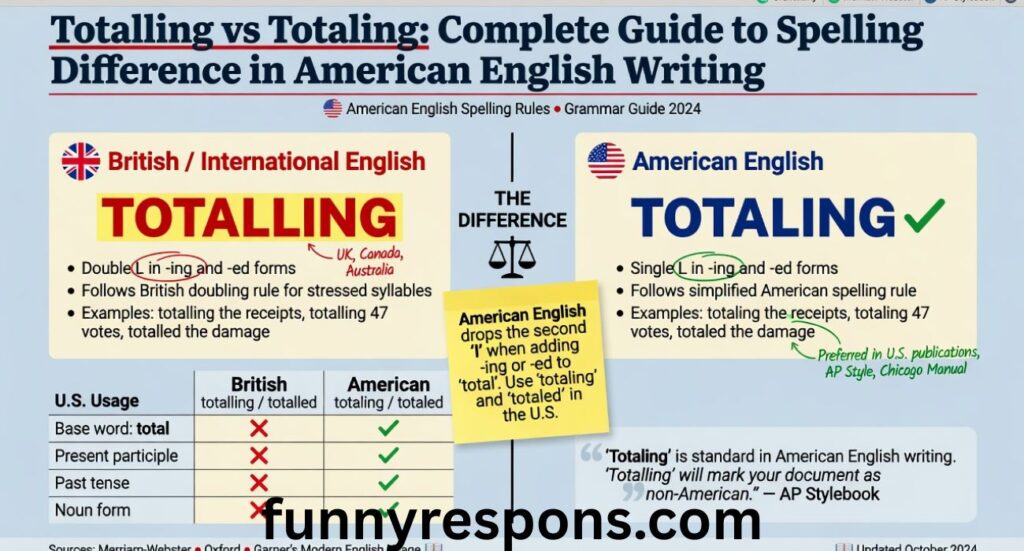
The words totalling vs totaling both describe the act of adding numbers to find a sum total. In everyday life, you use this when handling expenses, budget planning, receipts, invoices, and financial reports. The only real difference comes from British English and American English spelling rules, not meaning. British English prefers “totalling,” while American English uses “totaling.”
In the USA, American English spelling rules are followed in schools, offices, and business communication. That means “totaling” is the correct form in most cases. Whether you are working on data entry, spreadsheets, or bookkeeping tasks, the meaning stays the same. The difference is only part of language variation, grammar rules, and writing consistency used in formal and informal writing.
Read Also : Have a Great Rest of Your Week in the USA: Meaning, Alternatives, and Email Writing Guide
What do “Totalling” and “Totaling” Mean?
The phrase totalling vs totaling meaning refers to the process of summing or calculating numbers to reach a final amount. It is commonly used in financial writing, accounting terms, and arithmetic tasks. You might see it when someone is working on monthly expenses, sales figures, or financial reports in both school and business settings.
For example, a student may be adding up school assignment scores, while an accountant may be working on bookkeeping and financial reports. Both words describe the same action. The only difference is spelling based on regional spelling rules, UK spelling, and US spelling standards, which affect how documents are written and reviewed for clarity and credibility.
As a Noun
When used as a noun, totalling or totaling means the final result of adding numbers. It shows the completed sum after calculations.
This form appears often in accounting, financial reports, and business communication. It helps maintain accuracy and supports clear understanding in official work.
In financial writing and spreadsheets, people use phrases like “totaling of expenses” or “totalling of invoices.”
This usage improves clarity, professionalism, and writing consistency in documents. It is very useful in bookkeeping, data entry, and document editing, where precision builds credibility.
As a noun, it always reflects the end result of calculation work.
It helps writers present numbers in a clean and organized way.
This makes reports easier to read and understand.
As an Adjective
As an adjective, totalling vs totaling describes something related to a calculation process. It appears in reports, essays, and academic writing when explaining number-related results.
This form helps improve communication skills and writing clarity in structured documents.
For example, a report may mention a “totaling error” in financial management or budget tracking.
It can also appear in school assignments and professional writing tasks where mistakes need explanation clearly and simply.
Using it correctly shows understanding of grammar rules, verb usage, noun usage, and adjective usage.
It supports proper English language conventions and writing consistency.
This improves overall quality in both academic and professional documents.
“Totalling or Totaling”: What’s the Difference?
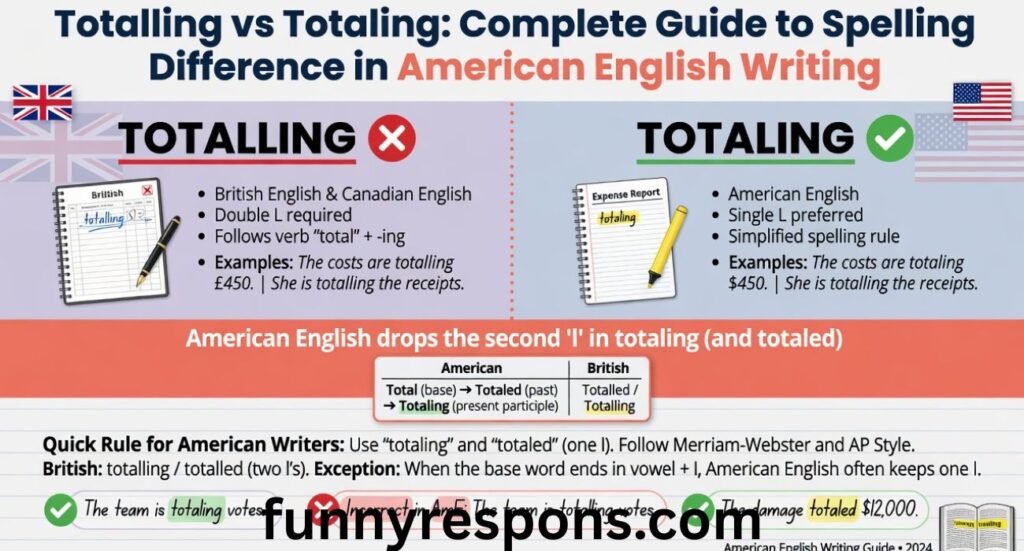
The main spelling difference between totalling and totaling is regional. British English uses “totalling,” while American English uses “totaling.” The meaning does not change, only the spelling varies based on language standards and style guides used in different countries.
In the United States, writing consistency and professionalism require using “totaling” in emails, reports, academic writing, and business documents. In the UK, “totalling” is preferred. Understanding this helps avoid confusion in international communication, document editing, and proofreading tasks, especially in professional environments where accuracy is expected.
| Region | Correct Spelling | Usage Context |
| USA | totaling | business, school, finance |
| UK | totalling | academic, formal writing |
Why Is There Confusion Between “Totalling” and “Totaling”?
The confusion comes from language variation and English spelling rules that differ between regions. Many people switch between UK spelling and US spelling without noticing, especially when reading online content. This creates inconsistency in digital writing and proofreading processes.
Another reason is autocorrect tools and software used in emails and documents. They sometimes apply the wrong spelling based on settings. This affects writing consistency, professionalism, and clarity in communication, especially in business communication, financial writing, and academic essays, where accuracy is very important.
A Simple Trick to Get Rid of Confusion
A simple rule helps you avoid mistakes in totalling vs totaling usage. Always choose your audience first. If you are writing for the USA, use “totaling” consistently in all documents. This improves writing consistency and document editing quality.
For example, in a budget report or financial spreadsheet, stick to one form only. Mixing both creates errors in proofreading, error correction, and professionalism. Think of it like a switch: UK equals “totalling,” USA equals “totaling.” This keeps your writing clean, simple, and easy to understand.
Synonyms of “Totalling” or “Totaling”
There are several helpful synonyms of totalling and totaling that improve writing variety. Words like adding up, summing, calculating, and computing are commonly used in finance management, arithmetic, and bookkeeping tasks.
These alternatives are useful in emails, reports, and essays where repetition should be avoided. For example, instead of saying “totaling expenses,” you can say “adding up expenses.” This improves clarity, communication skills, and writing style while keeping the meaning the same across financial reports and academic writing.
Using “Totalling” and “Totaling” in Sentences
In real usage, totalling vs totaling in sentences depends on region. In the USA, “totaling” is correct and appears in business communication, school assignments, and financial reports. It describes the action of adding numbers or calculating totals.
For example, “She is totaling monthly expenses for the budget report.” This shows how it fits into professional writing and financial writing contexts. It is commonly used in data entry, spreadsheets, and bookkeeping tasks, where accuracy and clarity are required for proper understanding.
Origins of “Totalling” and “Totaling”
The origin of totalling vs totaling spelling difference comes from historical changes in English. British English kept the double “l,” while American English simplified it to a single “l.” This change is part of broader language variation and English spelling evolution.
Over time, dictionaries and style guides adopted these differences. Today, both forms are correct depending on region. This evolution affects grammar rules, writing consistency, and communication standards, especially in academic writing, business documents, and professional communication worldwide.
Regional Differences in Spelling
The difference between UK spelling and US spelling plays a major role in how “totalling vs totaling” is used. British English uses “totalling,” while American English uses “totaling.” This impacts writing consistency in international communication.
For example, a UK financial report may use “totalling expenses,” while a US report uses “totaling expenses.” This difference is important in business communication, academic writing, and professional writing, where audience awareness ensures correct language conventions and clarity in documents.
Common Mistakes with “Totalling” and “Totaling”
Many writers mix totalling and totaling incorrectly in emails, reports, and essays. This usually happens when switching between British English and American English styles without noticing. It creates problems in writing consistency and proofreading accuracy.
Another common mistake is using both spellings in one document. This affects professional writing, financial reports, and academic essays. To avoid errors, always follow one style guide and maintain consistency in grammar rules, document editing, and error correction practices.
When to Prefer One Over the Other
Choosing between totalling or totaling depends on your audience. In the USA, always use “totaling” for professional writing and academic writing. In the UK, “totalling” is standard. This ensures proper language conventions and communication clarity.
For example, in a business report or budget sheet, consistency matters more than variation. Using the correct form improves credibility, professionalism, and writing tips application in real-world tasks like finance management and document editing.
Impact on Professional Writing
Correct use of totalling vs totaling improves professional writing and business communication quality. Small spelling differences can affect credibility, clarity, and audience trust, especially in financial writing and reports.
In workplaces, inconsistent spelling may lead to error correction, proofreading issues, and reduced professionalism. Using the correct form supports better communication skills, writing consistency, and productivity in tasks involving data entry, spreadsheets, and financial reports.
Pronunciation Guide
Interestingly, totalling and totaling pronunciation is the same in spoken English. Both sound like “TOH-tuh-ling.” The difference only exists in written English spelling rules, not in speech.
This means confusion mainly happens in digital writing, emails, and academic writing, not in conversation. Understanding this improves clarity, language awareness, and communication skills, especially for learners dealing with English spelling rules and regional spelling differences.
Related Words and Expressions
Related expressions to totalling vs totaling include summing, adding up, calculating, and computing totals. These are often used in financial writing, arithmetic tasks, and bookkeeping systems.
Using these alternatives improves writing variety, clarity, and professionalism. For example, instead of repeating “totaling,” you can use “calculating expenses” in reports, essays, and business communication, making your writing more natural and engaging.
Read Also : I Look Forward to Meeting You – Meaning, Tone, and Powerful Alternatives for Better Communication
Confusion in Digital Writing
In digital writing and emails, confusion around totalling vs totaling is very common. Autocorrect systems and global communication often mix UK spelling and US spelling, creating inconsistency.
This affects professional writing, academic essays, and financial documents, especially when multiple users edit the same file. Careful proofreading helps maintain writing consistency, credibility, and error correction, ensuring clear communication across platforms.
Grammar Rules for Totalling vs. Totaling
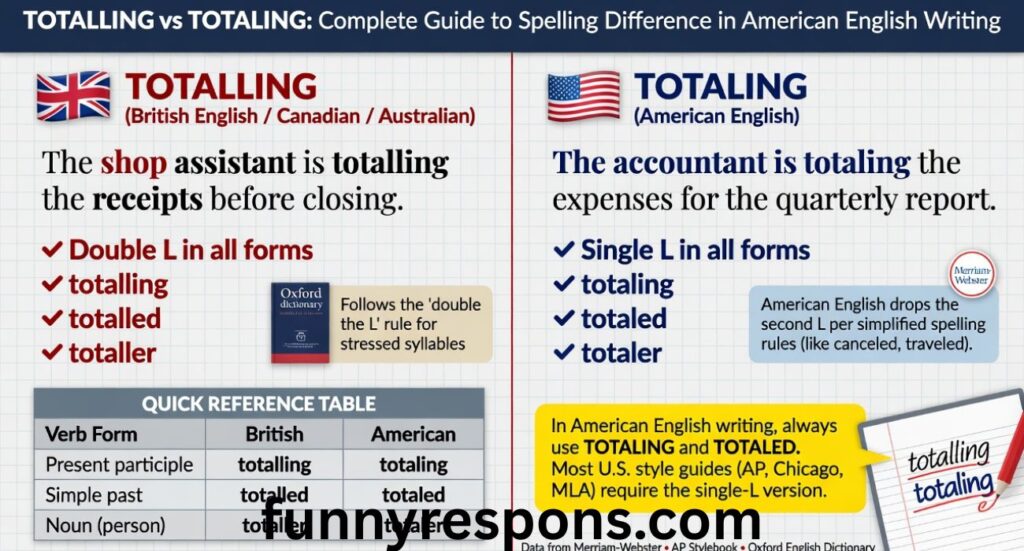
The grammar rule is simple: both words are verb forms showing action of adding numbers. The only difference is spelling based on regional spelling rules and language variation.
In the USA, “totaling” is correct for academic writing, business communication, and financial reports. Following these rules ensures proper grammar, verb usage, and writing consistency, which improves overall document quality.
Quiz: Can You Spot the Correct Usage?
To test your understanding of totalling vs totaling grammar rules, try filling in the blanks. In the USA, the correct answer is always “totaling.” This helps reinforce writing tips and language conventions.
Example: She is ___ her monthly expenses. The correct answer is “totaling.” This simple practice improves communication skills, proofreading ability, and grammar awareness, especially in school assignments and professional writing tasks where accuracy is important.
Totalling vs Totaling in Modern American Writing Standards
Modern American writing strongly prefers the spelling totaling, especially in business communication, academic writing, and professional writing. This standard is guided by US spelling rules, grammar rules, and style guides used across schools and workplaces. Writers focus on writing consistency, clarity, and credibility when choosing the correct form in documents like reports and emails.
In contrast, British English still uses totalling, which can create confusion in global communication. However, in the USA, using the correct spelling improves proofreading accuracy, document editing, and communication skills. Whether handling financial reports, expenses, or spreadsheets, consistent usage of “totaling” ensures your writing looks professional and aligns with modern language conventions.
How Totalling vs Totaling Affects Business Communication
In business communication, spelling accuracy plays a major role in how professional your message appears. Using totaling in American English documents ensures clarity in emails, reports, and financial summaries. Companies follow strict style guides to maintain consistency across internal and external communication, especially in finance-related tasks.
Incorrect spelling like mixing totalling and totaling can reduce credibility and professionalism. It may confuse readers reviewing invoices, budgets, or financial reports. Clear usage supports better writing consistency, audience awareness, and document editing, which are essential in modern workplaces where precision in language directly affects communication quality and trust.
Totalling vs Totaling in Academic Writing and Exams
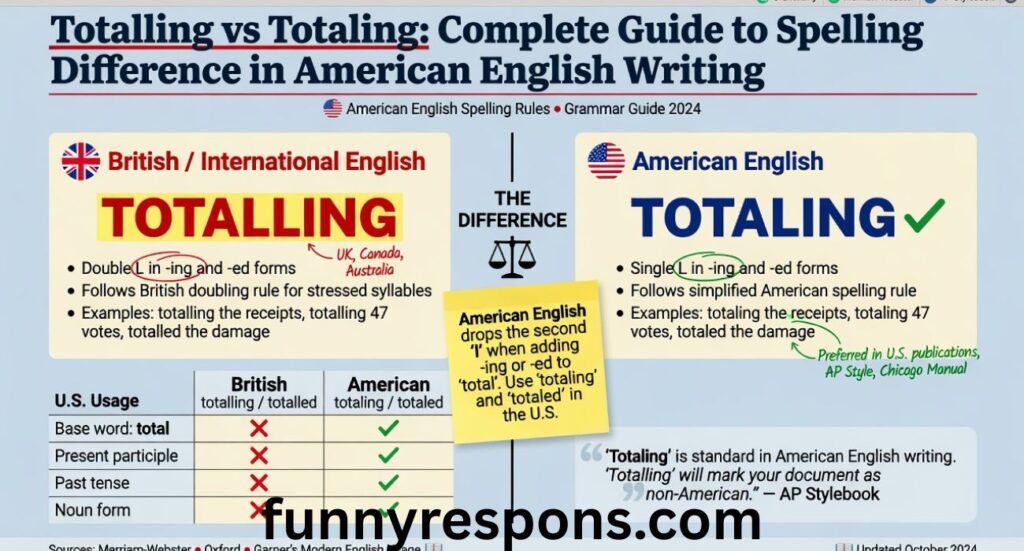
In academic writing, students must follow correct English spelling rules based on their region. In the USA, totaling is the correct form used in essays, assignments, and exam answers. Teachers expect proper use of grammar, verb usage, and writing consistency, especially in subjects involving mathematics, economics, or finance.
Using the wrong spelling can affect clarity, credibility, and grading performance. Whether writing about arithmetic, budgeting, or data analysis, students should maintain consistent US spelling conventions. Proper use of “totaling” also improves communication skills, proofreading habits, and document editing accuracy, which are essential for academic success.
Why Style Guides Prefer Totaling in US English
Most American style guides like APA, MLA, and Chicago recommend using totaling instead of totalling. These guides help maintain writing consistency, grammar accuracy, and professional standards across academic and business documents. They ensure that all writers follow the same language conventions and spelling rules.
Following a style guide improves clarity, credibility, and audience awareness. It also helps avoid confusion in reports, essays, and financial writing where consistency matters. Whether working with data entry, spreadsheets, or bookkeeping tasks, using “totaling” supports polished and error-free communication in professional environments.
Totalling vs Totaling in Financial Reports and Accounting
In accounting and financial writing, accuracy is essential. The word totaling is commonly used in the USA when working with expenses, invoices, budgets, and financial reports. It describes the process of adding up numbers, summing data, and calculating totals in structured financial systems.
Using incorrect spelling like totalling in American reports may reduce professionalism and credibility. Accountants rely on strict grammar rules, writing consistency, and document editing practices. Clear spelling ensures accurate communication in bookkeeping, financial management, and spreadsheet analysis, where even small errors can affect overall results.
Common Digital Errors with Totalling vs Totaling
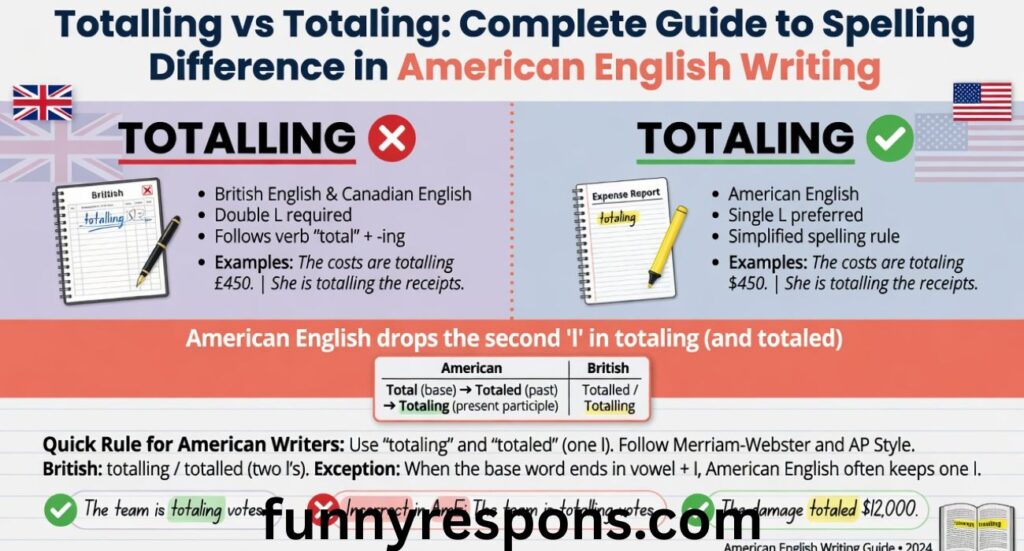
In digital writing, errors often happen due to autocorrect, keyboard settings, and language variation. Writers may accidentally switch between totalling and totaling, especially when working on international documents or using mixed devices. This creates inconsistency in emails, reports, and online communication.
Such mistakes can affect clarity, proofreading accuracy, and professionalism. In fast-paced environments like business communication or academic writing, these errors may go unnoticed. Maintaining correct usage of totaling in US English helps improve writing consistency, communication skills, and document editing quality across all digital platforms.
Totalling vs Totaling in Everyday Communication
In everyday writing, totaling is commonly used in American English conversations, emails, and notes. People use it when discussing monthly expenses, receipts, or budget planning. It appears in both casual and formal writing where simple and clear communication is needed.
Using consistent spelling improves clarity, readability, and audience awareness. Whether you are writing a quick email or preparing a financial summary or school assignment, correct usage of “totaling” ensures better understanding. It also strengthens grammar awareness, writing tips, and communication skills in daily tasks.
How Totalling vs Totaling Impacts SEO and Online Writing
In SEO writing and digital content creation, using the correct spelling totaling helps target American audiences effectively. Search engines recognize language consistency, keyword usage, and regional spelling differences, which influence content relevance and ranking in US-based searches.
Incorrect mixing of totalling and totaling can weaken SEO performance, readability, and credibility. Writers must focus on writing consistency, audience awareness, and keyword optimization. Using proper US spelling improves visibility in blogs, articles, and online financial content, especially when targeting professional or educational readers.
Totalling vs Totaling in Editing and Proofreading Process
During proofreading and document editing, checking for correct usage of totaling vs totalling is essential. Editors ensure that all spelling follows US English standards when writing for American audiences. This improves writing consistency, grammar accuracy, and professional quality of the final document.
Errors in spelling can reduce credibility and clarity, especially in financial reports, academic writing, and business communication. Careful proofreading helps maintain consistency across emails, essays, and reports, ensuring that “totaling” is used correctly in all relevant sections of the document.
Learning Totalling vs Totaling for Better Communication Skills
Understanding totalling vs totaling improves overall communication skills and language awareness. Writers learn how regional spelling rules and English conventions affect meaning and presentation in professional and academic contexts. This helps avoid confusion in business communication and formal writing.
Mastering correct usage builds stronger writing consistency, grammar understanding, and proofreading ability. Whether working on essays, reports, or financial documents, using “totaling” correctly ensures clear and professional communication. It also improves confidence in document editing, email writing, and academic tasks.
Future of Totalling vs Totaling in English Language
The future of totalling vs totaling usage is moving toward simplification, especially in American English writing standards. The spelling “totaling” is widely accepted in digital writing, academic systems, and business communication across the USA.
As global communication increases, consistency becomes more important. Writers must follow language conventions, style guides, and grammar rules to maintain clarity. Using correct spelling ensures better writing consistency, professionalism, and audience understanding in all forms of modern communication.
FAQs
What is the difference between totalling and totaling?
The difference is only spelling. “Totaling” is American English, while “totalling” is British English. Both mean adding numbers to get a sum.
Which spelling should I use in the USA?
In the USA, you should always use “totaling.” It follows American English spelling rules used in schools, offices, and professional writing.
Do totalling and totaling have different meanings?
No, they mean exactly the same thing. The only difference is regional spelling, not meaning or grammar usage.
Why do people get confused between totalling and totaling?
People get confused because they mix British English and American English spelling rules, especially in digital writing and autocorrect systems.
Conclusion
The difference between Totalling vs Totaling is simple when you understand the rule. American English uses totaling, while British English uses totalling. Both words mean adding numbers to find a final sum. This idea appears in many places like school work, financial reports, expenses, invoices, and daily calculations. Once you choose one spelling style, you should use it in the same way throughout your writing. This keeps your work clear and easy to read.
Good writing needs clarity, consistency, and correct grammar rules. Using the correct form of Totalling vs Totaling helps you write better emails, reports, and assignments. It also improves your communication skills and writing confidence. In American English, “totaling” always gives the correct result in professional and academic work. Simple and correct spelling builds strong writing habits and supports better understanding in every type of document.