Since vs Sense: Complete English Grammar Guide for Clear Writing in USA English
Since vs Sense shows two different words in English grammar with different meanings and usage.
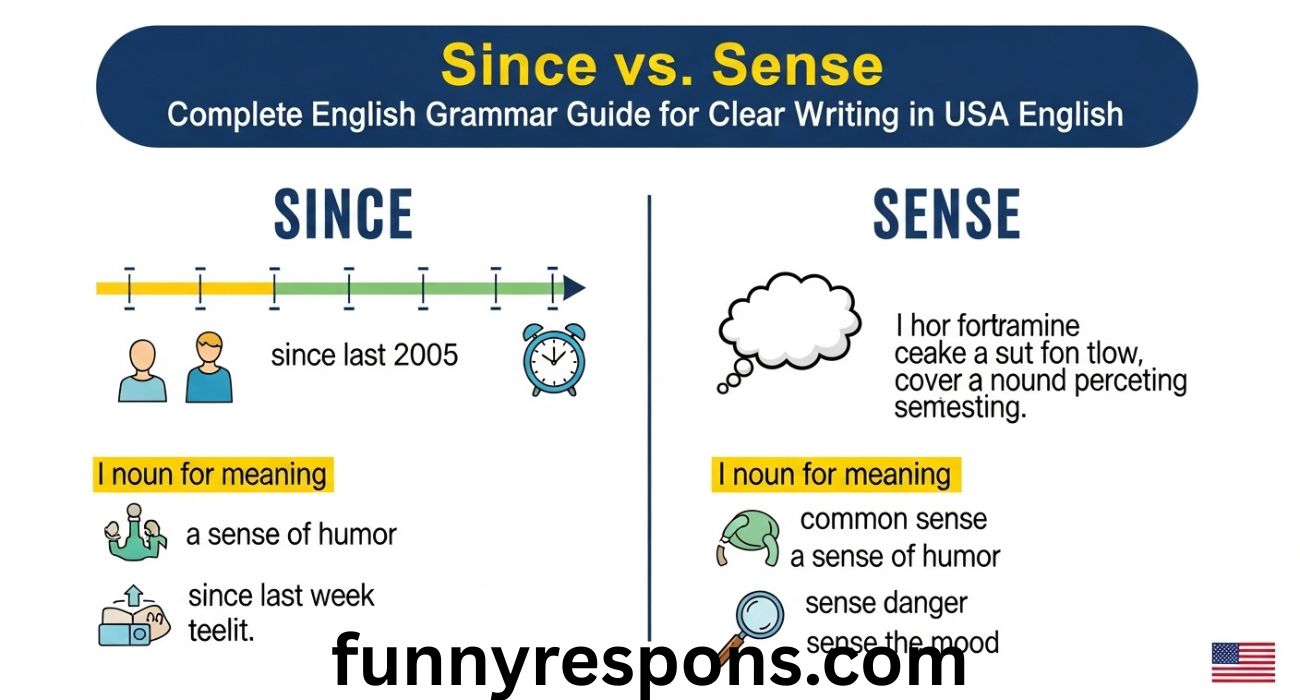
Since is used to show time or a reason in a sentence in simple English writing.
Sense is used to show meaning, feeling, understanding, or perception in communication.
Many learners often get confused between Since vs Sense in reading, speaking, and writing English.
Both words sound very similar, so people make mistakes when they do not check the context.
This confusion can affect clarity and create errors in grammar and sentence structure.
Since vs Sense is an important topic in English learning for students and beginners.
It helps learners understand how meaning changes based on word choice in sentences.
With regular practice, students improve grammar, vocabulary, and overall communication skills.
Why People Commonly Confuse “Since” and “Sense”

The confusion between since vs sense happens mostly because they are homonyms and part of homophones in English. They sound nearly identical, yet their meaning and usage are completely different. One relates to time or reason, while the other connects to perception, understanding, and feeling. This sound similarity creates constant confusion in spoken and written English.
For example, a learner might write “I don’t have any since of direction,” instead of “sense of direction.” This small grammar mistake changes the entire sentence meaning. Since English relies heavily on contextual meaning, even a tiny spelling error can affect communication clarity. That is why many USA learners focus on English grammar guide practice for these tricky word pairs.
Read Also : I Am Honored: 35 Powerful Alternatives to Express Gratitude, Respect
Pronunciation Pitfalls: Hearing vs Understanding
The words since vs sense are tricky because their pronunciation confusion happens in fast conversation. Both words end with a soft “-nce” sound, making them almost identical when spoken quickly in American English. This leads to mistakes in listening tasks, especially for learners improving language skills and learning English fluency.
For example, when someone hears “I’ve worked here since 2010,” they might misinterpret it due to weak context clues. However, understanding the sentence structure helps fix this issue. Listening carefully to time markers or emotional tone improves understanding meaning in English and reduces word confusion examples during real conversations.
The Role of Context in Choosing Between Since and Sense
The biggest key to mastering since vs sense usage is understanding contextual meaning. The word since usually connects to time or reason, while sense connects to understanding, perception, or feeling. Without context, both words feel confusing, but with practice, they become easy to separate.
For example, “I haven’t seen her since yesterday” uses since as a preposition of time, while “That idea makes sense” uses sense as a noun. This shows how grammar rules English depend heavily on context. Once learners train their brain to detect meaning, sentence structure becomes clearer and faster to understand.
Quick Grammar Tips to Avoid “Since” and “Sense” Errors
A simple grammar tips trick helps avoid confusion: if the sentence talks about time or reason, use since. If it talks about meaning, feeling, or understanding, use sense. This easy rule works in most cases and improves writing improvement instantly for beginners and advanced learners.
Another trick is replacing since with “because” to test accuracy. If the sentence still makes sense, then since is correct. For sense, think of phrases like common sense, sense of smell, or sense of humor. These patterns strengthen vocabulary usage and reduce grammar mistakes correction in everyday writing.
Common Mistakes Learners Make with Since and Sense
Many learners often confuse since vs sense mistakes in both writing and speaking. A common error is writing “He has a great since of humor” instead of “sense of humor.” This happens due to weak language learning English habits and lack of focus on word meaning and usage differences.
Another mistake appears in time sentences. For example, “Sense I arrived late, I missed the bus” is incorrect because since must be used for reason or time. These small errors affect essay writing tips performance and reduce communication clarity, especially in academic or professional formal writing situations.
How “Sense” Connects to Our Five Senses and Intuition
The word sense meaning and usage extends beyond grammar. It connects to our five senses: sight, smell, hearing, taste, and touch. For example, sense of smell or sense of direction shows physical perception, while emotional phrases like intuition reflect deeper understanding and awareness.
In everyday American English, people also use common sense to describe practical thinking. Saying “That doesn’t make sense” means something is illogical or unclear. These expressions strengthen language skills and improve understanding meaning in English, especially when learning real-life conversational patterns.
Historical Origins: Where Did “Since” and “Sense” Come From?
The origin of since vs sense explains why they sound similar today. The word since comes from Old English and relates to time progression, often used in phrases like since 2010 or since yesterday. It always connects to time or cause-based meaning in sentences.
Meanwhile, sense comes from Latin “sensus,” meaning perception or feeling. This origin connects strongly to understanding, awareness, and human experience. Over time, both words evolved into modern English but remained separate in grammar rules English, despite their similar sound patterns in speech.
The Importance of Correct Usage in Formal Writing
In formal writing, using since vs sense correctly is extremely important. A wrong word can reduce credibility in essays, emails, or professional documents. For example, saying “I have no since of responsibility” creates confusion and weakens the message in academic or business communication.
Correct usage improves writing improvement, especially in structured environments. Using since for time or reason and sense for understanding shows strong command of sentence structure and language skills. This clarity is highly valued in USA academic and workplace communication standards.
Fun Memory Tricks to Remember Since vs Sense
A simple memory tricks method helps learners remember the difference easily. Think of since as a clock, because it always deals with time or events. For example, “I have lived here since 2010” clearly shows a time reference and helps reinforce pattern recognition.
Now think of sense as the brain or heart. It deals with feeling, understanding, and perception. For example, “It makes sense” or “sense of humor” connects to thought or emotion. These mental images reduce confusion and improve learning English naturally through association.
How to Proofread Your Writing for Since/Sense Confusion
A strong proofreading habit can fix most since vs sense errors. When reviewing your writing, always check whether the sentence refers to time, reason, or understanding. This quick scan improves grammar mistakes correction and strengthens overall writing quality.
Reading aloud is another powerful tool. If a sentence sounds odd, it often signals a grammar mistake. For example, “She has no since of direction” feels wrong when spoken. Fixing it to “sense of direction” improves communication clarity and overall readability.
Exploring Idioms and Phrases with “Sense”
The word sense idioms and phrases plays a huge role in American English communication. Expressions like common sense, make sense, and sense of humor are widely used in daily conversation. These phrases focus on understanding, logic, and emotional awareness rather than time.
For example, saying “That makes sense” means something is logical and clear. However, using since in such phrases would be incorrect. Learning these idioms improves vocabulary usage, strengthens informal speech, and helps learners sound more natural in real conversations.
When “Since” Acts Like a Storyteller in Your Sentences
The word since usage in sentences works like a storyteller because it connects events across time. It helps explain when something started or why something happened. For example, “Since I moved to USA, I have improved my English” shows both time and experience.
In storytelling, since builds flow and connection between ideas. It acts as a bridge between past and present. This improves sentence structure, enhances writing improvement, and creates smoother communication clarity in both academic and casual writing situations.
Advanced Usage: Subtle Differences in Formal vs Informal Speech
In advanced since vs sense usage, tone matters. In informal speech, people often use since instead of “because.” For example, “Since it’s late, let’s go home” feels natural in conversation. However, in formal writing, “because” is often preferred for precision and clarity.
The word sense, however, remains consistent in both styles. Whether in essays or daily talk, phrases like sense of direction or sense of urgency stay the same. This balance improves essay writing tips, strengthens grammar rules English, and supports better communication across settings.
Comparing “Since” and “Sense” with Other Commonly Confused Words
The confusion between since vs sense is similar to other English word pairs like their vs there or than vs then. These commonly confused English words USA examples show how pronunciation and spelling differences can affect communication and understanding.
Below is a simple comparison table:
| Word Pair | Meaning Difference | Example |
| since vs sense | time/reason vs understanding | since 2010 / sense of humor |
| than vs then | comparison vs time | better than / then later |
| their vs there | possession vs place | their book / over there |
Understanding these patterns improves language skills, reduces confusion, and builds stronger writing improvement habits over time.
Mastering “Since vs Sense” Through Real-Life American English Usage
Understanding since vs sense difference becomes much easier when you see how native American speakers actually use them in daily life. In real conversations, since often connects events over time, while sense shows understanding or emotion. This practical exposure helps learners improve communication clarity, reduce confusion, and strengthen natural language skills in both writing and speaking situations.
For example, Americans say “I’ve worked here since Monday” to show time, while “That doesn’t make sense” shows understanding. These patterns build strong context clues for learners. Once you notice how both words appear in everyday speech, your grammar mistakes correction improves naturally and your confidence in sentence structure grows without extra effort.
Why Native Speakers Rarely Confuse Since and Sense

Native speakers rarely struggle with since vs sense usage because they rely on instinct built from exposure. They don’t think about rules every time. Instead, they understand meaning instantly through contextual meaning, which helps them separate time reference from understanding or perception without hesitation in conversation or writing.
For learners, this automatic skill takes practice. Listening to podcasts, TV shows, and conversations improves pronunciation confusion English awareness. Over time, your brain starts recognizing patterns like “since 2010” or “sense of humor,” helping you avoid common word confusion examples and strengthening natural English learning tips for long-term fluency.
Read Also : 35 Other Ways to Say “Please Disregard My Previous Email”
Breaking Down Since vs Sense in Academic Writing
In academic settings, mastering since vs sense formal writing is very important for clear expression. Professors expect correct grammar rules English usage, especially when explaining ideas or arguments. Misusing these words can weaken essays and reduce clarity in writing improvement, even if your ideas are strong and well researched.
For example, “Since the experiment began in 2020” correctly shows time, while “The results make sense” shows understanding. Using them correctly improves essay writing tips, strengthens argument flow, and ensures better sentence structure in academic papers, research assignments, and formal reports across USA education systems.
How Context Clues Help You Choose Between Since and Sense
Context clues are powerful tools in solving since vs sense confusion. Instead of memorizing rules, you can look at surrounding words to understand meaning. If the sentence talks about time or reason, it points to since. If it talks about understanding or feeling, it clearly points to sense.
For example, “Since it rained, the game was canceled” uses time logic. But “This explanation makes sense” uses meaning logic. Practicing this improves language learning English, builds stronger vocabulary usage, and helps learners quickly identify correct usage in both spoken and written communication.
The Psychology Behind Confusing Since and Sense
The confusion in since vs sense grammar is not just linguistic, it is psychological. The brain processes similar sounds quickly, especially in fast speech. Because both words sound alike, learners experience mental overlap, which leads to frequent grammar mistakes correction challenges in real-time communication and writing tasks.
This is why many learners struggle during listening tests or conversations. However, training your brain with repeated exposure improves recognition. Over time, contextual meaning becomes automatic, reducing hesitation and improving understanding meaning in English during both formal writing and informal speech situations.
How Since and Sense Shape Professional Communication
In professional environments, correct since vs sense usage affects how people perceive your writing. Emails, reports, and presentations must show strong communication clarity. A single incorrect word can create misunderstanding, especially in formal business contexts where precision in grammar rules English is highly valued.
For example, “Since 2015, our company has grown” shows experience over time. Meanwhile, “This strategy makes sense” shows logical understanding. Using both correctly improves professional tone, strengthens credibility, and supports better writing improvement in workplace communication across USA industries.
The Role of Sentence Structure in Avoiding Confusion
Strong sentence structure helps reduce since vs sense mistakes significantly. When sentences are clearly organized, it becomes easier to identify whether the meaning relates to time, reason, or understanding. Poor structure often increases confusion and leads to incorrect word choice in writing.
For example, placing time markers early in sentences often signals since, while descriptive phrases signal sense. Practicing structured writing improves language skills, enhances grammar mistakes correction, and builds confidence in constructing clear and natural English sentences for everyday communication.
Why Learners Struggle with Since vs Sense in Exams
Many students struggle with since vs sense confusion during exams because of time pressure and lack of deep understanding. Under stress, learners often rely on sound instead of meaning, which increases common errors in grammar sections of tests and writing assessments.
To improve, learners should practice proofreading and focus on context clues before choosing answers. Regular exposure to word confusion examples helps build confidence. This improves performance in English learning tips, especially in standardized exams and academic writing tasks in USA education systems.
How Memory Tricks Improve Since vs Sense Mastery
Memory techniques are powerful tools for solving since vs sense difference challenges. Associating since with a timeline helps learners remember its connection to time and reason. On the other hand, linking sense with the brain helps reinforce its meaning related to understanding and perception.
For example, imagine a clock for “since” and a thinking face for “sense.” These mental images reduce confusion and improve recall speed. Over time, this strengthens vocabulary usage, supports better grammar tips, and improves long-term English fluency.
Building Long-Term Fluency with Since and Sense Practice
Long-term mastery of since vs sense usage requires consistent practice and real-world exposure. Reading, writing, and listening daily helps learners internalize patterns naturally. This gradual process improves language skills and reduces dependency on memorized grammar rules.
For example, writing daily sentences like “I have studied English since last year” or “This idea makes sense” builds strong habit memory. Over time, learners develop automatic recognition, improve writing improvement, and achieve better fluency in both formal writing and informal speech contexts.
FAQs
What is the difference between since vs sense?
Since shows time or reason, while sense means understanding, feeling, or perception. One talks about when or why something happens, and the other talks about meaning or logic.
How do I remember when to use since or sense?
Use since when you talk about time or cause. Use sense when you mean understanding or feelings. A simple trick is: time = since, thinking = sense.
Can since and sense be used in the same sentence?
Yes, they can appear together if the sentence needs both meanings. For example, “Since I started learning English, everything makes sense now.”
Why do people confuse since and sense?
People confuse them because they are homophones and sound almost identical in speech. This leads to mistakes when writing without checking the context carefully.
Conclusion
Since vs Sense helps students write clear and correct English. The word since shows time or reason, while sense shows meaning, feeling, or understanding. When you learn this difference, you avoid common grammar mistakes and improve your writing skills. Good writers always check context before choosing a word. This simple habit builds strong communication and better sentence structure. It also supports learning English in a natural way. With practice, students start using both words correctly in school tasks, essays, and daily writing.
Learning Since vs Sense also improves confidence in reading and writing. Students can express ideas without confusion and choose the right word quickly. Simple practice, reading examples, and careful proofreading make a big difference. Over time, grammar becomes easier and more natural. Clear understanding of these words also supports better vocabulary usage and stronger language skills. This small improvement leads to better results in academic writing and everyday communication.