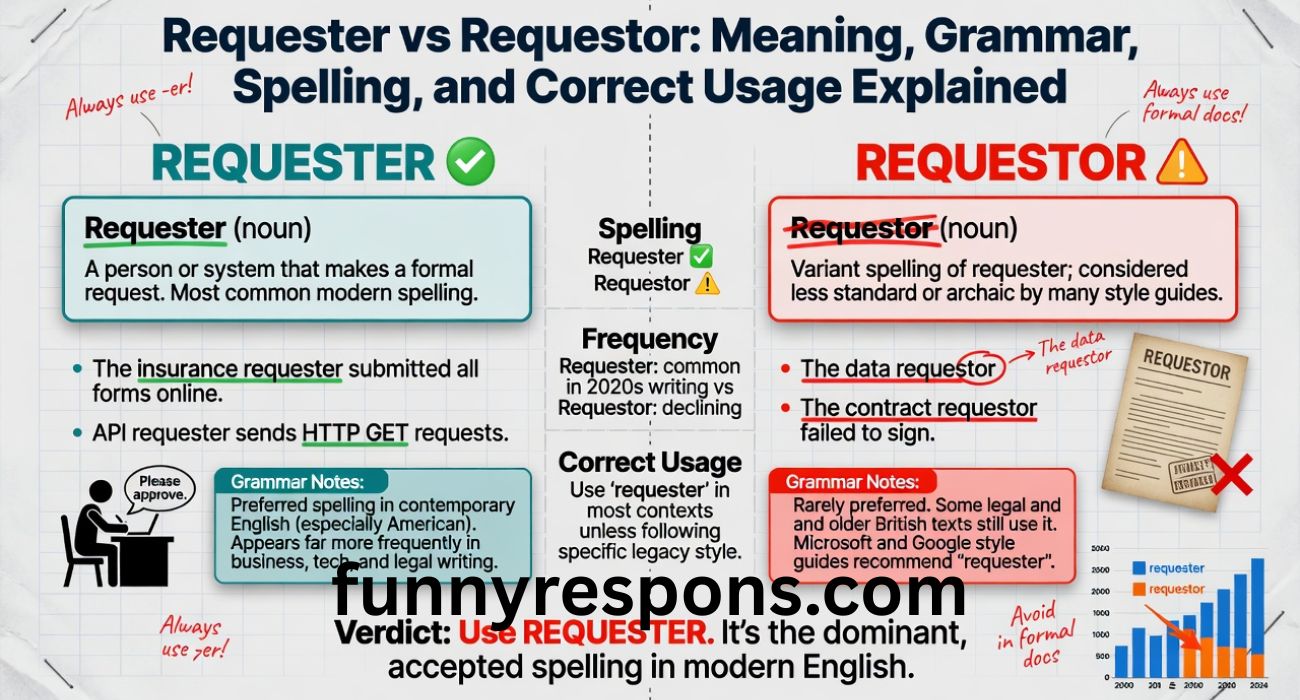
Requester vs Requestor: Meaning, Grammar, Spelling, and Correct Usage Explained
Requester vs Requestor refers to two words with almost the same meaning. Both words describe a person who makes a request. People often use these terms in business writing, legal papers, and office communication.
Many writers feel confused when choosing between requester and requestor. One small spelling change can make writing look more formal or more natural. Learning the correct usage helps people write clearly and professionally.
Today, most companies prefer the word “requester” in emails and workplace documents. The word “requestor” still appears in legal and technical writing. Understanding these terms improves grammar, spelling, and professional communication skills.
| Term | Common Usage | Tone | Popular In |
| Requester | Very Common | Natural | Business communication |
| Requestor | Less Common | Formal | Legal and technical writing |
What Do “Requester” and “Requestor” Mean?
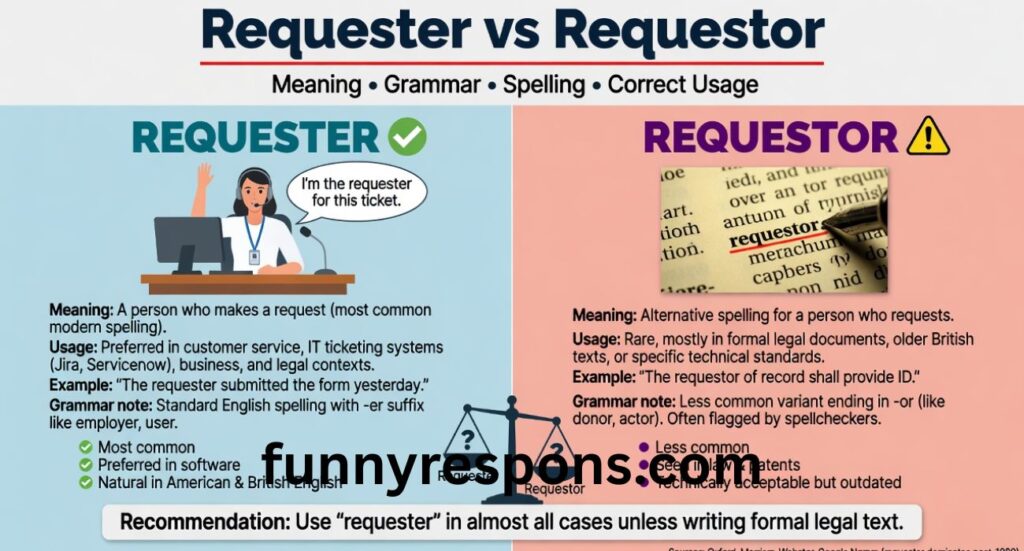
The words “requester” and “requestor” both describe a person who asks for something formally. The requester meaning refers to someone submitting a request, application, ticket, or inquiry. The requestor meaning is almost identical. Whether someone requests information, technical support, approval, or documents, both terms identify the individual starting the process. This similarity explains why people often confuse the two spellings in professional document language.
In workplaces, schools, hospitals, and government offices, these terms appear in official communication every day. A support platform may label the customer as the “requester” while a legal contract may call that same person the “requestor.” This is part of modern language evolution and industry-specific wording habits. Understanding these terms improves communication clarity, workplace grammar, and reader-friendly writing for both native and international English speakers.
Read Also : Waiting for Your Response: Meaning, Tone, and Smarter Ways to Communicate in Email Writing
“Requester” vs “Requestor”: What’s the Real Difference?
The real issue in requester vs requestor grammar is not meaning but preference and usage style. The word “requester” follows common English word-building rules using the “-er” ending, similar to teacher or builder. Meanwhile, “requestor” uses the “-or” ending often connected with legal jargon and technical writing. Because of this, many readers see “requester” as friendlier and easier to understand.
The difference between requester and requestor mainly depends on audience expectations and writing tone. In everyday workplace communication, “requester” sounds smoother and more modern. On the other hand, legal departments and compliance documents sometimes continue using “requestor” because older templates still contain that version. This creates a noticeable spelling variation across industries and professional environments.
| Feature | Requester | Requestor |
| Reader Familiarity | High | Moderate |
| Common in Emails | Yes | Rare |
| Legal and Technical English | Sometimes | Frequently |
| Audience-Friendly Language | Strong | Moderate |
| Modern Business English | Preferred | Limited |
Which One Is More Common: Requester or Requestor?
Today, “requester” clearly dominates modern writing. Most dictionaries, style guides, and online business communication platforms prefer this spelling because it feels more natural. The phrase requester preferred spelling accurately describes current English usage trends. You will often see “requester” in professional email wording, customer support language, and digital workplace systems.
Although “requestor” still exists, it appears mostly in specialized environments. The requestor industry preference remains strongest in legal paperwork terms, compliance forms, and older software systems. Some help desk terminology also uses “requestor” because legacy systems adopted that spelling years ago. However, modern digital platforms language trends increasingly favor simpler and more readable wording to improve user understanding.
“Clear writing creates trust faster than complicated wording.”
Is “Requestor” Correct English? Debunking the Myth
Many people assume “requestor” is incorrect because they rarely hear it in daily speech. However, requestor correct English is absolutely valid. Dictionaries recognize both spellings, and many organizations continue using “requestor” officially. The confusion happens because “requester” became far more common in modern business English and reader-focused communication.
The term “requestor” survives mainly through legal and technical English traditions. Lawyers, compliance officers, and software developers often use it in formal document wording. You may spot requestor in legal documents, audit systems, or access-control software. Even though it sounds formal, it still remains grammatically acceptable. The important thing is maintaining document consistency throughout your writing.
Choosing the Right Term for Your Writing
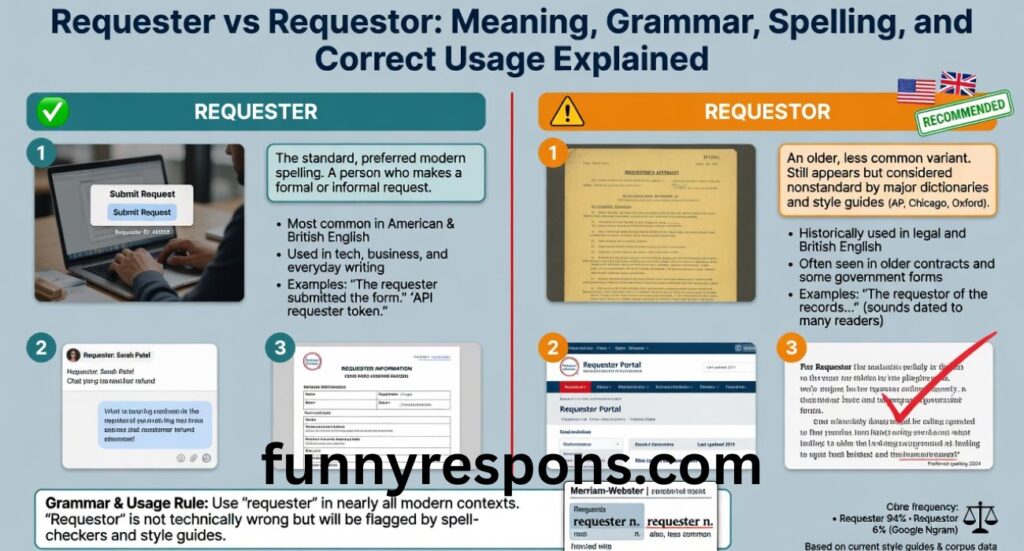
Choosing between “requester” and “requestor” depends on audience, industry, and tone. In general business communication, “requester” works best because readers instantly recognize it. It supports readability in writing and creates a smoother conversational flow. Most companies now prefer simpler wording because modern readers value speed and clarity over unnecessary complexity.
If you work with legal contracts, technical documents, or government paperwork, “requestor” may still appear frequently. In those situations, consistency matters more than personal preference. Writers should follow style guide preferences and internal company standards. Strong spelling consistency improves writing credibility and prevents confusion in official communication and multinational communication environments.
Examples in Context: Real-Life Usage
Seeing words used naturally helps people understand grammar faster. In office settings, “requester” usually sounds more approachable and modern. For example, a customer support email may say, “The requester will receive an update shortly.” This style fits business email language because it feels simple and direct. These are strong requester communication examples for everyday professional writing.
Meanwhile, legal teams often prefer more formal wording. A contract may state, “The requestor agrees to all compliance requirements.” These requester vs requestor examples show how industry context shapes language choices. Technical systems terminology also affects usage because many enterprise tools adopted “requestor” decades ago and never updated their wording standards.
| Situation | Preferred Word |
| Customer Service | Requester |
| Legal Contract | Requestor |
| Internal Email | Requester |
| Compliance Form | Requestor |
| IT Ticketing System | Requestor |
Requester Examples:
The word “requester” appears constantly in workplace communication because it sounds familiar and easy to read. Many businesses use it in customer service platforms, HR systems, and internal approval workflows. These requester examples help readers understand how naturally the word fits modern professional communication and audience-friendly language.
“The requester submitted the ticket yesterday.” “Please contact the requester for additional details.” “The requester approved the updated schedule.” These examples reflect strong requester usage in business environments. They also support reader-friendly writing because the word feels smooth, modern, and easy to pronounce during daily conversations and email exchanges.
Requestor Examples:
The word “requestor” appears more often in legal and technical English than casual business writing. Compliance departments, government offices, and technical systems terminology frequently rely on this spelling. These requestor examples show why some industries continue using the more formal version despite changing language trends.
“The requestor must provide official identification.” “Every requestor action is logged for security reasons.” “The requestor agrees to the listed contract conditions.” These examples demonstrate requestor usage in formal environments. While grammatically correct, the spelling may sound rigid in ordinary customer communication or workplace emails.
Can You Use “Requestor” in Business Communication?
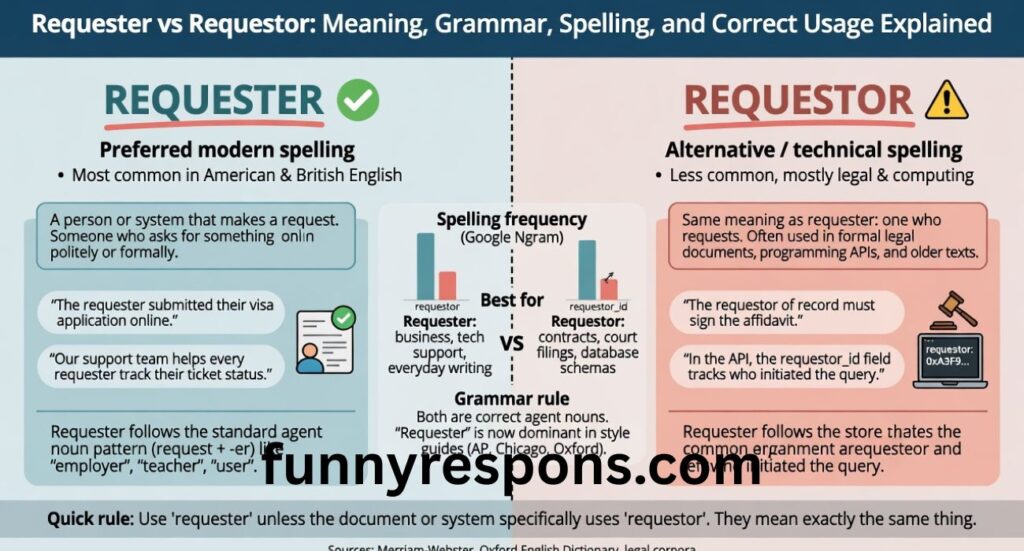
You can absolutely use “requestor” in business communication, but context matters. In customer-facing emails or workplace updates, “requester” usually sounds more natural. Readers process it faster because it follows standard English usage patterns. Businesses now focus heavily on communication clarity, especially in digital communication where short attention spans shape reading habits.
However, some organizations still rely on “requestor” in internal software or official paperwork terminology. A finance department, legal office, or compliance team may require that wording. In those situations, following company language rules matters more than personal style preferences. Good writing adapts to audience expectations while maintaining professionalism and readability.
Origins of the Words “Requester” and “Requestor”
The history behind these words explains why both spellings exist today. English often forms nouns by adding “-er” to verbs. That pattern created “requester,” just like teacher, painter, or driver. This structure feels natural to most readers because it matches common grammar habits used throughout modern English vocabulary.
The “-or” ending has Latin roots and appears often in legal jargon and technical language. Words like creditor, auditor, and contractor follow this style. Because of that history, “requestor” developed a more formal and institutional tone. This explains why legal contracts and official records continue using the variant spelling today.
| Word Ending | Common Tone | Example |
| -er | Conversational | Requester |
| -or | Formal | Requestor |
Regional Differences: US vs UK vs International Use
Regional spelling differences influence how people use these terms worldwide. In American English usage, both spellings appear, although “requester” dominates everyday communication. Most US companies now favor the simpler version because it improves readability in writing and sounds more approachable in customer-facing communication.
British English spelling strongly prefers “requester” in both formal and casual writing. International organizations also choose “requester” because multinational communication requires simple and universally understood wording. As businesses expand globally, companies increasingly prioritize communication clarity and reader accessibility over highly technical terminology.
The Evolution of “Requester” and “Requestor” in Modern English
Language constantly changes according to user behavior and communication needs. Decades ago, technical departments and enterprise systems adopted “requestor” because formal document language dominated software development. Many older IT systems still display that version today. This explains the continued presence of requestor in IT systems across industries.
Modern language evolution shifted toward simpler wording that feels easier to understand. Businesses discovered that audience-friendly language improves customer trust and communication efficiency. As a result, “requester” became the standard spelling in modern business English, professional writing, and digital customer service systems across the United States and beyond.
How to Use “Requester” and “Requestor” in Formal Writing
Formal writing requires careful word choice because terminology shapes reader perception. In most professional settings, requester in formal writing feels clearer and more natural. Business reports, emails, and presentations usually benefit from the simpler spelling because readers understand it instantly without hesitation or confusion.
Still, requestor in contracts and compliance documents remains common. Legal teams often preserve traditional wording for consistency across older records and templates. Writers should focus on document consistency and professional tone rather than personal preference. Once you choose a spelling, keep it unchanged throughout the entire document.
Pronunciation and Spelling: Requester vs Requestor Explained
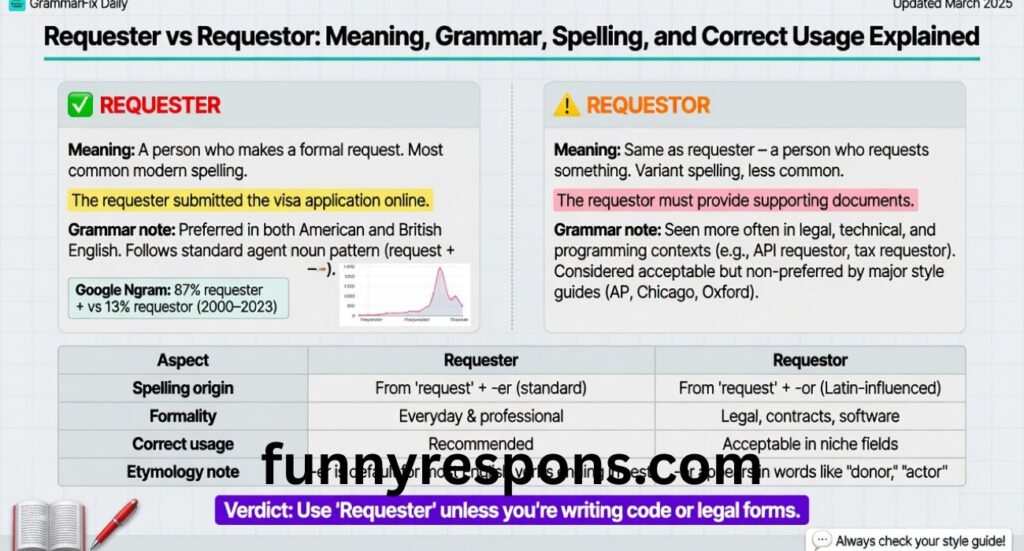
Interestingly, both words sound almost identical when spoken aloud. The slight spelling difference rarely changes pronunciation, which creates additional confusion for writers. Many people hear the word verbally and later guess the spelling incorrectly. This contributes to frequent grammar mistakes and spelling inconsistencies in workplace communication.
The issue becomes even more noticeable in speech-to-text software and fast typing situations. The phrase requestor pronunciation often surprises people because it sounds nearly the same as “requester.” Since readers recognize “requester” more quickly, businesses increasingly choose that spelling to improve communication speed and reduce misunderstanding.
Read Also : Hope All Is Well: 35 Better Ways to Say “Hope All Is Well” in USA Communication
Top Mistakes People Make Using Requester and Requestor
One major mistake involves mixing both spellings inside the same document. That inconsistency weakens professionalism and damages writing credibility. Readers may assume the writer overlooked grammar details or failed to proofread carefully. Strong requester consistency in writing creates cleaner and more trustworthy communication.
Another common issue happens when writers use “requestor” in casual customer support language. The formal tone may sound robotic or outdated to modern readers. Businesses now prioritize conversational communication because customers respond better to clear and natural wording. Simplicity often improves engagement more than complicated terminology.
| Common Mistake | Better Approach |
| Mixing spellings | Use one consistently |
| Overusing “requestor” | Prefer “requester” for readability |
| Ignoring audience | Match tone to readers |
| Using outdated templates | Modernize wording |
Synonyms of the Word “Requester”
Writers sometimes need alternatives to avoid repetition. Several useful synonyms can replace “requester” depending on context and industry. Words like applicant, submitter, petitioner, and participant all share similar meanings while creating slight tone differences in professional writing and official communication.
For example, “applicant” works better in job forms while “submitter” fits digital systems and online platforms. Legal paperwork may prefer “petitioner” because it sounds more formal. Choosing the right synonym improves word choice clarity and keeps writing fresh without sacrificing meaning or communication quality.
Popular Alternatives to Requester and Requestor
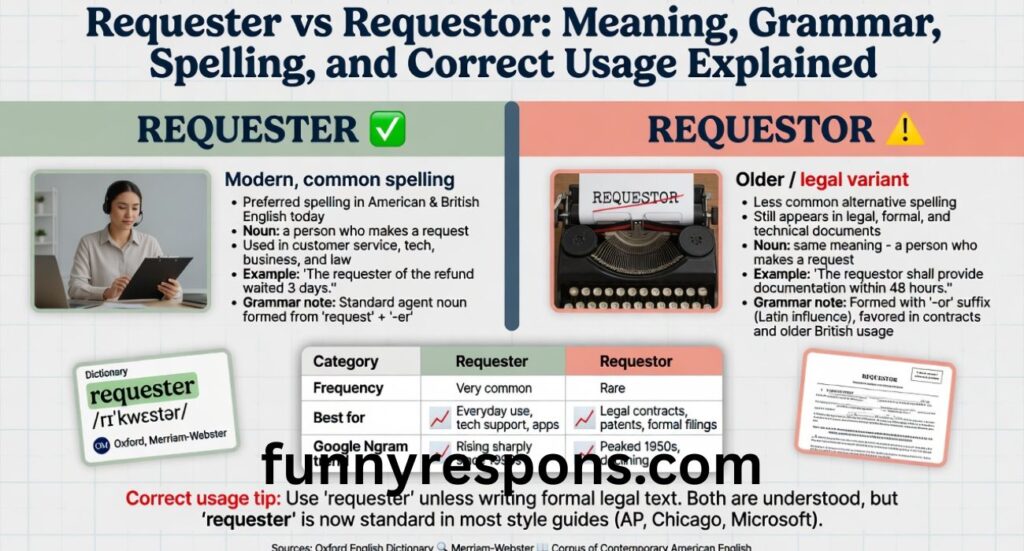
Modern companies increasingly use simpler alternatives instead of “requester” or “requestor.” Technology platforms often replace these words with “user” because it feels cleaner and easier to understand. Customer-focused businesses may choose “client” or “customer” depending on the communication style and industry setting.
These alternatives support reader-friendly writing and modern communication standards. Businesses now focus heavily on clarity because shorter and simpler words improve understanding across global audiences. While “requester” remains the preferred standard spelling, alternative terms sometimes create smoother communication in specialized industries and digital platforms.
| Alternative Word | Common Usage |
| User | Software systems |
| Client | Service businesses |
| Applicant | Hiring processes |
| Submitter | Digital forms |
| Participant | Research projects |
Why “Requester” Sounds More Natural in Modern Business English
The word requester in modern English feels smoother because it follows familiar language patterns people already use every day. Most readers instantly recognize the “-er” ending since English commonly uses it for roles like teacher, manager, and writer. This natural structure improves readability in writing and helps workplace communication feel more conversational instead of robotic or overly technical.
Modern companies value audience-friendly language because simple wording improves customer trust and communication speed. Businesses now focus heavily on professional email wording that feels clear and approachable. Because of this shift, requester in business writing has become the standard choice in emails, reports, customer service messages, and online support systems across the United States.
Why Legal Departments Still Prefer “Requestor”
Legal teams often continue using requestor legal usage because many contracts and compliance documents were originally written decades ago. Once organizations adopt a legal template, they rarely change terminology unless regulations require updates. This habit explains why “requestor” still appears in official paperwork terminology, court filings, and enterprise compliance systems today.
Another reason involves consistency across legal records and archived contracts. Lawyers prefer stable language because changing wording may create confusion during audits or legal reviews. While modern business English favors “requester,” the legal industry often values tradition over simplicity. That preference keeps requestor in legal documents alive despite changing communication trends.
How Customer Support Teams Use “Requester” Today
Customer service departments rely heavily on requester in customer service because the word sounds friendlier and easier to understand. Support emails must feel human and approachable, especially when customers already feel frustrated. Using natural wording improves communication clarity and helps readers process information faster during stressful situations.
Many help desk platforms now automatically label users as “requesters” inside ticket systems. This change reflects modern digital communication standards and reader-focused writing practices. Companies learned that conversational language improves customer satisfaction, reduces confusion, and creates stronger trust. As a result, “requester” now dominates support workflows and customer-facing communication tools.
Why Consistency Matters in Professional Documents
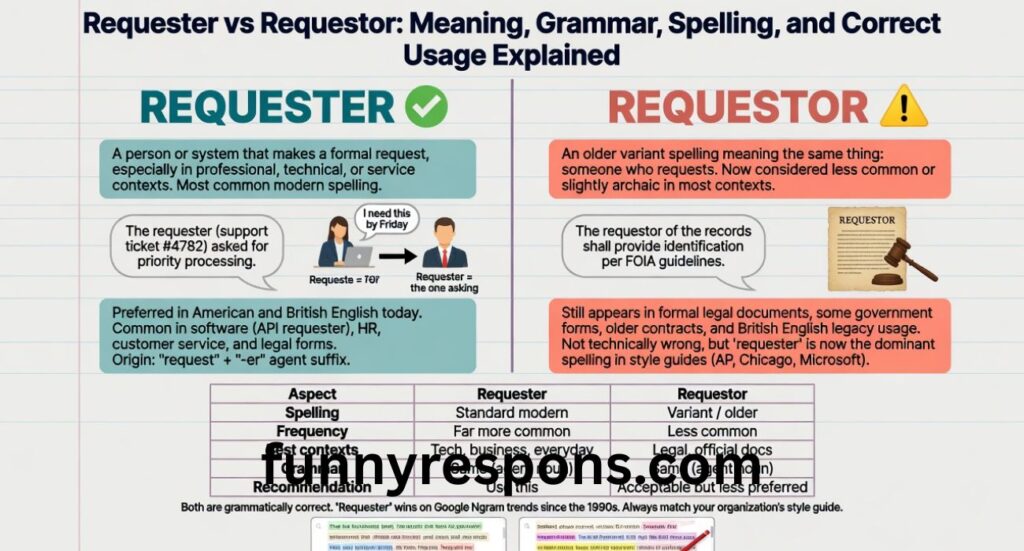
One of the biggest writing mistakes involves switching between “requester” and “requestor” inside the same document. Readers notice these inconsistencies quickly because repeated wording patterns shape their understanding of professional tone. Strong requester consistency in writing improves writing credibility and creates a polished appearance in workplace communication.
Consistency also matters for branding and internal company standards. Businesses often develop style guides to ensure every employee uses the same terminology across emails, reports, and technical documents. Whether a company chooses “requester” or “requestor,” maintaining uniform language supports communication clarity and helps organizations appear more professional and organized.
How Digital Platforms Changed Requester vs Requestor Usage
Technology played a major role in shaping the modern requester vs requestor differences discussion. Older software systems frequently used “requestor” because early developers preferred technical and formal wording. Many enterprise platforms still contain that spelling today, especially in access-control systems and compliance software used by large organizations.
However, modern apps and customer service platforms shifted toward simpler language design. Companies discovered that users respond better to clear wording that feels natural and easy to understand. This movement toward audience-friendly communication pushed “requester” into mainstream business writing and reduced reliance on highly technical language patterns.
The Role of Style Guides in Choosing the Correct Spelling
Large companies often rely on internal style guides to maintain consistent communication across departments. These guides determine whether employees should use “requester” or “requestor” in reports, contracts, emails, and customer support responses. Following style guide preferences helps businesses maintain professionalism and avoid unnecessary spelling confusion.
Style guides also improve document consistency for multinational communication. When teams work across countries and departments, standard terminology becomes extremely important. Most modern business style manuals now recommend “requester” because it improves readability in writing and aligns with standard English usage preferred by wider audiences.
Common Grammar Confusion Around Requester and Requestor
The confusion surrounding requester vs requestor grammar often comes from pronunciation similarities and unfamiliar spelling patterns. Since both words sound nearly identical in conversation, many writers simply guess the spelling while typing. Spellcheck tools may not catch mistakes either because both forms remain technically correct English.
Another issue comes from outdated templates and copied business documents. Employees frequently reuse old wording without questioning whether it still fits modern communication standards. This habit spreads inconsistency across professional writing. Understanding the spelling variation between these words helps writers create cleaner and more accurate workplace documents.
How Reader Psychology Influences Word Choice
Readers naturally trust language that feels familiar and easy to process. When people encounter unusual terminology like “requestor,” they may pause briefly to confirm the meaning. That interruption affects communication clarity and reduces reading flow. Simpler wording creates smoother experiences and helps readers stay focused on the message itself.
Businesses understand this psychological effect very well. Modern communication strategies prioritize reader-friendly writing because customers and employees prefer direct and conversational wording. The rise of “requester” reflects a larger movement toward accessible business communication that values clarity, speed, and natural language over rigid formal traditions.
Why “Requester” Works Better for Global Audiences
International communication requires words that readers across different language backgrounds can understand quickly. The term “requester” fits global business English because it follows familiar grammar structures taught worldwide. This makes it especially useful for multinational communication, remote work environments, and customer service operations serving diverse audiences.
Meanwhile, “requestor” may confuse non-native English speakers because the spelling feels less common and more technical. Companies expanding internationally often simplify terminology to improve communication efficiency. Choosing “requester” supports audience-friendly language and reduces misunderstandings across countries, departments, and professional communication channels.
The Future of Requester vs Requestor in English Writing
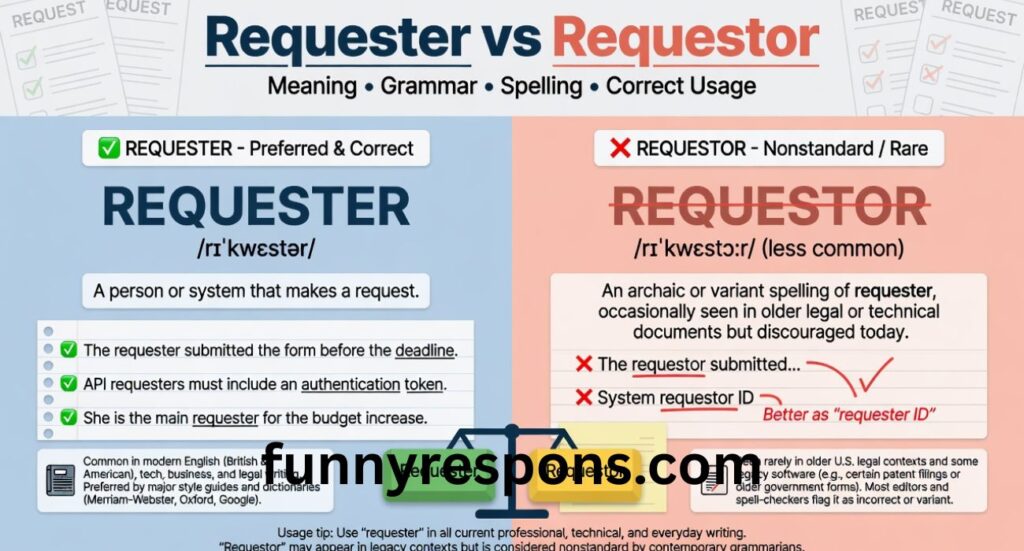
Language trends suggest that “requester” will continue growing as the dominant spelling in modern business English. Digital communication rewards simplicity, clarity, and fast readability. Companies now prefer words that feel natural in emails, online platforms, customer support systems, and workplace communication because users expect smooth reading experiences.
Still, “requestor” probably will not disappear completely. Legal departments, compliance teams, and older technical systems may continue using the traditional spelling for years. The future likely involves both words existing together, although “requester” will remain the stronger choice for most professional writing and modern communication needs.
FAQs
Is “requester” or “requestor” more correct in modern English?
Both words are correct, but “requester” is more common in modern business English because it sounds clearer and more natural to most readers.
Why do legal documents often use “requestor”?
Many legal and technical systems still prefer “requestor” because older templates and formal document wording traditionally used that spelling.
Can I use “requester” in professional emails?
Yes, “requester” works perfectly in workplace communication, customer support language, and professional email wording because it feels reader-friendly and easy to understand.
Should I use both “requester” and “requestor” in the same document?
No, you should choose one spelling and stay consistent throughout the document to maintain professionalism, spelling consistency, and communication clarity.
Conclusion
The topic Requester vs Requestor may look confusing at first, but the meaning becomes simple after learning the difference. Both words describe a person who makes a request. Most people and companies now use “requester” because it sounds clearer and easier to read. Business emails, customer service systems, and workplace documents often prefer this spelling in modern English writing.
“Requestor” still appears in legal papers, technical systems, and official records. Some industries continue using it because of old writing styles and company rules. Good writing needs clear words and consistent spelling. Writers should choose one term and use it correctly throughout the document. In most situations, “requester” gives better readability and a more natural professional tone for everyday communication.